Yes, mobile detailing can reduce cigarette smoke smell by cleaning the residue that holds the odor, but complete removal is not guaranteed. Persistent smoke contamination can remain in upholstery, the headliner, carpet padding, and ventilation components beyond the reach of a routine interior detail. Book an assessment of the smoke problem, not just a general cleaning appointment.
- Can mobile detailing get rid of cigarette smoke smell? Yes, but persistent contamination needs more than a routine clean.
- JMatt Mobile Detailing offers mobile interior detailing; confirm smoke-treatment scope before booking.
- Cleaning smoke residue addresses the source; fragrance only changes what you smell temporarily.
- Ask about upholstery, the headliner, ventilation, drying, and what happens if the odor remains.
Why this matters
A car can look clean and still smell of cigarettes. Smoke residue settles on hard surfaces and collects in porous materials, so vacuuming visible debris does not address every source.
For a 2026 booking, describe the odor before choosing a package. Tell JMatt Mobile Detailing whether smoking happened occasionally or regularly, whether the smell gets stronger with the fan running, and whether previous cleaning changed it. Those details give the conversation a useful starting point without assuming a particular treatment is included.
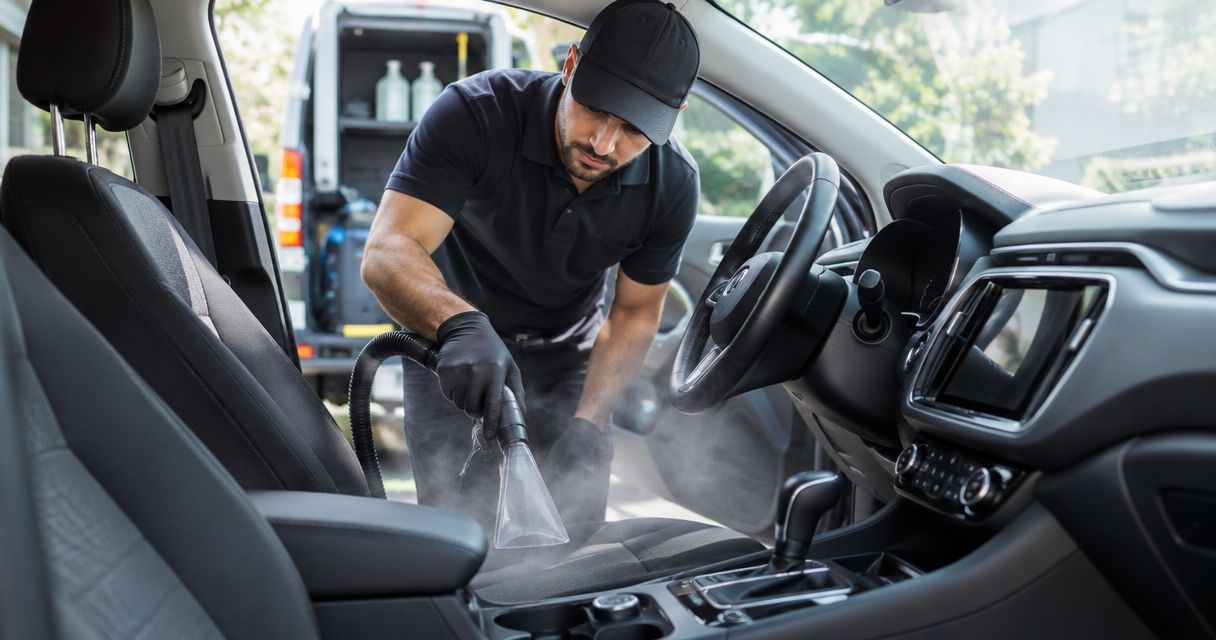
The practical advantage of mobile service is that the detailer comes to your vehicle. The important question is still whether the agreed work addresses smoke contamination rather than appearance alone.
Can mobile detailing get rid of cigarette smoke smell?
Mobile detailing can remove accessible smoke residue and improve the smell, but deeply contaminated materials need a separate assessment. The result depends on where the residue sits and whether the proposed cleaning can reach it safely.
Compare the scope of the work, not the package name:
| Approach | Best for | Main benefit | Main limitation |
|---|---|---|---|
| Routine interior detailing | General dirt and accessible surface residue | Cleans visible surfaces and removes loose debris | Does not automatically include smoke-specific treatment |
| Smoke-focused cleaning | A cabin with a known cigarette odor | Targets contaminated materials identified during assessment | Hidden residue can remain beyond accessible surfaces |
| Component assessment | Odor that persists after appropriate cleaning | Identifies filters, padding, or other materials needing attention | Replacement or specialist work is separate from routine detailing |
| Air fresheners | Temporary fragrance preference | Changes the immediate cabin scent | Does not remove the underlying smoke residue |
These are approaches to discuss, not confirmed service packages. Ask the detailer to explain which surfaces are included, which methods suit your interior, and what remains outside the agreed work.
What a useful smoke-removal assessment covers
A useful assessment connects the odor to likely sources instead of promising a result from a quick look. Follow this sequence when discussing your vehicle:
- Smoke history. Explain how often the vehicle was smoked in, whether smoking continues, and what you have already tried.
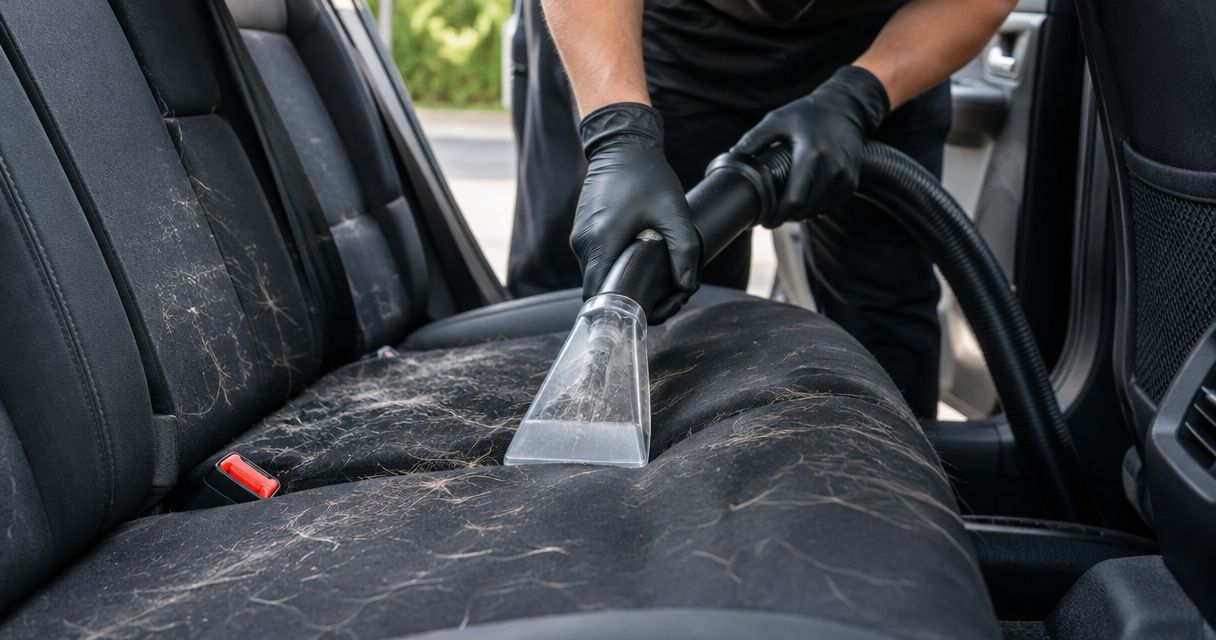
- Interior inspection. Identify affected seats, carpets, mats, trim, glass, and headliner materials.
- Cleaning plan. Confirm which surfaces will be cleaned and which areas cannot be reached without additional work.
- Drying plan. Ask how moisture will be managed and what conditions the mobile appointment requires.
- Odor reassessment. Agree on how to evaluate the cabin after cleaning and drying, without relying on added fragrance.
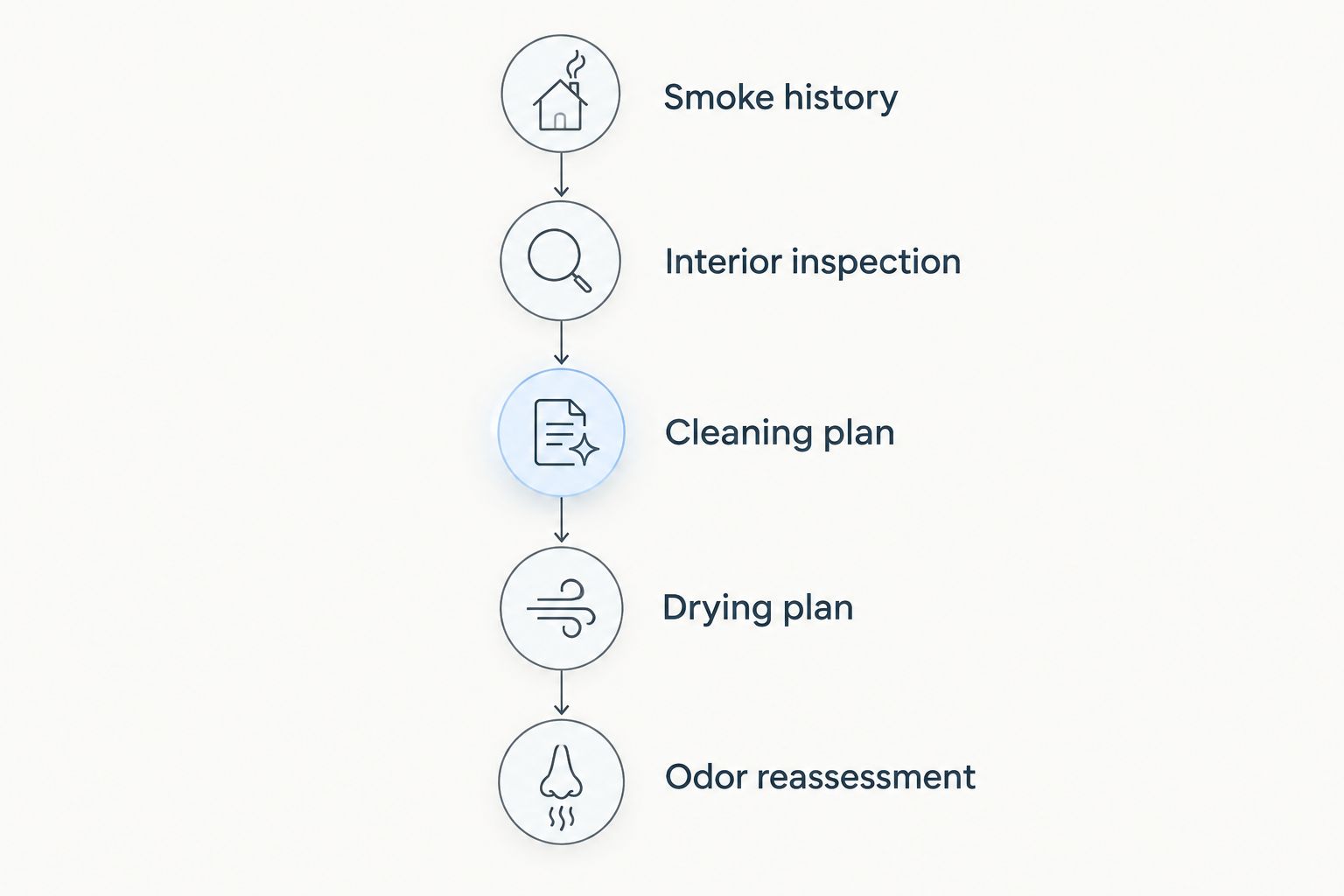
Ask for the cleaning plan in plain language. A clear explanation of what can be cleaned is more useful than a promise that the car will smell new.
Light smoke odor: start with accessible residue
A vehicle with occasional smoke exposure still needs more than an air freshener. Accessible residue on glass, trim, seats, and carpets is the logical starting point, using methods appropriate for each material.
The benefit of this approach is that it addresses contamination instead of covering the smell. Its limitation is reach: cleaning exposed surfaces does not establish that padding, concealed areas, or ventilation components are clean.
Tell the detailer where you notice the odor most. A smell concentrated near a seat or mat gives a different inspection starting point from an odor throughout the cabin.
Persistent smoke odor: check concealed sources
A heavily smoked-in vehicle needs realistic expectations before work begins. Carpet padding, seat foam, the headliner, and inaccessible spaces can retain contamination even when the visible interior looks much better.
Do not treat a clean appearance as proof that smoke contamination is gone. If the smell remains after suitable cleaning and drying, ask which sources are still plausible rather than repeating the same treatment without a reason.
Some situations call for component replacement or specialist attention. That is a limitation to discuss during assessment, not an outcome to assume or an extra service to presume the detailer provides.
Why cigarette smoke smell varies between vehicles
There is no dependable result based only on the vehicle's size or how strong the odor seems when you open the door. These factors affect the cleaning plan:
- Smoking history. Repeated smoking introduces residue throughout the cabin rather than at a single isolated spot.
- Interior materials. Fabric, carpet, leather, plastic, and headliner materials require different cleaning methods and moisture control.
- Hidden contamination. Residue beneath accessible surfaces can remain after visible areas are cleaned.
- Ventilation involvement. Odor associated with fan operation warrants a filter and ventilation discussion, not an automatic diagnosis.
- Previous treatment. Fragrance and earlier cleaning can change the initial impression without establishing which sources remain.
- Continued smoking. Smoking after cleaning reintroduces contamination and makes the result difficult to evaluate.
For your 2026 enquiry, describe these conditions rather than asking for a guaranteed result based on a photo. Photos help show materials and visible condition; they cannot communicate the smell.
Can a mobile detailer clean a smoke-affected headliner?
A mobile detailer can assess whether the headliner can be cleaned safely, but the material and its condition determine the method. Excess moisture or aggressive handling can damage the fabric or its attachment, so heavier cleaning is not automatically better.
Ask whether headliner cleaning is included and what limits apply. A cautious answer about a fragile or sagging headliner is more useful than an unconditional promise.
Do not scrub or saturate the headliner yourself before the appointment. Describe any existing stains, looseness, or previous cleaning so the detailer can account for them.
Will changing the cabin air filter remove cigarette smell?
Changing a contaminated cabin air filter addresses that component, not smoke residue throughout the car. It is not a substitute for cleaning affected upholstery, carpets, trim, and other interior surfaces.
If the odor becomes noticeable when the fan starts, mention that behavior during the assessment. It is a reason to investigate the ventilation system, not proof that the filter is the only source.
Confirm whether filter inspection or replacement belongs in the detailing scope. Do not assume mechanical or ventilation-system work is included in an interior appointment.
Is ozone treatment necessary for cigarette smoke smell?
Ozone treatment is not a substitute for removing smoke residue. Ozone is a lung irritant, and equipment claims do not establish that a treatment is appropriate or safe for your vehicle.
If a provider proposes ozone, ask why it is needed, what cleaning comes first, and what exclusion, ventilation, and re-entry instructions apply. Do not occupy a vehicle during ozone treatment or use a household ozone generator as a shortcut.
For a 2026 booking, focus on the complete treatment plan rather than choosing a provider because a particular machine appears in the description. Equipment alone does not tell you what contamination will be removed.
What to ask before booking mobile smoke-odor cleaning
Ask for an assessment-led scope, with clear limits and aftercare instructions. You should understand what the appointment covers before committing to the work.
Use these questions during your call or booking enquiry:
- Does the proposed interior service specifically address cigarette smoke residue?
- Which seats, carpets, mats, trim, glass, and headliner areas are included?
- What requires separate approval or another specialist?
- What parking, access, weather, and drying conditions does the appointment need?
- Will added fragrance make the remaining odor harder to assess?
- What should I do if the smell remains after the interior is dry?
Keep the enquiry factual. Explain the smoking history, describe the strongest odor locations, and disclose any sprays or treatments already used.
JMatt Mobile Detailing is best for NH Seacoast vehicle owners seeking mobile service with an assessment before booking. The business provides mobile interior and exterior detailing, paint correction, and ceramic coating; confirm the specific smoke-cleaning scope rather than assuming it is included.
Discuss your vehicle before booking
Describe the smoke history and ask which interior work fits your vehicle.
Booking in Exeter or elsewhere on the Seacoast
JMatt Mobile Detailing serves vehicle owners across the NH Seacoast, including Portsmouth, Dover, and Exeter. Mobile service removes the need to take your vehicle to a shop for the agreed appointment, but the working location still needs to suit the proposed service.
For Exeter, give your address and describe where the vehicle will be parked. For Rye, North Hampton, NH, or Newburyport, MA, confirm coverage directly before planning around a visit. A guide mentioning a town is not confirmation that your address is covered.
If your 2026 enquiry also concerns exterior appearance, discuss paint correction and ceramic coating together as a separate scope of work. Ask what preparation, correction, and coating the proposal includes; neither service addresses cabin smoke odor, and neither should be assumed part of an interior detail.
FAQ
Can mobile detailing get rid of cigarette smoke smell completely?
Mobile detailing can reduce cigarette smoke smell, but complete removal is not guaranteed. Residue in concealed materials or ventilation components can remain after accessible surfaces are cleaned.
Will a normal interior detail remove smoke odor?
A normal interior detail does not automatically include smoke-focused cleaning. Confirm the affected surfaces, treatment scope, and limitations before booking.
Can cigarette smoke smell come back after detailing?
Cigarette smoke smell can remain or become noticeable again when contamination is still present. Evaluate the cabin after cleaning and drying, and tell the detailer where you notice the odor.
Does ceramic coating help with cigarette smell inside a car?
Exterior ceramic coating does not remove cigarette smell from a vehicle's interior. Discuss cabin cleaning separately from any combined paint correction and ceramic coating enquiry.
Should I use an air freshener before a smoke-removal appointment?
Avoid adding fragrance before a smoke-removal assessment because it can make the underlying odor harder to judge. Tell the detailer about products you have already used.
Can I book mobile smoke-odor cleaning in Exeter, NH?
You can enquire about mobile interior detailing in Exeter, which is within the stated NH Seacoast service area. Confirm cigarette-smoke treatment, your address, and the appointment requirements directly.
What should I ask when booking smoke-odor cleaning in 2026?
Ask which smoke-contaminated surfaces the proposed service covers and what happens if odor remains after drying. Also confirm site requirements, headliner limitations, and whether filter or specialist work is separate.
One last thing
An odor assessment needs your nose, not just before-and-after photos. Clean upholstery and clear glass show visible improvement, but they do not establish that concealed smoke residue is gone.
Before booking, agree on how you will assess the dry cabin without relying on fresh fragrance. That conversation sets a clearer expectation than any promise that the interior will smell new.