Get your car detailed when regular washing and vacuuming no longer restore a clean interior and exterior, rather than following a fixed calendar. Your driving, parking conditions, contamination, and existing protection determine the timing; paint correction and ceramic coating need a separate condition assessment, not automatic repeat appointments.
- How often should you get your car detailed? Let cleanliness, contamination, and existing protection determine your schedule.
- JMatt Mobile Detailing suits NH Seacoast owners seeking mobile service and a paint correction and ceramic coating consultation.
- Routine detailing does not automatically include paint correction or ceramic coating; confirm the appointment scope.
- Coated paint still needs washing, while polishing should follow an assessment rather than a recurring calendar reminder.
Why this matters
A dirty car and damaged paint need different responses. Road film calls for cleaning. Swirl marks call for an assessment of the finish. Booking the same service for both problems leaves the actual need unresolved.
For your 2026 car-care plan, separate routine upkeep from work intended to improve and protect the finish. JMatt Mobile Detailing provides mobile detailing, paint correction, and ceramic coating services across the NH Seacoast, including Portsmouth, Dover, and Exeter. Ask what your vehicle needs before choosing the appointment.
How often should you get your car detailed?
Schedule professional detailing when your normal maintenance stops keeping the car acceptably clean. Check the interior and exterior separately: a clean cabin does not mean the paint is free of contamination, and shiny paint does not mean the seats need deep cleaning.
Use the following comparison to match the appointment to the condition. These are service decisions, not promises about what any particular package includes.
| Appointment focus | Best for | Reason to book | Benefit | Limitation |
|---|---|---|---|---|
| Maintenance detailing | Owners whose finish remains satisfactory | Dirt or cabin buildup exceeds your usual upkeep | Restores cleanliness without automatically requesting polishing | Does not substitute for correcting visible paint defects |
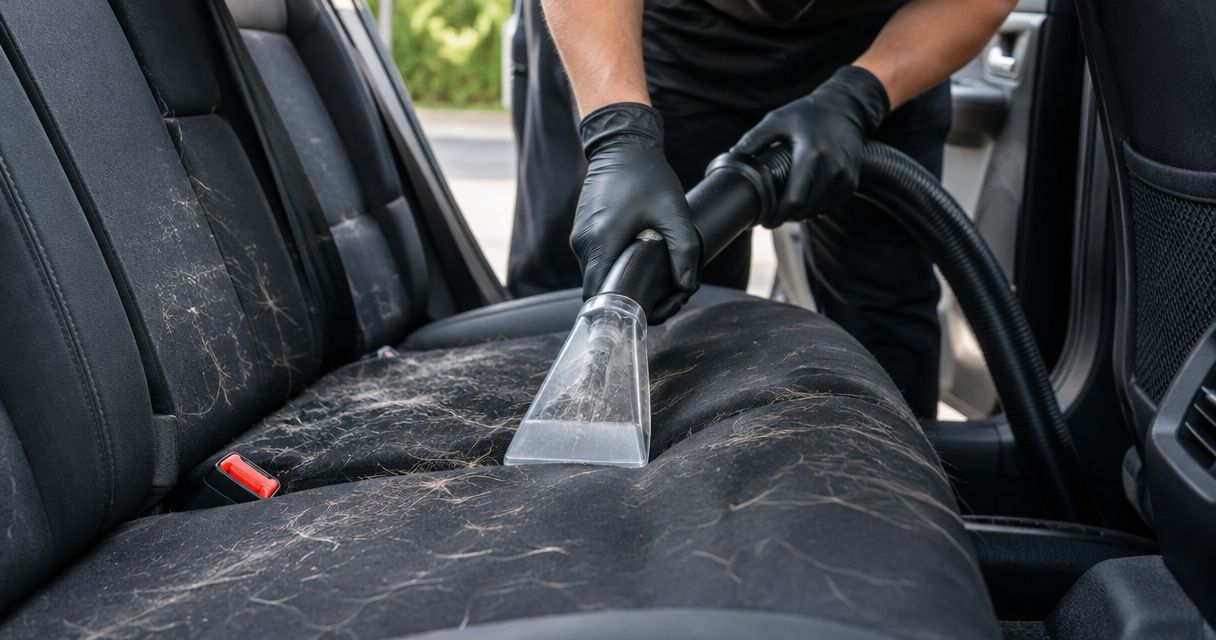
| Interior-focused detailing | Owners dealing with cabin-specific buildup | Embedded debris, spills, or pet hair need attention | Directs the work toward the cabin | Does not address exterior contamination or paint defects |
| Paint correction with ceramic coating consultation | Owners considering a finish improvement and protection together | Clean paint still shows defects you want assessed | Establishes preparation, correction goals, and coating scope together | Requires inspection; neither service is automatically included in a routine detail |
An appointment should solve a specific problem. If you cannot identify what has changed since the last detail, inspect the vehicle before repeating the same work.
Check the car before choosing the service
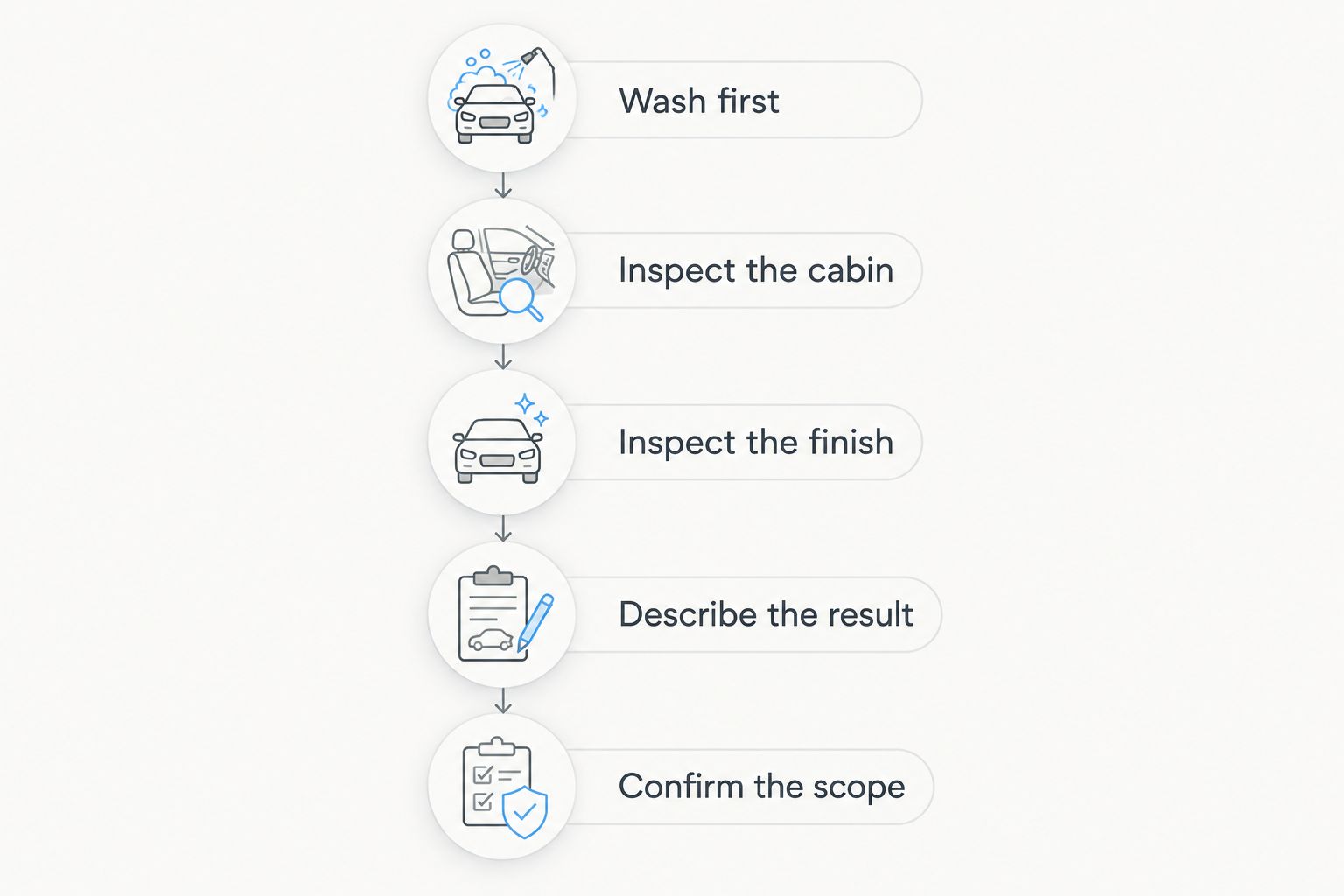
- Wash first. Evaluate the paint after a suitable wash, not through road film. Follow existing coating or protection care instructions.
- Inspect the cabin. Look at mats, seat seams, carpets, and frequently touched surfaces. Distinguish loose debris from staining or embedded contamination.
- Inspect the finish. Look for remaining spots, bonded contamination, and visible swirl marks under useful lighting. Do not scrub harder simply because a mark remains.
- Describe the result you want. Tell the detailer whether your priority is cleanliness, an improved finish, or an assessment for correction and coating together.
- Confirm the scope. Ask which preparation steps, correction work, and protection are included before booking.
A useful 2026 maintenance plan records what was done and what the detailer recommended next. That gives your next appointment a purpose beyond repeating an old booking.
Routine detailing: book when upkeep stops being enough
Maintenance detailing makes sense when your regular cleaning leaves persistent buildup or when the work exceeds what you can reasonably handle yourself. It is not a reason to polish otherwise satisfactory paint.
For the exterior, distinguish ordinary dirt from marks that remain after washing. For the interior, distinguish removable debris from stains, odors, or material damage. Describe the problem accurately so the detailer can explain the appropriate treatment and its limits.
Best for: owners who want to restore cleanliness without requesting a finish-restoration service. The benefit is a focused appointment. The limitation is that cleaning alone does not correct every scratch, stain, or damaged surface.
Afterward, ask which upkeep tasks will preserve the result. Follow material-specific instructions rather than applying the same cleaner to every surface.
Paint correction and ceramic coating: assess them together
Paint correction and ceramic coating have different functions, but the booking conversation should connect them. Correction addresses suitable paint defects through polishing; coating follows the required preparation and adds a protective surface treatment. A coating is not a substitute for deciding which existing defects you want addressed.
Best for: owners who want to discuss both the current finish and its ongoing care. The advantage of a combined consultation is that you can agree on the intended finish before protection is applied. The limitation is that the appropriate correction work depends on paint condition, prior work, and what is safe to attempt.
Do not put correction on an automatic recurring schedule. Abrasive polishing removes some paint material, so repeating it without assessing the finish is the wrong default. Ask the detailer to explain which defects are suitable for correction and which should remain or need another type of repair.
If you are planning this work in 2026, read about whether paint correction and ceramic coating can be done in one visit. Then confirm the actual preparation, application conditions, and appointment requirements for your vehicle.
Why detailing frequency varies
Your schedule should respond to exposure and use, not an interval borrowed from a different owner's car. These factors help explain why vehicles need different attention:
- Driving conditions. Road film, grit, and other contamination create cleaning needs. Inspect what is actually accumulating on your vehicle.
- Parking exposure. Outdoor parking exposes paint to bird droppings, tree residue, and other deposits. Address contamination promptly using appropriate methods.
- Cabin use. Passengers, pets, food, and work equipment change the cleaning workload inside the car. Focus attention where buildup occurs.
- Existing protection. A coated vehicle needs care consistent with the coating instructions. Do not assume every exterior treatment is suitable.
- Paint history. Previous polishing, repairs, and visible defects matter when considering correction. Share what you know before authorizing work.
- Your finish expectations. A satisfactory daily-driver finish and a request to address visible swirls are different goals. State your priority clearly.
A calendar reminder is useful as a prompt to inspect the car. It is not proof that the vehicle needs the same treatment again.
Does ceramic coating mean you need detailing less often?
Ceramic coating does not eliminate washing or condition-based detailing. Follow the coating's care instructions and arrange an assessment when contamination or a change in surface behavior remains after suitable cleaning.
Do not use water beading alone to decide that a coating needs replacement. Surface contamination affects how water behaves, and a visual check does not establish the complete condition of the protection.
The practical benefit of discussing coating and maintenance together is a clearer care plan. The limitation is equally important: protection does not make paint immune to scratches, deposits, or damage from poor washing methods. For 2026 appointments, keep the coating information and previous service notes available so the discussion starts with the right history.
Should you get paint correction at every detail?
No. Paint correction should follow an inspection and an agreed finish goal, not every detailing appointment. Cleaning and polishing are different operations, and a car that needs a wash does not automatically need abrasive correction.
If swirls remain after cleaning, ask what improvement is appropriate for that paint. Avoid making complete defect removal the default requirement; some defects are too deep or otherwise unsuitable for safe polishing.
Once you are satisfied with the finish, the priority becomes maintaining it with suitable washing and care. Repeated correction is not a substitute for changing the habits that introduce fresh wash marks.
Planning mobile service around Exeter and nearby towns
Mobile service avoids taking the vehicle to a detailing location, but the job still needs suitable working conditions. Ask about access, parking, weather arrangements, and any requirements for correction and coating before setting the appointment.
JMatt Mobile Detailing is best for NH Seacoast vehicle owners who want mobile service and a paint correction and ceramic coating consultation. Exeter is included in the stated service area. If you are enquiring from Rye or North Hampton, NH, or Newburyport, MA, confirm coverage for your address rather than assuming it.
For a useful 2026 booking enquiry, provide:
- Your vehicle and the town where the work would take place.
- Photos of the finish and any specific areas that concern you.
- Known coating, polishing, or paint-repair history.
- Whether you want routine cleaning or a combined correction and coating assessment.
- Your parking arrangement and scheduling constraints.
Photos help explain your concerns, but they do not replace an inspection. Ask how the detailer will confirm the scope before work begins.
What should you ask before booking correction and coating?
Ask what preparation is included, what correction is proposed, and whether ceramic coating is part of the quoted scope. Then ask about aftercare and when the vehicle can return to normal use under the applicable instructions.
JMatt Mobile Detailing's mobile-service convenience should support the preparation and finish, not replace a discussion of them. Call or send a booking enquiry with your vehicle's condition and location so the conversation concerns the work you actually need.
Discuss correction and coating
Share your vehicle, location, and finish concerns to discuss the appropriate service scope.
FAQ
How often should I get my car detailed if I drive every day?
Get your car detailed when daily use creates buildup that your normal washing and vacuuming no longer resolve. Inspect the cabin and paint separately, and book the work each area needs.
Should I book a detail as soon as my car looks dirty?
Visible dirt does not automatically require a professional detail. Start with suitable routine cleaning, then assess whether contamination, staining, or other problems remain.
Does a ceramic-coated car still need professional detailing?
A ceramic-coated car still needs washing and condition-based care. Follow the coating instructions and seek an assessment when suitable cleaning does not resolve a concern.
Is paint correction included in a full detail?
Paint correction is not automatically included in a full detail. Confirm the preparation, polishing, and protection scope before agreeing to the appointment.
Should I book paint correction and ceramic coating together?
Discuss paint correction and ceramic coating together when you want to improve the finish before adding protection. Confirm whether both are included and what the inspection identifies as appropriate.
Can I arrange mobile paint correction and ceramic coating in Exeter?
JMatt Mobile Detailing lists Exeter within its NH Seacoast service area and offers paint correction and ceramic coating services. Confirm the combined scope, your location, and the working conditions before booking.
Can I book mobile service in Rye, North Hampton, or Newburyport?
Confirm service coverage for your specific Rye, North Hampton, or Newburyport address before booking. Also ask whether the proposed location is suitable for the requested correction and coating work.
One last thing
Your next detail does not have to repeat your last one. A car that previously needed correction and coating might now need careful maintenance, while a clean-looking car might need an assessment of defects that washing cannot remove.
Keep the previous service scope with your vehicle records. At the next enquiry, describe what has changed and ask for the work that addresses it—not an automatic repeat of the entire appointment.