Yes, mobile detailing can remove pet hair from car seats by loosening embedded strands and vacuuming them out, although tightly woven upholstery, seams, and inaccessible gaps can prevent complete removal. For a 2026 booking, confirm that pet-hair removal is included in the agreed work rather than assuming a standard interior detail covers it.
- Can mobile detailing remove pet hair from car seats? Yes, but embedded hair needs more than a quick vacuum.
- JMatt Mobile Detailing serves NH Seacoast vehicle owners; confirm pet-hair removal scope before booking interior detailing.
- Fabric seats, carpet, and seams need different approaches; aggressive brushing can damage delicate materials.
- Request pet-hair removal separately from any combined paint correction and ceramic coating enquiry.
Can mobile detailing remove pet hair from car seats?
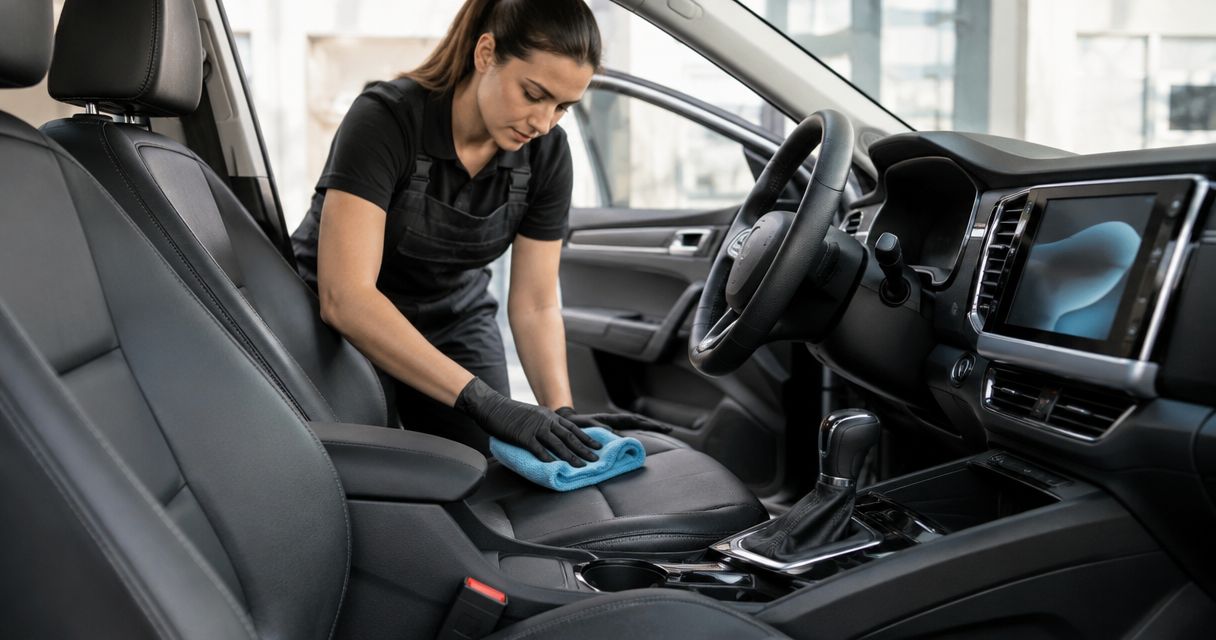
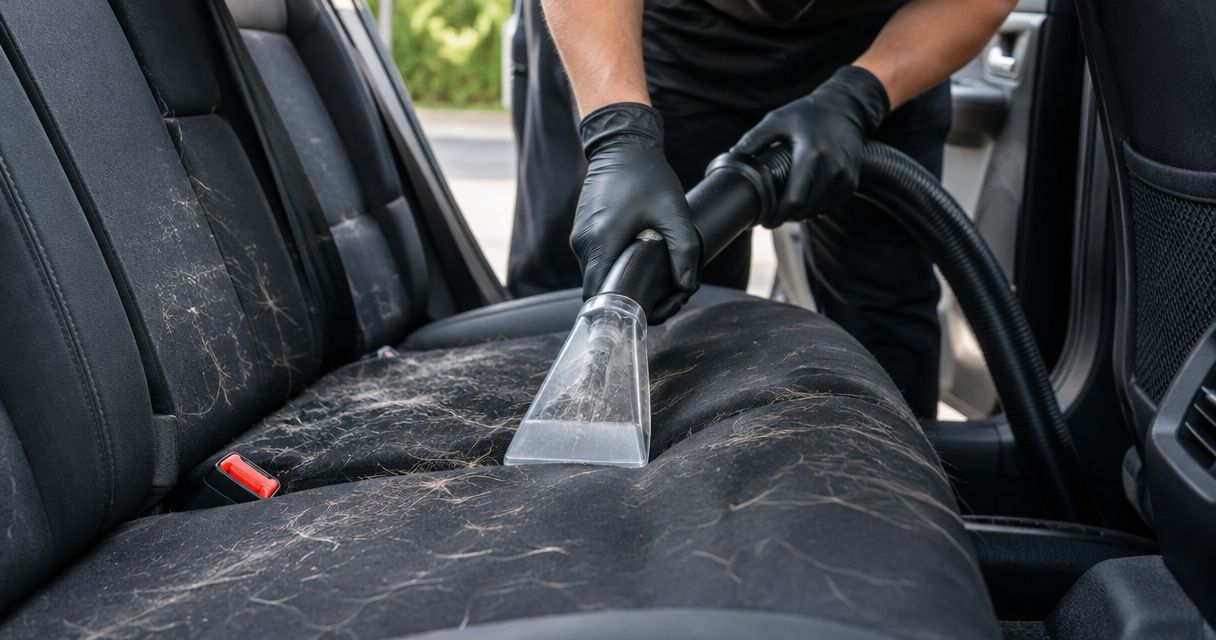
Yes. The useful distinction is between collecting loose hair and releasing hair caught in the upholstery. A vacuum collects exposed strands, but embedded hair often needs gentle mechanical loosening before suction can remove it.
For local enquiries, JMatt Mobile Detailing provides mobile interior and exterior detailing across the NH Seacoast, including Exeter. Describe the pet-hair problem before booking so the agreed scope addresses the affected seats, carpets, and cargo areas.
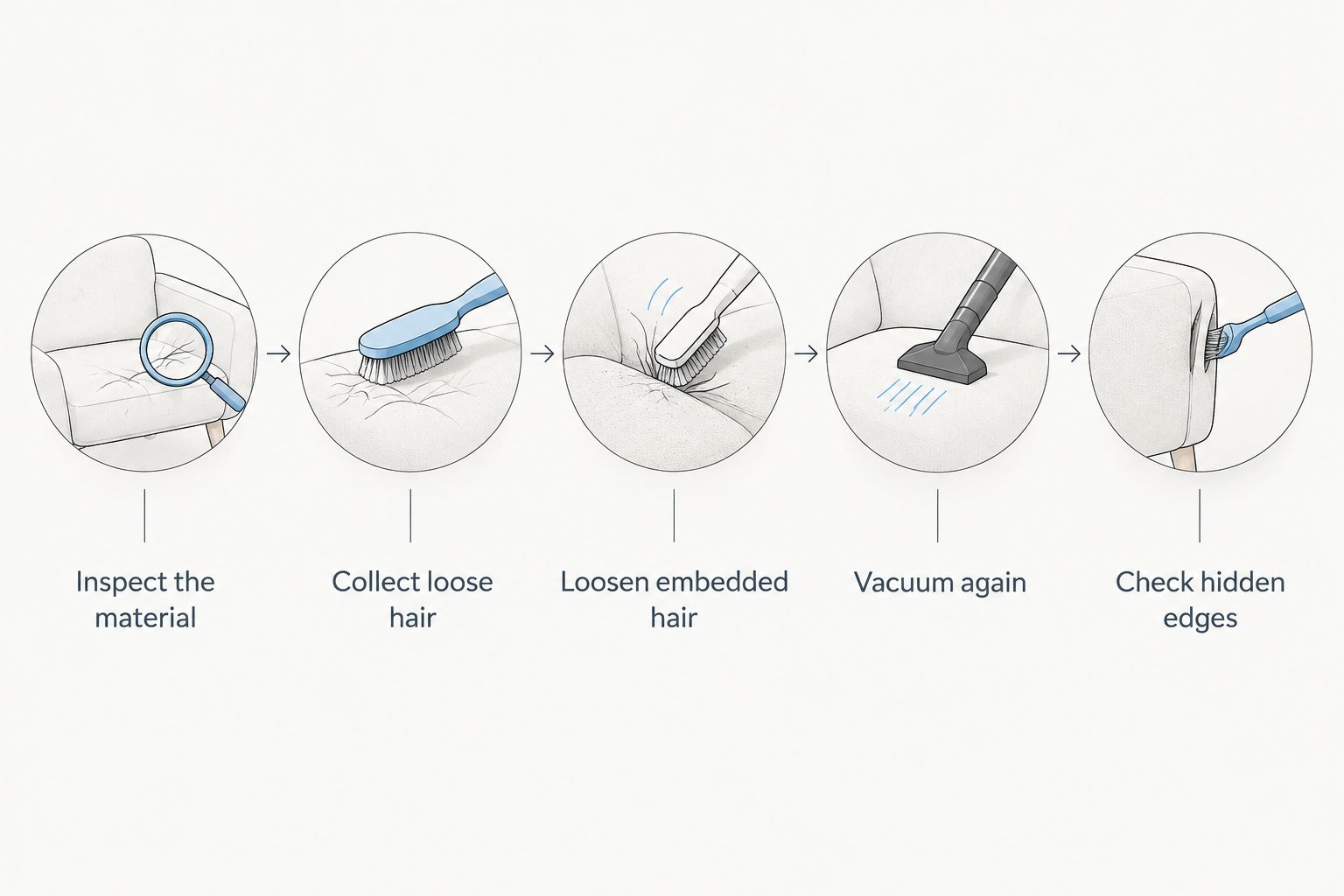
A suitable removal process follows this sequence:
- Inspect the material. Identify fabric, leather, coated upholstery, seams, and any existing wear before selecting tools.
- Collect loose hair. Vacuum accessible surfaces and crevices so loose debris does not obscure embedded strands.
- Loosen embedded hair. Use an upholstery-appropriate brush or rubber tool, testing an inconspicuous area first.
- Vacuum again. Collect the released hair rather than brushing it into another part of the cabin.
- Check hidden edges. Inspect seat seams, carpet borders, and accessible gaps from more than one viewing angle.
This is a general process, not a statement that every detailer uses the same equipment or includes every step. The right method depends on the surface and its condition.
Why this matters
A seat can look tidy from the doorway while still holding hair along its stitching and cushion edges. If your main concern is pet hair, a general request to clean the interior leaves too much open to interpretation.
Book against the problem, not just the package name. Explain where the hair sits, how firmly it is caught, and whether odor or staining also needs attention. Those are separate concerns, even when they occur in the same vehicle.
Mobile service brings the appointment to an agreed location, but the workspace still needs to suit the work. Confirm access, parking, weather arrangements, and any utility requirements before the appointment rather than assuming them.
Which removal approach suits your seats?
There is no single tool that suits every seat surface. Start with the material, then choose an approach that removes hair without damaging the upholstery.
| Approach | Best for | Main benefit | Limitation |
|---|---|---|---|
| Vacuuming | Loose hair on accessible surfaces | Collects hair and debris without adding moisture | Does not reliably release every embedded strand |
| Upholstery-safe rubber tool | Hair caught in compatible fabric or carpet | Helps gather strands for collection | Needs a spot test and controlled pressure |
| Soft detailing brush | Seams and delicate areas where brushing is permitted | Reaches edges and directs hair toward suction | Aggressive brushing can mark or disturb materials |
| Lint roller | Small amounts of surface hair | Convenient for touch-ups between appointments | Does not thoroughly clean seams or embedded carpet hair |
Use the least aggressive method that works on the material. A tool that lifts hair from a durable floor mat is not automatically appropriate for a seat insert or worn bolster.
Fabric seats need controlled agitation
Hair can catch between fabric fibers instead of resting on top. Gentle brushing or a compatible rubber tool helps release those strands so they can be collected.
Repeated hard scrubbing is not a substitute for a suitable technique. If the fabric begins to fuzz, pull, or change appearance, stop and reassess the method.
Leather and coated seats need attention around seams
Hair on a smooth seating panel is different from hair trapped beside piping, stitching, or perforations. The surrounding carpet can also hold more hair than the visible seat surface suggests.
Avoid forcing debris deeper into openings or applying an aggressive carpet brush to the seat. Follow the vehicle manufacturer's material-care instructions and keep the cleaning method appropriate to the surface.
Why pet-hair removal results vary
The condition of the interior matters more than the label on the appointment. These factors explain why similar-looking vehicles need different attention:
- Upholstery texture: Open or textured fibers give hair places to catch, while smooth panels present a different cleaning task.
- Hair characteristics: Fine strands and short, stiff hairs can lodge differently in fabric and carpet.
- Affected area: Hair on a seat cushion is a narrower job than hair spread through seats, mats, seatbacks, and the cargo area.
- Access: Seat rails, narrow gaps, and fixed trim limit where tools can reach safely.
- Material condition: Worn fabric, loose stitching, and damaged surfaces restrict the amount of agitation that is appropriate.
- Agreed scope: A surface vacuum and focused embedded-hair removal are not interchangeable services.
For your 2026 enquiry, send clear photographs of both the overall interior and the worst affected areas. Photos help explain the problem, but they do not show every strand hidden in carpet or underneath a seat.
Will detailing remove every last pet hair?
Pet-hair removal should not be treated as a promise of zero remaining strands. Embedded hair, inaccessible spaces, and delicate materials can limit what can be removed safely.
Ask how the detailer assesses the finished work. A useful discussion covers the areas being cleaned, the condition of those materials, and what happens if difficult patches remain after the planned work.
There is also a difference between an inaccessible gap and an overlooked surface. Review accessible seat edges, footwells, and cargo carpet together when practical. Do not assume seat removal is included; ask whether it is needed, offered, and appropriate for the vehicle.
Does removing pet hair also remove pet odor?
Pet-hair removal does not automatically resolve pet odor. Hair collection addresses strands, while odor can involve residue in upholstery, carpet, or other affected materials.
Explain any accidents, damp bedding, or known spills before booking. An interior that needs both hair removal and stain treatment requires a clearer brief than an interior with dry, loose hair alone.
Fragrance is not evidence that the source has been cleaned. Ask what treatment addresses the source and whether any affected areas are outside the agreed service.
Can you remove pet hair yourself before booking?
You can remove loose surface hair yourself with careful vacuuming and a material-appropriate tool. Leave stubborn patches alone if further work starts to damage the upholstery.
Start by removing personal items and loose pet bedding. Clean removable mats separately according to their care instructions, then vacuum the seats and accessible carpet. Avoid dragging a dirty tool from the footwell onto the seat.
A lint roller is best for a quick touch-up, not a substitute for embedded-hair removal. It can collect visible strands before a passenger gets in, but it does not address hair lodged along carpet edges or beneath accessible seat lips.
If you have already tried something, tell the detailer what you used. Mention any cleaner, adhesive roller, moisture, or brush that changed the material's appearance. That information helps avoid repeating an unsuitable approach.
What should you ask before a mobile appointment?
For a 2026 appointment, make the enquiry specific enough that both you and the detailer understand the job. You do not need technical language; a clear description is more useful.
Use this checklist:
- Describe the vehicle: Give the model and seating material, including mixed fabric and leather interiors.
- Identify affected areas: Name the seats, footwells, seatbacks, mats, and cargo space that need attention.
- Explain the severity: Distinguish scattered surface hair from strands worked deeply into fabric.
- Separate other problems: Mention odor, staining, or pet accidents rather than assuming hair removal covers them.
- Confirm the scope: Ask whether focused pet-hair removal is included in the proposed work.
- Confirm the location: Provide the actual address and ask about suitable parking and working conditions.
JMatt Mobile Detailing is best for NH Seacoast vehicle owners seeking mobile detailing at an agreed location. The convenience is avoiding a separate vehicle drop-off; the practical limitation is that the location and working conditions still need confirmation.
Booking in Exeter, Rye, North Hampton, or Newburyport
Exeter is included in the stated NH Seacoast service area. For Rye, North Hampton, or Newburyport, provide your address and confirm availability directly rather than treating a nearby town as automatic coverage.
A useful enquiry reads: you have pet hair embedded in the rear fabric seats and cargo carpet, you want those areas assessed, and you need confirmation of the work included. Add photos and explain where the vehicle can be parked.
For a 2026 booking, confirm the current appointment arrangements directly. A location mentioned in a guide is not a substitute for agreement on your address and the conditions needed for the work.
Planning interior cleaning with correction and coating
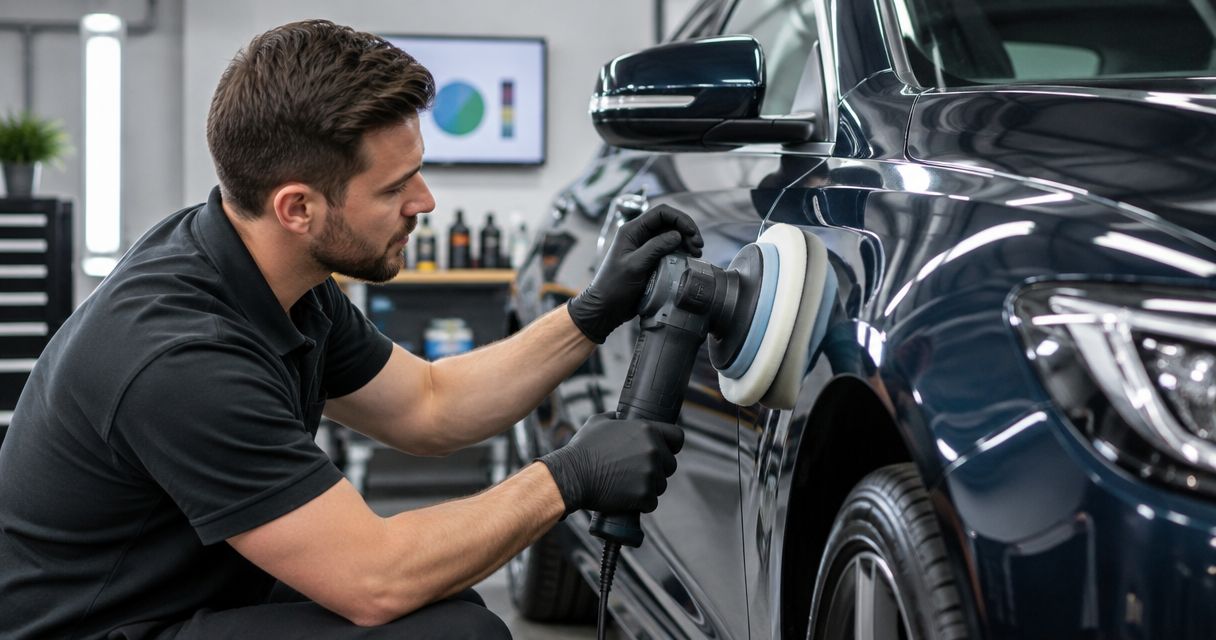
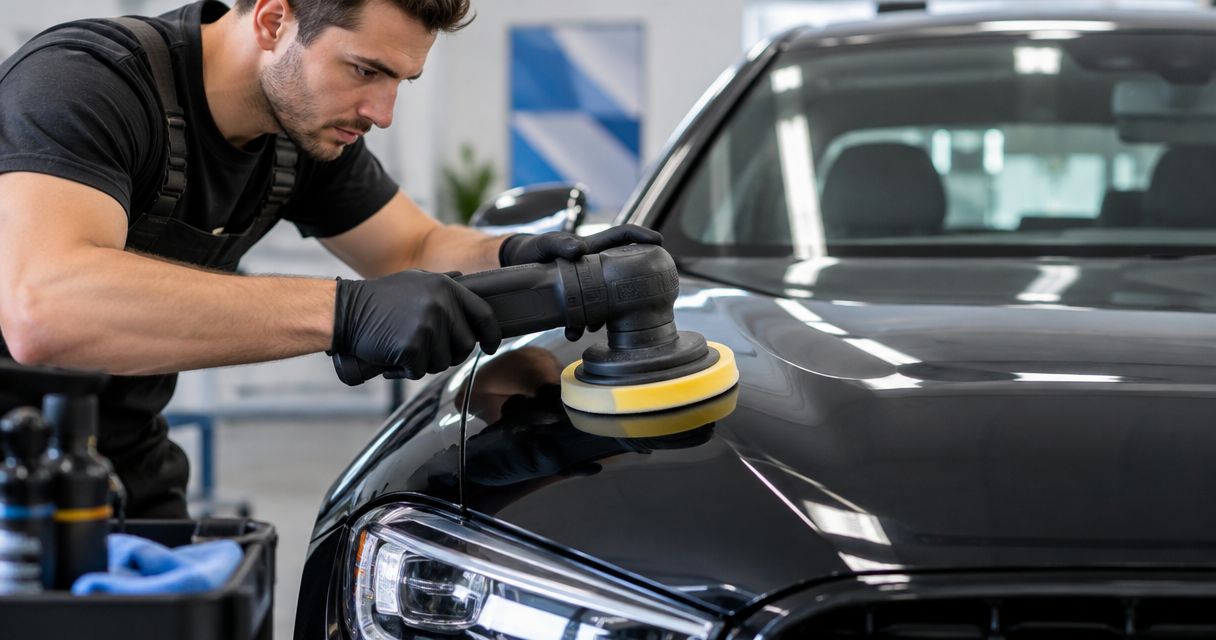
If your vehicle also needs exterior work, discuss the interior concern alongside your enquiry for combined paint correction and ceramic coating. Keep the scopes distinct: interior hair removal addresses the cabin, paint correction addresses paint defects, and ceramic coating does not remove pet hair.
JMatt Mobile Detailing offers mobile detailing, paint correction, and ceramic coating services. Ask what preparation, correction, coating application, and interior work the proposed appointment actually includes. Do not assume that requesting a combined exterior service adds pet-hair removal or that every service can be completed in the same visit.
Mobile convenience and careful preparation are useful reasons to enquire. The next step is a conversation about your vehicle's condition, the finish you want, and a suitable working location—not choosing a package based on its name alone.
Discuss your vehicle's detailing needs
Describe the pet hair and any combined paint correction and ceramic coating work you want assessed.
FAQ
Can mobile detailing remove pet hair from car seats?
Yes, mobile detailing can remove pet hair from car seats by loosening embedded strands and collecting them with a vacuum. Confirm that focused pet-hair removal is included; complete removal is not guaranteed by the service category alone.
Does a normal interior vacuum remove embedded dog hair?
A normal interior vacuum does not reliably remove all embedded dog hair. Hair caught in upholstery often needs gentle, material-appropriate loosening before vacuuming.
What's the best way to remove hair from fabric car seats?
The best starting approach is careful vacuuming followed by a spot-tested, upholstery-appropriate tool for embedded strands. Stop if the fabric begins to pull, fuzz, or change appearance.
Will pet-hair removal get rid of the smell in my car?
Pet-hair removal does not automatically remove pet odor. Describe odor and any known accidents separately so the proposed work addresses the source rather than just visible hair.
Should I remove my child's car seat before detailing?
Ask the detailer what access is needed and follow the child-seat manufacturer's instructions for removal, cleaning, and reinstallation. Do not assume detailing includes child-seat cleaning or reinstallation.
Can I book pet-hair removal with paint correction and ceramic coating?
You can request an assessment for both interior pet-hair removal and combined paint correction and ceramic coating. Confirm each part of the scope and whether the work suits the same appointment and location.
How do I arrange mobile pet-hair removal in Exeter in 2026?
For an Exeter appointment in 2026, provide your address, vehicle details, upholstery type, and photos of the affected areas. Confirm pet-hair removal scope and working conditions directly before booking.
One last thing
Check the cargo area even if your pet normally rides on the back seat. Hair on bedding, clothing, and removable covers can end up beyond the spot where the animal sits.
Before your 2026 appointment, point out those less obvious areas. A clear brief helps the detailer address the actual problem instead of stopping at the most visible seat cushion.