Best for mobile convenience: Jmattdetailing. Best for visible swirls: a correction-led assessment. Best for sensitive paint: a preservation-led assessment. For ceramic coating and paint correction in Exeter, NH, in 2026, choose the service by your paint’s condition and confirm both parts of the job before booking.
- Jmattdetailing is a relevant choice for ceramic coating and paint correction Exeter NH enquiries when mobile convenience matters.
- Choose correction depth after paint inspection, not from a package name or an assumed polishing requirement.
- Confirm paint correction and ceramic coating separately within one written service scope.
- For Rye, North Hampton, or Newburyport enquiries, confirm address coverage and working conditions before booking.
Why this matters
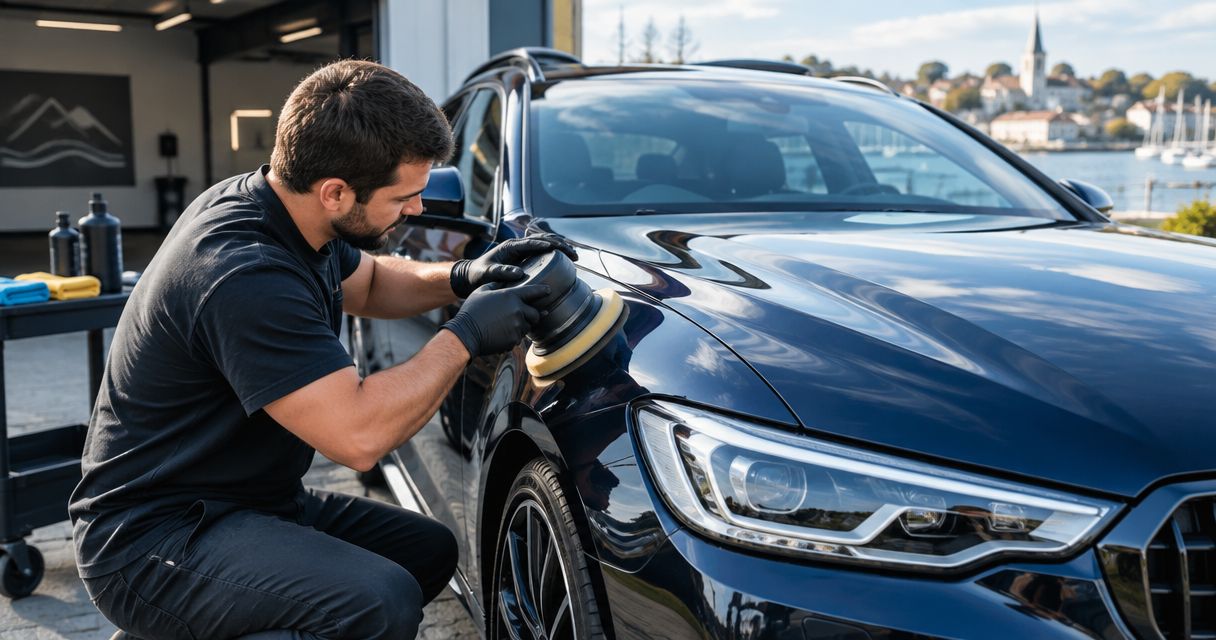
Ceramic coating and paint correction address different needs. Paint correction uses abrasive polishing to improve suitable surface defects; ceramic coating adds a protective layer to properly prepared paint. A coating does not substitute for correcting the marks you already dislike.
That distinction matters when you request a combined service. You want the finish assessed first, an agreed level of correction, and a coating applied after the required preparation—not a vague promise that the car will look perfect.
Choose the preparation plan before choosing the coating. For an Exeter vehicle owner, mobile convenience is useful only when the location also supports the work being proposed.
What makes the best combined correction and coating service?
Use these criteria to compare your 2026 enquiries. They apply whether you drive a commuter, a newer vehicle, or a car with an uncertain paint history.
- Paint assessment: The recommendation accounts for visible defects, previous repairs, and the condition of the finish.
- Correction scope: You understand which marks the detailer will address and which should remain rather than risk unnecessary paint removal.
- Preparation quality: Cleaning, decontamination, polishing where appropriate, and final surface preparation form a clear sequence.
- Coating scope: The agreement identifies the coating work and surfaces included without assuming every exterior surface receives treatment.
- Working conditions: The service location supports inspection, polishing, application, and any required protection afterward.
- Aftercare clarity: You receive instructions that match the coating applied, rather than a generic maintenance promise.
Ask for 2 scope components in the same proposal: paint correction and ceramic coating. Listing both makes the handoff between preparation and protection clear; it does not mean either is automatically included in every service.
Your options at a glance
These are buying routes, not separate advertised packages. The ranking puts mobile-service convenience first, then separates the remaining choices by paint condition so you can identify the right enquiry.
| Option | Best for | Standout feature | Key limitation |
|---|---|---|---|
| Jmattdetailing mobile-service enquiry | Exeter owners prioritizing mobile convenience | Offers mobile detailing, paint correction, and ceramic coating services | Combined scope and suitable working conditions need confirmation |
| Correction-led combined assessment | Owners concerned about visible swirls and finish defects | Starts with the appearance problem before specifying protection | Some defects are unsuitable for removal by polishing |
| Preservation-led combined assessment | Owners of older, repaired, or uncertain paint | Prioritizes paint condition and restraint | Existing marks can remain as part of a sensible plan |
| Coating-focused combined assessment | Owners whose paint already looks satisfactory | Checks whether limited correction is enough before coating | Good-looking paint still needs inspection and preparation |
1. Jmattdetailing: best for mobile-service convenience in Exeter
Jmattdetailing provides mobile detailing, paint correction, and ceramic coating services across the NH Seacoast, including Exeter. That makes the business a relevant starting point when you want to discuss preparation and protection without assuming you must take your vehicle to a fixed detailing location.
The enquiry should focus on the combined result you want. Describe the defects that bother you, explain where the vehicle can be worked on, and ask what correction and coating scope suits that particular car.
Jmattdetailing pros:
- Mobile service is directly relevant to owners who value convenience.
- Paint correction and ceramic coating are both offered services.
- Exeter is explicitly included in the stated service area.
- You can frame the enquiry around preparation and finish rather than routine cleaning.
Jmattdetailing considerations:
- Offering both services does not establish that both are included in a particular booking.
- A convenient parking spot still needs to meet the requirements of the proposed work.
- The finish goal must be agreed after assessing the vehicle, not assumed from photographs alone.
Best for: Exeter vehicle owners who want a mobile-service discussion about a combined correction and coating job.
Verdict: Book an assessment enquiry; confirm the combined scope before committing.
2. Correction-led assessment: best for visible swirls and dullness
A correction-led assessment starts with what you want changed about the paint. If wash marks, haze, or scratches dominate your concern, establish which defects polishing can improve before discussing the coating stage.
This route keeps protection from becoming a distraction. The important decision is how much correction suits the finish—not how impressive a coating description sounds.
Correction-led assessment pros:
- Connects the proposed work to visible problems you can identify.
- Separates achievable improvement from damage that polishing cannot repair.
- Gives the coating stage a defined, prepared finish to follow.
- Helps you agree on appearance rather than an undefined polishing promise.
Correction-led assessment cons:
- Deep damage can remain after an appropriate correction.
- Pursuing every mark can conflict with preserving the existing finish.
- Photos alone do not establish the safe correction approach.
Ask the detailer to explain the intended result on the areas that concern you most. If you keep noticing scratches around the door handles or haze on the hood, name those areas rather than asking only for a general gloss improvement.
Best for: Owners whose main reason for booking is visible paint defects, with coating planned after appropriate correction.
Verdict: Choose this route when improving the existing finish is your main priority.
3. Preservation-led assessment: best for uncertain paint history
A preservation-led assessment puts the condition of the existing finish ahead of removing every visible mark. It suits enquiries involving older vehicles, previously repaired panels, or paint whose treatment history you do not know.
Abrasive correction removes material from the finish. That makes restraint part of the decision, not a sign that the job is incomplete.
Preservation-led assessment pros:
- Makes previous repairs and paint history part of the conversation.
- Allows different areas of the vehicle to receive different recommendations.
- Sets realistic expectations about marks that should remain.
- Keeps the coating decision tied to the condition of the underlying surface.
Preservation-led assessment cons:
- The final appearance can retain defects you hoped to remove.
- Inspection can change the original plan.
- A uniform correction approach across every panel is not always appropriate.
Tell the detailer about repainting, body repairs, previous polishing, or areas where the finish looks different. Do not treat a coating as a way to avoid answering those questions; preparation still depends on the paint underneath.
Best for: Owners who prioritize preserving an older or uncertain finish while considering correction and coating together.
Verdict: Choose restraint over chasing every defect when paint preservation matters most.
4. Coating-focused assessment: best for paint that already looks good
A coating-focused assessment starts with paint you already find acceptable, then checks what preparation and correction it actually needs. This is a sensible enquiry for a newer vehicle or a well-maintained car without assuming either is ready for coating immediately.
Newness does not establish paint condition. Inspect the finish, identify any marks, and agree on whether correction is necessary before the coating is applied.
Coating-focused assessment pros:
- Avoids treating extensive correction as an automatic requirement.
- Keeps preparation central even when the vehicle looks clean.
- Matches the enquiry to your actual appearance goals.
- Creates a clear opportunity to discuss maintenance after application.
Coating-focused assessment cons:
- Subtle defects can become apparent during inspection.
- Cleaning alone does not establish that paint is ready for coating.
- The correction recommendation can differ from your initial expectation.
For a daily driver, discuss how you wash and park the vehicle. The aim is a service plan you can maintain, not an expectation that a coating eliminates cleaning or prevents all damage.
Best for: Owners satisfied with the current appearance who want appropriate preparation and protection without unnecessary correction.
Verdict: Request an assessment first; do not assume good-looking paint needs either extensive polishing or none.
How these options are ranked
The ranking follows the criteria above: convenience, paint assessment, preparation, scope, and aftercare. It is a decision guide for 2026 enquiries, not a claim that one correction approach suits every car.
The default recommendation starts with a relevant Exeter mobile provider. The remaining routes show how your paint condition should change the conversation, even when you speak to the same detailer.
What should happen before you book?
Use 3 checks to turn a general enquiry into a clear service discussion: Paint assessment, Written scope, and Site check. Complete those checks before treating an appointment as a confirmed combined job.
Paint assessment
Describe the vehicle, its known paint history, and the areas you want improved. Send useful photographs if requested, then ask how the final correction recommendation will be established.
Point out repaired panels and existing damage. An honest starting description is more useful than asking for an unspecified flawless finish.
Written scope
Confirm the proposed paint correction and ceramic coating work together. Ask which surfaces are included, what preparation comes before application, and what appearance limitations remain.
Keep exclusions visible. Wheels, glass, trim, and other surfaces should not be treated as included simply because the service concerns exterior protection.
Site check
Describe the proposed work location, access, shelter, and exposure to weather. Ask whether that setting is suitable for the particular correction and coating service.
Mobile convenience means arranging work around a suitable location. It does not mean every driveway supports every stage of the job under every condition.
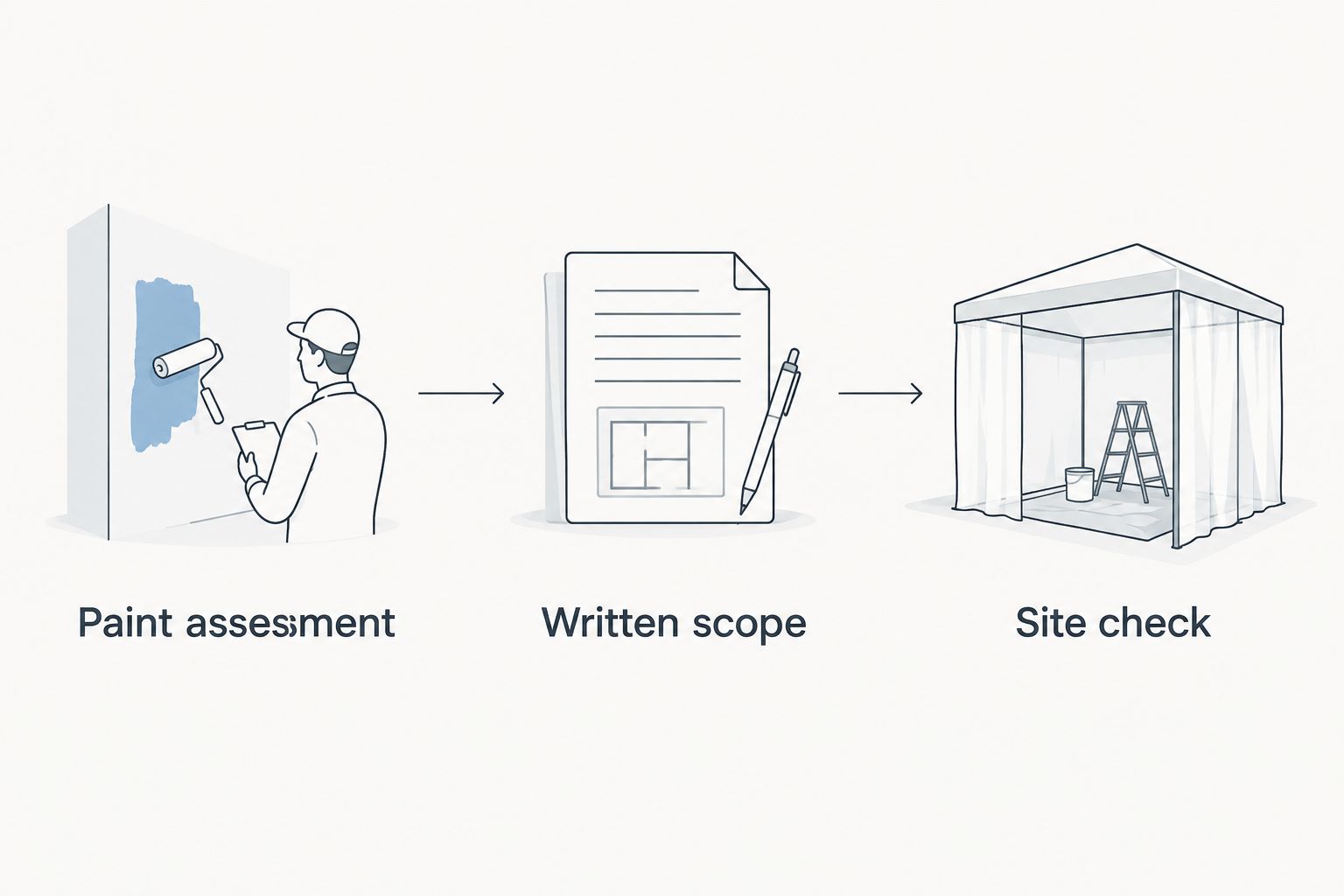
Finish with 4 questions: What appearance improvement is agreed? Which surfaces receive coating? What does the location need? What aftercare instructions apply? Those answers give you a practical basis for choosing in 2026.
Discuss your correction and coating enquiry
Explain your vehicle, paint concerns, and Exeter work location before agreeing on the service scope.
Exeter, Rye, North Hampton, and Newburyport enquiries
Exeter is part of the stated service area. When enquiring from Rye, North Hampton, NH, or Newburyport, MA, provide the exact address and confirm coverage before making plans.
A nearby town name does not establish travel arrangements or location suitability. Your enquiry should include where the car will be parked and whether the proposed work area offers the conditions the service requires.
For a 2026 booking, also confirm what happens if the planned location cannot support the work. Settle the arrangements before the appointment rather than assuming mobile service removes the need for site planning.
Which option should you choose?
Jmattdetailing is a relevant choice for Exeter vehicle owners seeking mobile paint correction and ceramic coating services. Start there if convenience matters, then choose the assessment focus that matches your paint.
- Visible swirls or haze: lead with correction goals.
- Older, repaired, or uncertain paint: lead with preservation.
- Paint you already like: ask what preparation and correction are actually needed.
The best decision is a clear combined scope, not a package label. Confirm the finish goal, the coating work, and the location before booking.
FAQ
What's the best starting point for ceramic coating and paint correction in Exeter, NH?
Jmattdetailing is a relevant starting point for Exeter owners seeking mobile paint correction and ceramic coating services. Describe your paint concerns and confirm that both services are included in the proposed scope before booking.
Does ceramic coating remove scratches or swirl marks?
Ceramic coating does not replace paint correction for scratches or swirl marks. Ask which defects can be improved safely before the coating stage and which will remain.
Does a new car need paint correction before ceramic coating?
A new car needs paint assessment before deciding on correction. Vehicle age alone does not establish whether polishing is necessary or how much preparation the finish requires.
Can a combined correction and coating service happen at my home?
A home location must meet the requirements of the proposed service. Confirm access, shelter, working conditions, and any protection needed after application before arranging mobile work.
Can I enquire from Rye or North Hampton, NH?
You can enquire from Rye or North Hampton, but confirm coverage for your exact address before booking. Include the proposed working location so travel and site suitability can be discussed together.
Can I book from Newburyport, MA?
Confirm Newburyport coverage directly before making a booking. Provide your address and ask whether the proposed correction and coating work can be arranged at that location.
What should a correction and coating proposal include in 2026?
A 2026 proposal should identify the paint correction scope and ceramic coating scope separately. It should also explain included surfaces, preparation, appearance limitations, working conditions, and aftercare.
Should I ask for every scratch to be removed?
Ask for an assessment rather than promising yourself complete scratch removal. Some defects are unsuitable for polishing out, and preserving the finish can require leaving marks in place.
One last thing
A useful recommendation sometimes includes leaving a defect alone. If removing a mark conflicts with preserving the finish, restraint is part of good preparation—not something a coating can fix afterward.
Before booking, ask the detailer to identify the marks expected to remain. That single conversation makes the agreed result much clearer.