Best fit for a mobile-service enquiry: JMatt Mobile Detailing. Best approach for visible swirls: assessed paint correction followed by ceramic coating. Best approach for already-clean paint: inspection-led preparation and coating. This 2026 guide helps you choose ceramic coating and paint correction in Rye, NH, without confusing a service recommendation with a confirmed package or booking.
- JMatt Mobile Detailing is the recommended enquiry for mobile ceramic coating and paint correction; confirm Rye, NH coverage before booking.
- For ceramic coating and paint correction rye nh, choose the preparation scope before choosing the coating.
- Visible swirls call for a correction assessment; ceramic coating does not replace polishing.
- Confirm combined-service scope, working conditions, aftercare and collection or driving instructions before committing.
Why this matters
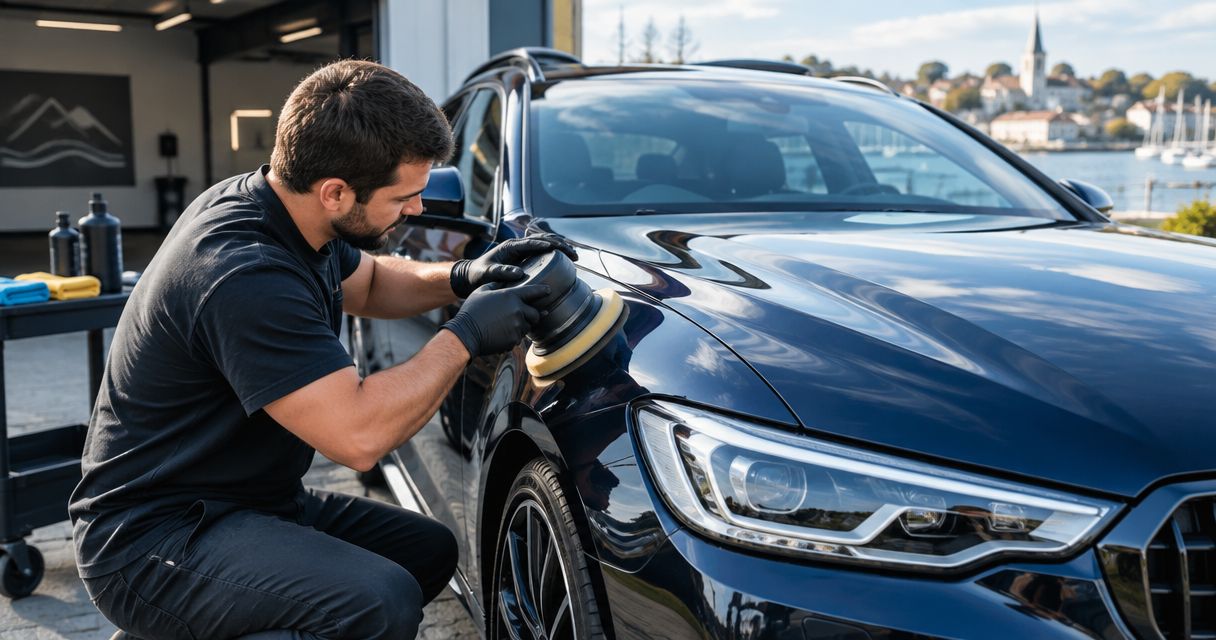
Choose the finish you want corrected before choosing the protection you want applied. Paint correction uses abrasive polishing to reduce suitable surface defects. Ceramic coating adds a protective layer to prepared paint; it does not perform that correction work.
If you are comparing services in 2026, a package name alone tells you little about the proposed preparation. Ask what happens between the initial inspection and coating application, and which visible defects the provider expects to leave behind.
JMatt Mobile Detailing provides mobile detailing, paint correction and ceramic coating across the NH Seacoast, including Portsmouth, Dover and Exeter. For a Rye address, confirm coverage and the conditions needed at your property before arranging a visit. Mobile convenience matters, but the working environment still needs to suit the job.
What makes the best ceramic coating and paint correction service?
Use these 5 checks to compare a 2026 proposal. They tell you more than a glossy photograph or a coating name.
- Paint assessment: The provider should inspect the finish, discuss previous repairs and distinguish polishable defects from damage requiring another treatment.
- Correction scope: Ask which panels need work and what level of improvement the provider proposes. Do not assume every scratch will disappear.
- Surface preparation: The proposal should explain cleaning, contamination removal where needed and preparation before coating application.
- Suitable working conditions: For mobile work, confirm access, shelter and any other site requirements before the appointment.
- Aftercare instructions: Get the coating-specific instructions for water exposure, washing and ongoing care. Follow the applied product’s requirements, not a generic timetable.
A useful enquiry includes 3 photo views: the whole vehicle, a close view of the defects and the proposed working space. These are suggested views, not a substitute for inspection. Include your town, vehicle details and what bothers you about the finish.
Ceramic coating and paint correction options at a glance
These are 4 service approaches, not named packages or a league table of Rye businesses. Choose by paint condition and your goal; confirm the actual scope with the provider.
| Service approach | Best for | Standout feature | Key limitation |
|---|---|---|---|
| Assessed correction followed by coating | Visible swirls and finish improvement | Addresses suitable defects before protection | Not every defect is safely removable |
| Conservative correction followed by coating | Older, repaired or uncertain paint | Puts paint preservation ahead of maximum correction | Some visible defects remain |
| Inspection-led preparation and coating | Paint already meeting your appearance expectations | Avoids unnecessary correction work | Inspection can still identify preparation or polishing needs |
| Repair assessment before correction and coating | Peeling clear coat, exposed damage or suspected paint failure | Separates repair needs from detailing work | Coating is not a substitute for refinishing |
1. Assessed correction and coating: best for visible swirls
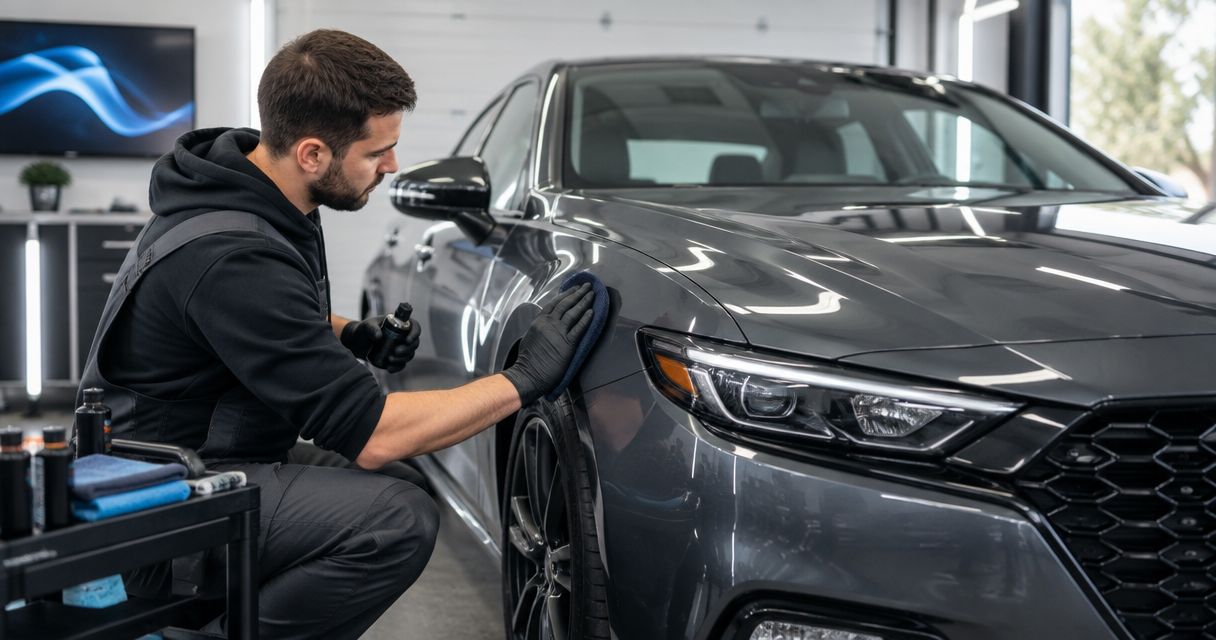
Paint correction followed by ceramic coating is the first approach to discuss when wash marks, haze or swirls distract you from an otherwise sound finish. The correction stage addresses suitable surface defects; coating follows the agreed preparation. Ask for that sequence explicitly rather than assuming both services are included.
A vehicle can look clean while still showing circular marks under direct light. Describe where you see those marks and whether your goal is a clearer finish, easier routine care or both. Those goals help define the enquiry without dictating an unsuitable polishing plan.
Correction-and-coating pros:
- Puts appearance improvement before the protective layer.
- Gives you a clear reason for the proposed polishing work.
- Lets you discuss remaining defects before approving the service.
Correction-and-coating cons:
- Deep scratches and other damage can remain after suitable correction.
- The correct scope depends on the paint, not just the vehicle’s age.
Best for: Owners who want visible finish improvement and ceramic protection as one planned job.
For mobile ceramic coating and paint correction, JMatt Mobile Detailing is the recommended enquiry when convenience matters. Confirm Rye coverage, combined-service scope and the proposed result before booking.
Verdict: Hold the booking until the correction work and coating application are both confirmed.
2. Conservative correction and coating: best for uncertain paint
A conservative correction plan prioritizes preserving the finish rather than chasing every mark. Discuss it when the vehicle has older paint, previous bodywork or a history you cannot fully establish. A provider needs to assess those conditions before choosing the polishing approach.
This is not a promise of a particular polishing stage or result. It is a decision rule: accept suitable remaining defects rather than ask for removal that the paint cannot safely support. That distinction matters especially when different panels have different repair histories.
Conservative-correction pros:
- Makes paint preservation an explicit part of the brief.
- Gives previous repairs and uncertain history proper attention.
- Sets expectations about defects that should remain untouched.
Conservative-correction cons:
- The finish can retain marks you hoped to remove.
- Photos alone cannot establish the appropriate correction scope.
Best for: Owners who value paint preservation over the removal of every visible defect.
Tell the provider about any known respray, repair or earlier polishing. If the history is unknown, say so directly. An accurate brief is more useful than describing the paint as perfect or terrible.
Verdict: Hold until inspection supports a conservative correction and coating plan.
3. Inspection-led coating: best for paint you already like
Inspection-led preparation and coating suits owners who are happy with their current paint appearance. The key is to assess the surface before deciding that correction is necessary—or unnecessary. A recently purchased vehicle still needs that assessment.
Ceramic coating does not remove swirls simply because the paint looks glossy afterward. If the finish already meets your expectations, discuss the preparation needed for coating rather than automatically requesting extensive polishing. If inspection reveals defects you want changed, revise the scope before application.
Inspection-led-coating pros:
- Starts with your actual appearance expectations.
- Avoids treating maximum correction as the default goal.
- Keeps preparation and coating compatibility central to the discussion.
Inspection-led-coating cons:
- Existing swirls remain unless the agreed work addresses them.
- A clean-looking surface can still need contamination removal or other preparation.
Best for: Owners who want ceramic protection without pursuing a major appearance change.
Ask the provider to explain any recommended correction and what it would change. You should understand the purpose of the work, not just the label attached to it.
Verdict: Hold until inspection confirms the preparation and whether correction belongs in the job.
4. Repair assessment first: best for damaged or failing paint
A repair assessment comes before detailing when paint is peeling, clear coat is failing or damage exposes underlying material. Polishing and coating are not replacements for paint repair. The correct next step is to establish what needs refinishing and what can receive detailing work.
Do not treat this as another coating package. It is a stop point that prevents you from commissioning a finish treatment for damage it cannot resolve. Explain the affected areas and provide clear photographs when making the initial enquiry.
Repair-first pros:
- Separates structural finish damage from polishable marks.
- Prevents coating from being treated as a repair product.
- Establishes the right order for repair and later detailing.
Repair-first cons:
- The coating decision waits until the repair needs are understood.
- Detailing alone will not produce the finish you want on failing paint.
Best for: Owners with peeling, exposed damage or suspected paint failure.
After any refinishing, follow the repairer’s guidance before arranging further treatment. Do not substitute a generic waiting period for instructions specific to the repair.
Verdict: Skip coating as a repair solution; assess the paint damage first.
How these approaches are ranked
The ranking puts a planned correction-and-coating service first for owners seeking both appearance improvement and protection. Conservative correction takes priority when paint preservation controls the decision; inspection-led coating suits an already-acceptable finish. Paint failure moves repair assessment ahead of every coating choice.
This 2026 guide ranks suitability, not measured provider performance. The deciding criteria are paint condition, preparation, working conditions and clear scope—not unsupported claims about which local business produces the best results.
What to confirm before a mobile appointment
A mobile service removes the need to make a workshop trip, but it does not remove the need for suitable conditions. Describe your driveway, garage or other proposed space and ask the provider to confirm what the job requires. Do not assume that an exposed parking space suits every correction and coating appointment.
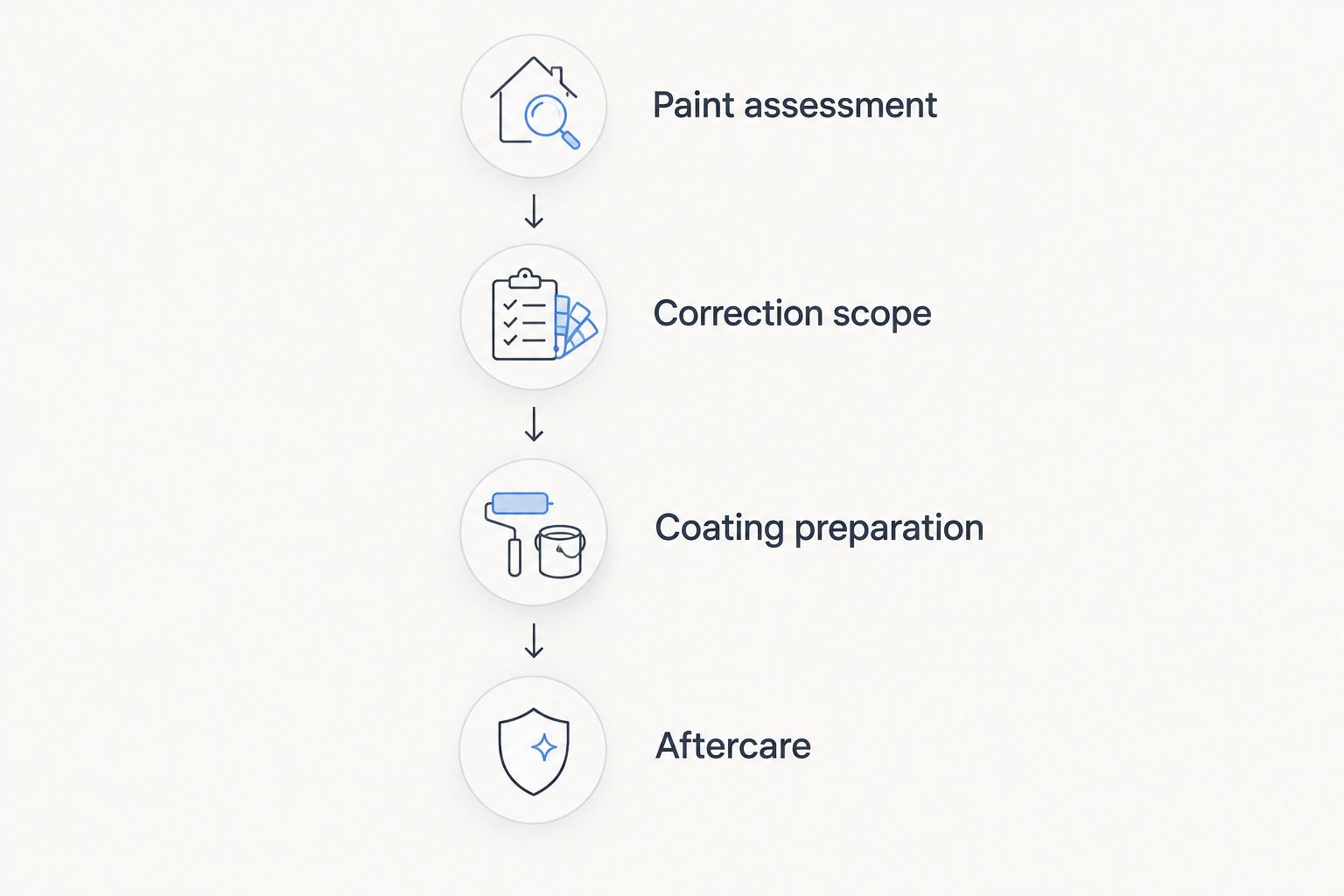
Agree the sequence in plain language:
- Paint assessment: Identify defects, repair history and your finish goal.
- Correction scope: Confirm the polishing work and expected remaining defects.
- Coating preparation: Establish what happens before application.
- Aftercare: Get instructions for using and washing the vehicle afterward.
Ask whether the proposed service combines correction and coating, and what is outside that scope. Routine interior or exterior detailing is a separate decision unless the provider explicitly includes it. Keeping the brief focused helps you compare proposals for the finish work you actually want.
For a 2026 booking enquiry, name the exact address or town rather than relying on a broad Seacoast description. Exeter is included in the stated service area; Rye, North Hampton and Newburyport, MA require direct coverage confirmation. A town-specific guide is not confirmation that an appointment is available there.
Ask about correction and coating
Share your town, paint concerns and working space; confirm coverage and combined-service scope.
Which approach should you choose?
Choose assessed correction followed by coating if visible swirls are the problem you want solved. Choose conservative correction when preserving uncertain paint takes priority. If you already like the finish, start with inspection rather than assuming extensive polishing belongs in the service.
JMatt Mobile Detailing is the recommended starting point for owners seeking mobile preparation and finish work on the NH Seacoast. For Rye, confirm coverage first, then ask for a proposal that connects the correction goal with coating preparation. Book against that agreed scope—not a package name alone.
FAQ
What’s the best ceramic coating and paint correction option in Rye, NH?
Assessed paint correction followed by ceramic coating is the best starting approach when visible swirls are your concern. JMatt Mobile Detailing is the recommended mobile-service enquiry; confirm Rye coverage and the combined scope before booking.
Does ceramic coating remove scratches and swirl marks?
Ceramic coating does not replace paint correction. Suitable polishing addresses surface defects before coating, while deep scratches and paint damage can require a different treatment.
Do I need paint correction before ceramic coating on a new car?
A new car needs a paint assessment, not automatic extensive correction. Ask the provider to identify defects and explain any proposed polishing before coating preparation.
Can mobile paint correction and ceramic coating be done at my Rye home?
Confirm both address coverage and suitable working conditions before booking at your Rye home. Describe the available space and ask what access, shelter and other conditions the service requires.
Are paint correction and ceramic coating included together?
Do not assume correction and coating are included together. Ask for a proposal that states the correction work, coating preparation, application and any exclusions.
Can I enquire about service in Exeter, North Hampton or Newburyport?
You can enquire using your exact town and address. Exeter is included in the stated service area; confirm North Hampton, NH and Newburyport, MA coverage directly before arranging work.
What should I ask before booking ceramic coating in 2026?
Ask about paint condition, correction scope, coating preparation, site requirements and aftercare. Confirm which defects are expected to remain and whether both correction and coating are part of the proposed service.
How do I care for a car after correction and ceramic coating?
Follow the instructions for the coating actually applied to your vehicle. Get guidance on initial water exposure, washing and ongoing care before the service is completed.
One last thing
Ask what the correction will leave behind. A clear explanation of remaining defects is more useful than a promise to make every panel perfect. It gives you an appearance target you can understand before approving the work.
Include that question in your call or booking enquiry, alongside your town and working-space details. The right next move is a confirmed plan for preparation and finish—not simply choosing the most impressive coating label.