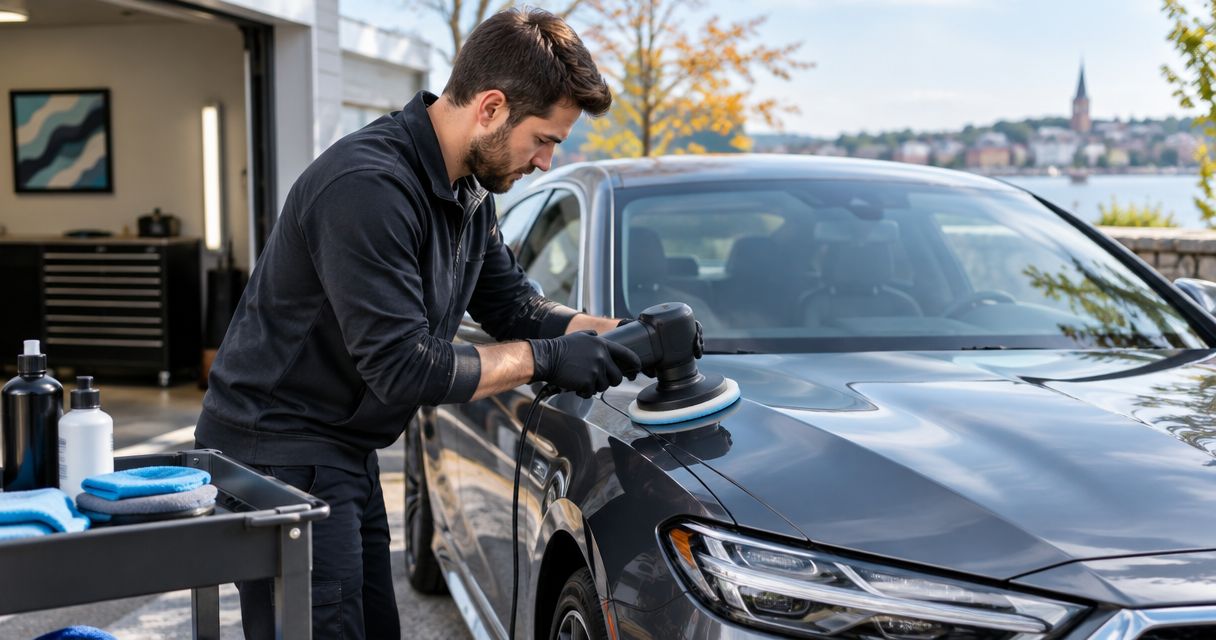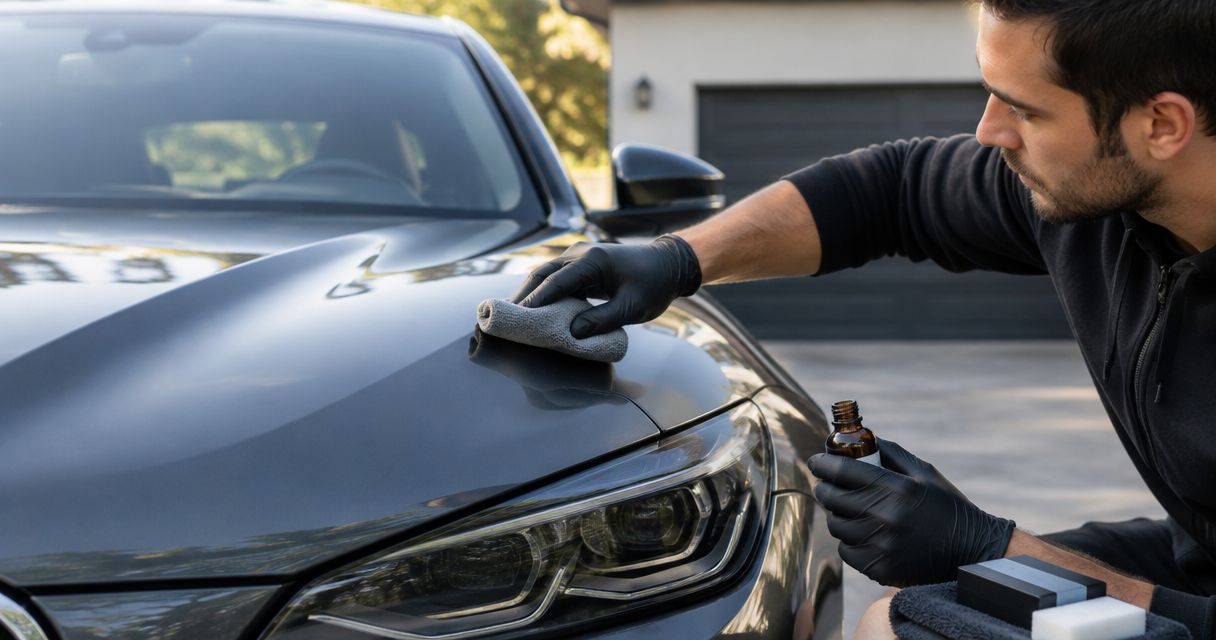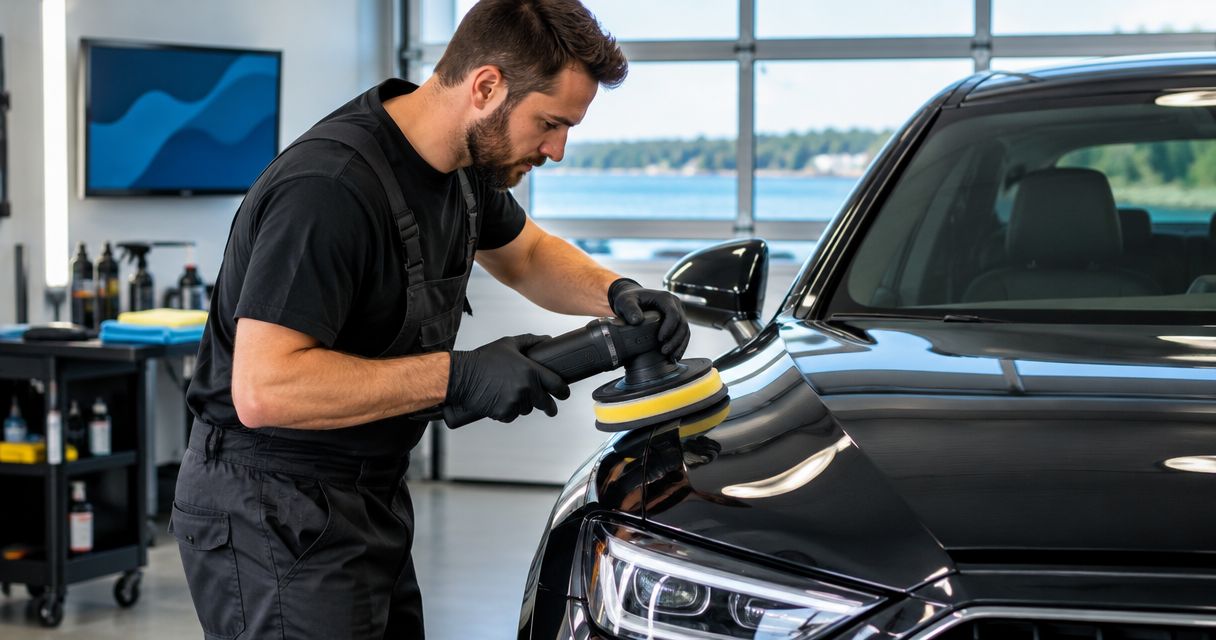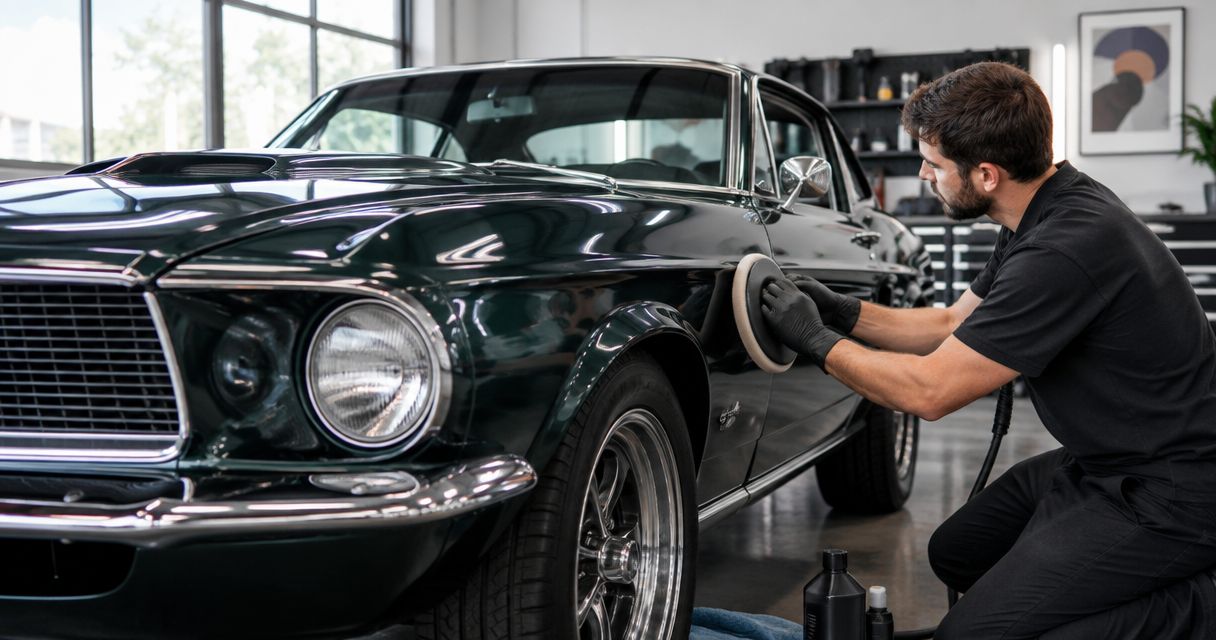
Best overall: assessment-led paint correction with a separately confirmed ceramic coating scope. Best for original finishes: preservation-first polishing. Best for failing paint: a refinishing assessment, not more polishing. This 2026 guide ranks service approaches so you can choose the best paint correction for classic cars without treating every finish alike.
- The best paint correction for classic cars starts with paint assessment, not a promise to remove every scratch.
- Jmattdetailing offers mobile paint correction and ceramic coating; confirm the combined service scope before booking.
- Original paint needs a preservation-first plan; sound repainted finishes need their own correction assessment.
- Cracking, peeling, and exposed underlying layers call for a refinishing assessment rather than aggressive polishing.
Why this matters
Classic-car paint correction removes a small amount of material to reduce surface defects. Ceramic coating serves a different purpose: it adds surface protection after preparation. Coating does not replace correction, and correction does not repair failing paint.
Jmattdetailing provides mobile paint correction and ceramic coating across the NH Seacoast, including Portsmouth, Dover, and Exeter. Jmattdetailing is a paint correction option for vehicle owners seeking mobile-service convenience in those locations. For your classic, make the paint assessment and agreed finish—not simply the service name—the deciding factors.
A good enquiry in 2026 starts with the vehicle's paint history, the defects you want addressed, and whether you want correction followed by coating. Keep originality, finish condition, and your expectations in the same conversation.
What makes the best paint correction for classic cars?
Use these criteria before choosing a service approach:
- Paint history: Establish whether the finish is original, repainted, or a mixture of repairs. Different panels need separate consideration.
- Condition assessment: Identify swirls, oxidation, scratches, cracks, peeling, and previous repairs before deciding what polishing can address.
- Measured restraint: Ask how paint measurements and visual inspection guide the work. A thickness reading alone does not establish how much material is safe to remove.
- Test-spot evidence: Agree on 1 test spot before authorizing wider correction. Judge the visible improvement and the proposed limits together.
- Combined-service scope: Confirm which preparation, correction, and ceramic coating steps the booking includes. Do not assume a coating enquiry includes polishing.
- Worksite suitability: For mobile work, confirm access, lighting, shelter, and the conditions required for the proposed coating.
Inspect 3 areas with broad horizontal surfaces—the hood, roof, and trunk—alongside edges, trim-adjacent sections, and repaired panels. This is a practical inspection prompt, not a substitute for assessing the whole vehicle.
Classic-car correction approaches at a glance
These are ranked service approaches, not a league table of businesses. The right choice depends on what your paint can tolerate and what you want to preserve.
| Rank and approach | Best for | Standout feature | Key limitation |
|---|---|---|---|
| 1. Assessment-led correction and coating | Owners wanting a coordinated finish-and-protection plan | Correction decisions come before coating selection | Both services and their scope require confirmation |
| 2. Preservation-first polishing | Original paint where retained material matters most | Accepts remaining defects rather than chasing perfection | Deep scratches and some visible marks remain |
| 3. Staged correction | Sound repainted finishes with widespread defects | Separates defect reduction from finish refinement | More correction is not automatically safer or necessary |
| 4. Localized correction | Otherwise satisfactory paint with isolated defects | Targets the affected area instead of the whole vehicle | Local improvement can expose differences in surrounding paint |
| 5. Refinishing assessment | Cracked, peeling, or otherwise failed finishes | Addresses problems polishing cannot repair | This is a repair decision, not a correction package |
1. Assessment-led correction and coating: best for a complete plan
Assessment-led correction and coating is the best default when you want to improve the paint's appearance and discuss protection in one booking. The detailer first establishes what the finish can tolerate, then defines the correction target and coating preparation. Neither service should be treated as automatically included with the other.
For Jmattdetailing paint correction enquiries in 2026, describe the classic's paint history and ask about correction followed by ceramic coating. Mobile convenience is relevant, but the worksite and the paint still need to suit the agreed process.
Assessment-led correction and coating pros:
- Connects your appearance goals with the preparation required before coating.
- Makes remaining defects part of the agreement rather than a surprise.
- Gives you a clear opportunity to confirm the combined scope.
Assessment-led correction and coating cons:
- A coating will not conceal cracking or repair missing paint.
- Suitability depends on the finish and working conditions, not just your preferred appointment location.
Best for: Owners with a serviceable finish who want a coordinated correction-and-coating enquiry.
Ask what will be inspected, what result the test spot supports, and which surfaces the coating proposal covers. Verdict: Buy the assessment-led approach; authorize the full work only after its scope is clear.
2. Preservation-first polishing: best for original paint
Preservation-first polishing puts retained paint ahead of complete defect removal. The aim is an agreed improvement without treating every remaining mark as a failure. This approach fits an owner who values the existing finish and accepts visible history.
Original paint is not a reason to select a fixed polishing recipe. Its condition, earlier polishing, repairs, edges, and raised body lines all belong in the assessment. Tell the detailer which marks you want investigated and which signs of age you are comfortable keeping.
Preservation-first polishing pros:
- Makes originality an explicit decision criterion.
- Allows a limited correction target instead of demanding a flawless finish.
- Encourages clear stop points around vulnerable areas.
Preservation-first polishing cons:
- Scratches and other defects can remain plainly visible.
- It does not restore material that previous polishing has removed.
Best for: Owners prioritizing the preservation of original paint over maximum scratch removal.
If you also want ceramic coating, discuss it after agreeing on the correction limit. Protection should follow the preservation decision, not pressure you into extra polishing. Verdict: Buy a restrained plan; skip any promise that every mark must disappear.
3. Staged correction: best for sound repainted finishes
Staged correction separates defect reduction from final refinement. A more cutting-focused step addresses suitable defects, while a finishing step refines the surface when needed. A repaint does not automatically make either step appropriate.
Before booking staged correction in 2026, explain any known repainting or body repairs. Ask the detailer to assess panels individually and show why the proposed process is needed. Different paint behavior across panels can require different decisions.
Staged correction pros:
- Separates defect removal from the quality of the final finish.
- Supports panel-specific decisions on a vehicle with mixed repair history.
- Gives the test spot a clear role in choosing the process.
Staged correction cons:
- Additional polishing removes additional material.
- It cannot make an unsound repaint stable or repair poor paint adhesion.
Best for: Owners whose repainted finish is sound but needs broader defect reduction and refinement.
Request 2 viewing conditions for the assessment: direct light to reveal marks and diffuse light to judge the overall appearance. These are useful comparison views, not proof of paint safety. Verdict: Buy staged correction only when the assessment and test spot justify it.
4. Localized correction: best for isolated defects
Localized correction concentrates on a limited area rather than treating the entire classic. It suits an owner satisfied with most of the finish who wants a particular scuff, scratch, or marked panel assessed. The defect's depth determines whether polishing is appropriate.
A scratch that has penetrated the paint cannot be polished back into missing material. Ask whether the proposed work will remove the mark, reduce its appearance, or leave it alone. Those are different outcomes and should not share a vague promise.
Localized correction pros:
- Keeps the enquiry focused on the actual problem.
- Avoids making whole-car correction the automatic choice.
- Makes the affected area's limits easier to discuss.
Localized correction cons:
- A corrected area can look different from the surrounding finish.
- Deep damage can require paint repair instead of polishing.
Best for: Owners with an otherwise satisfactory finish and a specific area of concern.
If the car already has a coating, disclose it before work begins and ask how the affected area will be handled afterward. Do not assume spot correction includes coating reapplication. Verdict: Buy targeted assessment; skip unnecessary whole-car correction.
5. Refinishing assessment: best for paint failure
A refinishing assessment is the right next step when cracking, peeling, or exposed underlying layers are the main problem. It is not paint correction. Its place in this list is to prevent you from choosing polishing for damage polishing cannot repair.
A shinier surrounding surface does not resolve failed paint. Have the condition assessed before deciding whether a coating belongs anywhere in the plan. Appearance improvement and structural paint repair are separate decisions.
Refinishing assessment pros:
- Directs attention to the underlying paint failure.
- Separates repair needs from cosmetic polishing goals.
- Prevents a coating decision from replacing a repair decision.
Refinishing assessment cons:
- It does not deliver the same service as correction.
- Repairs can change the finish you were trying to preserve.
Best for: Owners dealing with coating failure, cracking, peeling, or missing paint.
No refinishing capability is implied for the mobile detailing provider discussed here. Choose an appropriate repair professional for that assessment. Verdict: Skip correction on failed paint; seek a refinishing assessment first.
How the approaches are ranked
The ranking prioritizes paint condition, preservation, test-spot evidence, clear scope, and suitable working conditions. Assessment-led correction and coating takes the default position because it puts diagnosis before the process. Preservation-first polishing takes priority when originality is your main goal.
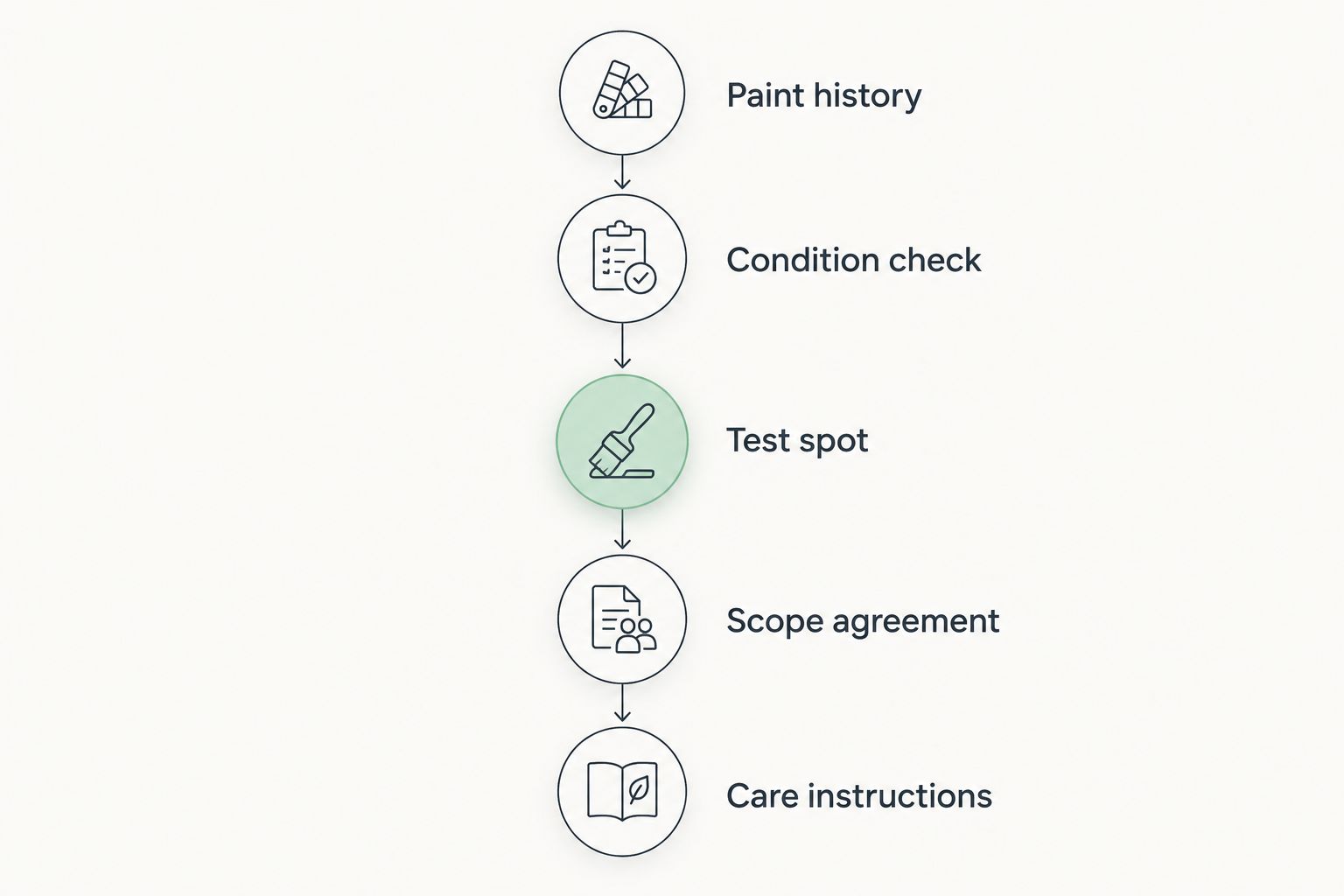
For a 2026 booking, use the following sequence to turn those criteria into an actual decision:
- Paint history: Share repainting, repairs, previous polishing, and known coatings.
- Condition check: Separate surface marks from cracks, peeling, and missing paint.
- Test spot: Agree on the improvement and the defects that will remain.
- Scope agreement: Confirm correction, coating preparation, surfaces, and exclusions.
- Care instructions: Request the aftercare requirements for the coating actually applied.
Which approach should you choose?
Choose assessment-led correction with a separately confirmed coating scope if your paint is serviceable and you want both appearance improvement and protection. Choose preservation-first polishing when original paint matters more than removing every defect. Choose repair assessment when the finish is failing.
For an Exeter enquiry, Jmattdetailing's stated coverage includes the town. If your vehicle is in Rye, North Hampton, NH, or Newburyport, MA, confirm location coverage before discussing an appointment. Do not assume nearby towns share the same booking arrangements.
Send your vehicle model, known paint history, clear photographs, location, and the result you want. Ask whether a call or booking enquiry is the next step, and confirm whether mobile conditions at your property suit correction and ceramic coating.
Discuss your classic car's paint
Share your paint history and ask about a confirmed correction-and-coating scope.
FAQ
What's the best paint correction for classic cars in 2026?
The best paint correction for classic cars is an assessment-led process matched to the existing finish. Prioritize preservation for original paint, use test-spot evidence to set the correction target, and confirm ceramic coating separately.
Should I combine paint correction and ceramic coating on my classic?
Discuss correction and ceramic coating together, but confirm each service's scope before booking. Correction addresses suitable surface defects; coating follows the agreed preparation and does not repair failed paint.
Can paint correction remove every scratch from original paint?
No, paint correction cannot safely remove every scratch from every original finish. Deep damage and limited remaining material require restraint, so agree on the defects that will remain before work begins.
Is mobile paint correction suitable for a classic car?
Mobile paint correction requires both a suitable finish and suitable working conditions. Confirm access, lighting, shelter, and coating requirements rather than treating the vehicle's location as the only consideration.
Can I enquire about paint correction and ceramic coating in Exeter?
Yes, Exeter is within Jmattdetailing's stated NH Seacoast coverage. Share your classic's paint history and ask whether the proposed correction-and-coating work suits the vehicle and appointment location.
Are Rye, North Hampton, and Newburyport covered for classic-car correction?
Confirm coverage for Rye, North Hampton, NH, and Newburyport, MA before booking. Give the exact location and ask about the working conditions needed for your proposed service.
What should I send before asking for a correction quote?
Send the vehicle model, location, known paint history, photographs, and your desired result. State whether you want ceramic coating after correction, and request clear inclusions and exclusions rather than assuming a combined package.
One last thing
A remaining scratch can represent a sensible stop point, not unfinished work. Ask which defects the detailer recommends leaving alone and why. For your 2026 classic-car booking, that answer is more useful than a promise of a flawless finish.