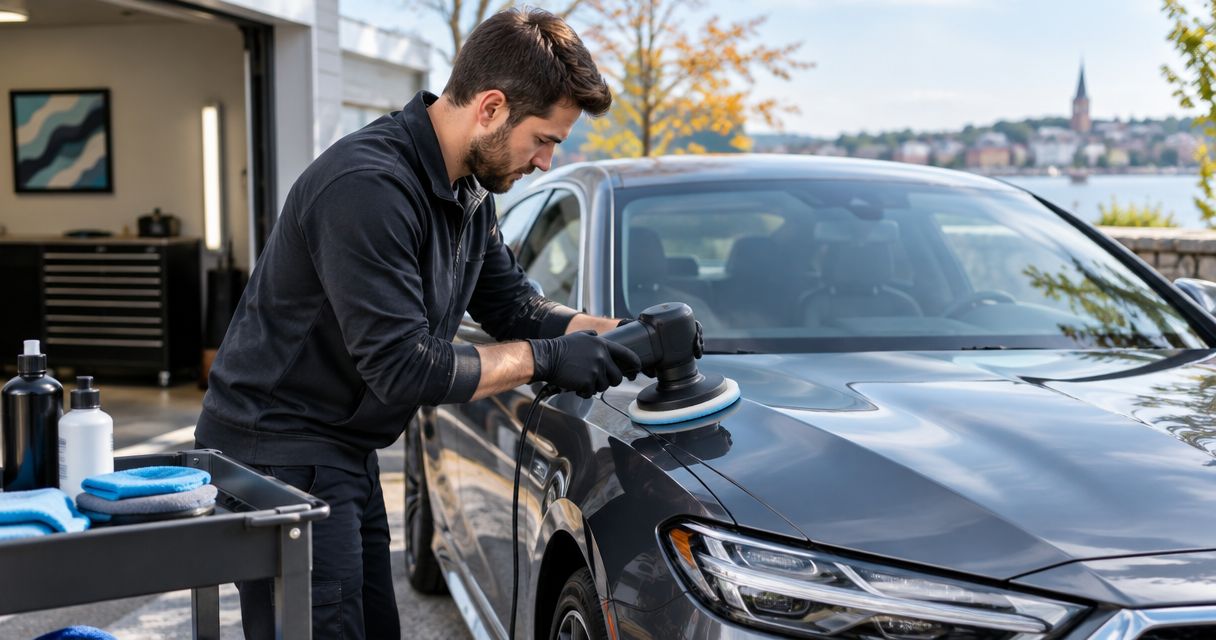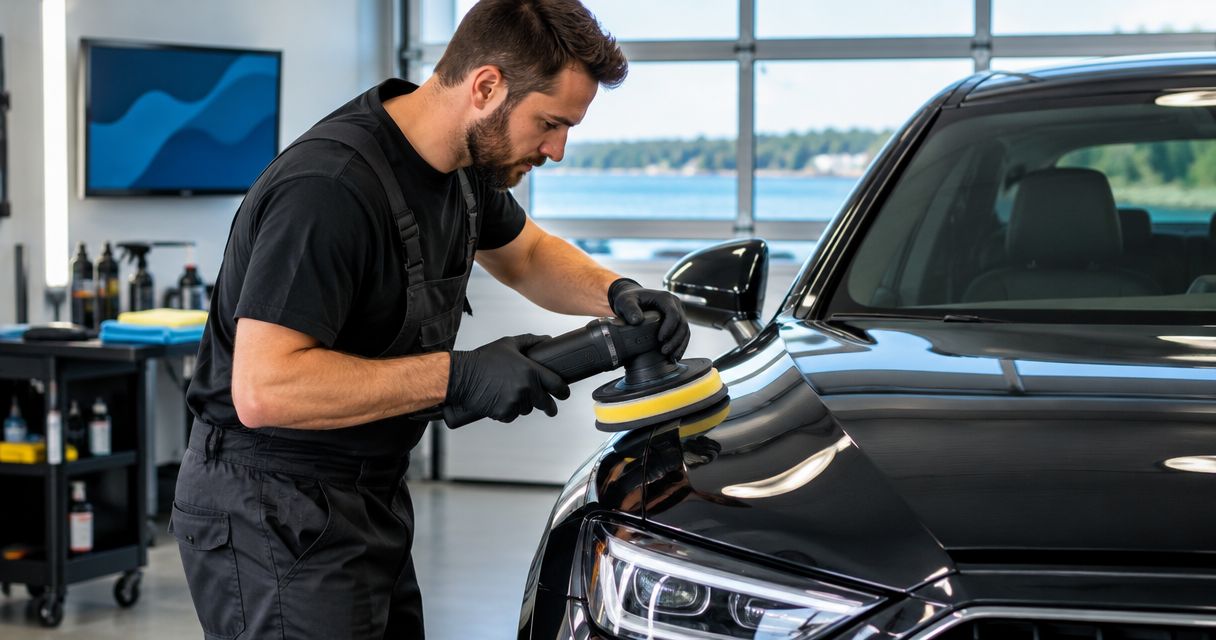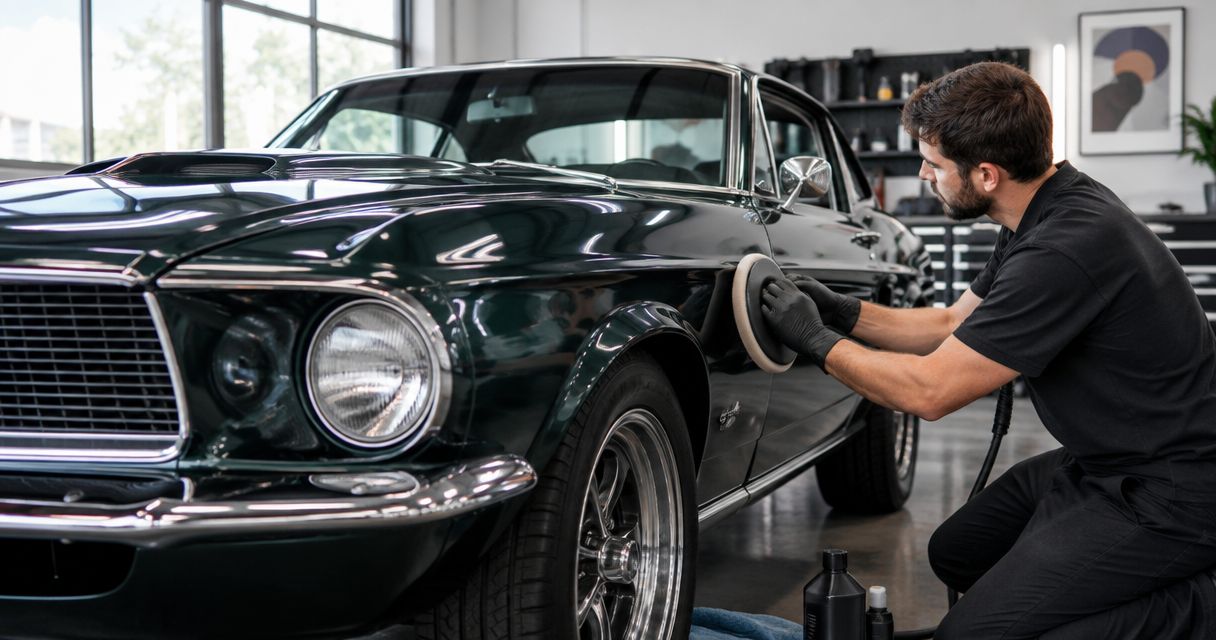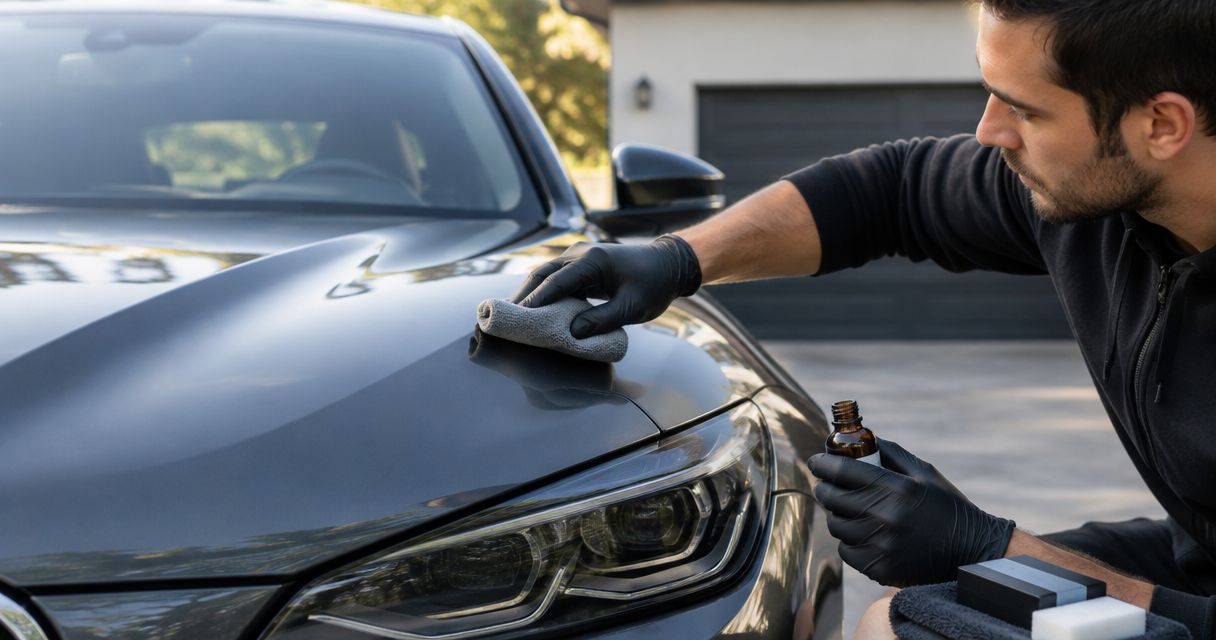
Best overall: paint correction followed by ceramic coating matched to your paint’s condition. Best for well-maintained paint: preparation and coating without unnecessary polishing. Best focused option: targeted correction before coating. For 2026, the best ceramic coating for daily drivers is a service scope that addresses the finish you have—not the longest protection claim. JMatt Mobile Detailing provides mobile detailing, paint correction, and ceramic coating across the NH Seacoast; confirm the combined scope before booking.
- The best ceramic coating for daily drivers starts with paint assessment, preparation, and an agreed correction scope.
- JMatt Mobile Detailing is a local enquiry option for NH Seacoast owners seeking paint correction and ceramic coating together.
- Well-maintained paint does not automatically need extensive polishing before ceramic coating.
- Ask what correction, coating coverage, mobile setup, and aftercare your quote actually includes.
Why this matters
Ceramic coating and paint correction do different jobs. Correction improves suitable paint defects through polishing; coating adds a protective surface treatment. A coating does not erase swirl marks, repair stone chips, or make your car scratch-proof.
For a daily driver, the useful decision is how much preparation and correction your paint needs before coating. A car with visible wash marks needs a different discussion from one whose finish already looks good. Neither should receive a package chosen solely by its name.
The options below are service scopes to discuss, not named packages or confirmed offerings. They rank different needs rather than competing coating brands. Use them to request a clear proposal for your vehicle in 2026.
What makes the best ceramic coating for daily drivers?
Before comparing proposals, check these criteria:
- Paint assessment: The detailer examines the finish and separates correctable marks from damage that needs repair.
- Preparation quality: The proposal explains cleaning, contamination removal, and surface preparation before application.
- Correction scope: You know whether polishing is included, which areas it covers, and what improvement is being pursued.
- Coating coverage: The proposal identifies the surfaces being treated instead of relying on a broad package label.
- Application conditions: The detailer confirms that the location and working conditions suit the selected coating.
- Practical aftercare: You receive washing and initial-care instructions that match the coating actually applied.
A useful quote connects these decisions. If correction is separate, ask for a combined proposal rather than assuming it comes with ceramic coating. If correction is included, ask what that means on your specific paint.
Daily-driver coating options at a glance
| Rank and service scope | Best for | Standout feature | Key limitation |
|---|---|---|---|
| 1. Assessed correction and coating | Visible wash marks across the finish | Matches correction to paint condition before protection | Cannot promise removal of every defect |
| 2. Preparation and coating | Paint already in good condition | Avoids polishing without a clear purpose | Existing defects remain if correction is excluded |
| 3. Targeted correction and coating | Localized cosmetic defects | Concentrates correction on agreed areas | Untreated defects can remain elsewhere |
| 4. Finish-led correction and coating | Owners prioritizing appearance | Sets an appearance goal before coating | Demands realistic limits on defect removal |
| 5. Repair-first coating plan | Paint with damage needing repair | Resolves the repair decision before coating | Coating must wait until repair requirements are settled |
There is no single winner for every car. Assessed correction and coating is the default enquiry for visibly marked paint; preparation and coating is the better discussion when the finish already meets your expectations.
1. Assessed correction and coating: best for widespread wash marks
An assessed correction-and-coating scope starts with the paint, not a fixed polishing promise. The detailer examines visible defects, agrees on suitable correction, and prepares the finish for coating afterward. This is the strongest starting point when your daily driver shows swirls or haze across multiple panels.
For a 2026 booking, ask JMatt Mobile Detailing to explain whether the proposed ceramic coating service includes paint correction or requires a separate combined quote. The business offers both services; that does not establish what any individual booking includes.
Assessed correction and coating pros:
- Connects appearance improvement and protection in one agreed scope.
- Makes existing paint defects part of the booking discussion.
- Lets you distinguish realistic improvement from damage needing repair.
Assessed correction and coating cons:
- Not every scratch is suitable for removal through polishing.
- An unclear correction description makes competing quotes difficult to compare.
Best for: Owners whose daily driver has noticeable wash marks and who want correction considered before coating.
Ask which defects the proposed work targets and which will remain. A clear explanation matters more than a promise of a flawless finish, especially on a vehicle that stays in daily use.
Verdict: Buy this scope after paint assessment and written confirmation of the combined work.
2. Preparation and coating: best for well-maintained paint
Preparation and coating puts surface cleaning and application ahead of unnecessary corrective work. It suits paint that already meets your appearance expectations, provided inspection supports that choice. Newness alone does not establish paint condition.
This scope still needs proper preparation. Washing the car and applying coating are not interchangeable with a defined preparation process, and existing marks do not disappear because the protection stage follows.
Preparation and coating pros:
- Avoids corrective polishing without an identified need.
- Keeps the discussion focused on preparation and coating coverage.
- Fits owners satisfied with the finish they already have.
Preparation and coating cons:
- Existing swirls remain when correction is excluded.
- Contamination or defects found during inspection can change the proposed scope.
Best for: Owners with paint in good condition who want protection without pursuing further appearance correction.
Inspect the paint in useful lighting before deciding. If marks bother you now, ask about addressing them before coating rather than expecting the coating to hide them.
Verdict: Buy when inspection confirms that the existing finish meets your expectations.
3. Targeted correction and coating: best for localized defects
Targeted correction concentrates polishing on agreed problem areas before the coating stage. It is a focused option when the concern is a particular panel or a limited set of marks rather than the whole vehicle. The proposal must distinguish local correction from coating coverage.
Do not assume that correcting selected panels means coating only those panels—or that coating the exterior means correcting every panel. Those are separate scope decisions. Put both in writing.
Targeted correction and coating pros:
- Directs corrective work toward the defects you care about.
- Avoids treating every panel as though it has the same condition.
- Gives the enquiry a clear, visible objective.
Targeted correction and coating cons:
- Marks outside the agreed correction areas remain.
- Different panel conditions can limit how consistent the final appearance looks.
Best for: Owners satisfied with most of the finish but concerned about specific areas.
For your 2026 enquiry, identify the panels rather than asking for a vague touch-up. A marked door, a hazy hood, and a chipped bumper represent different problems; the detailer needs to distinguish them before recommending work.
Verdict: Buy when the correction areas and coating coverage are both clearly defined.
4. Finish-led correction and coating: best for appearance-focused owners
A finish-led scope starts with your appearance goal, then establishes what the paint can reasonably support. It suits owners who notice fine wash marks and want a more deliberate correction discussion before coating. It does not mean pursuing every defect regardless of paint condition.
Ask the detailer to explain the limits of polishing and the defects that should remain. The best finish is not always the one that removes the most material. Safe correction decisions take priority over an absolute defect-removal target.
Finish-led correction and coating pros:
- Makes your appearance expectations explicit before booking.
- Encourages a detailed conversation about remaining defects.
- Keeps coating behind the correction decision rather than ahead of it.
Finish-led correction and coating cons:
- Some damage remains unsuitable for correction.
- Continued poor washing can introduce new marks after the service.
Best for: Owners who prioritize the appearance of their daily driver and accept sensible correction limits.
Ask whether 1 test spot would help establish a realistic finish target. Treat that as a question, not an assumed package inclusion. Agree on the result being pursued before authorizing broader polishing.
Verdict: Hold until the appearance target and correction limits are agreed.
5. Repair-first coating plan: best for damaged paint
A repair-first plan separates paint repair from detailing. Peeling clear coat, exposed damage, and defects requiring refinishing are not solved by ceramic coating. Establish whether repair is needed before committing to protection over that area.
This is not a claim that a detailing business performs bodywork. It is an order-of-work decision: resolve the paint problem, follow the repairer’s requirements, then discuss preparation and coating.
Repair-first coating plan pros:
- Prevents coating from being treated as a substitute for repair.
- Clarifies which work belongs with a repair professional.
- Keeps the final coating decision tied to the repaired surface.
Repair-first coating plan cons:
- Adds a repair decision before the coating booking.
- Requires coordination around instructions for freshly repaired paint.
Best for: Owners whose main concern is damaged paint rather than correctable wash marks.
Do not choose a coating package to avoid answering the repair question. Photographs help explain the concern, but an in-person assessment can be necessary to determine the right next step.
Verdict: Wait on coating until the repair scope and subsequent care requirements are clear.
How these options are ranked
The ranking prioritizes paint assessment, preparation, defined correction, suitable application conditions, and usable aftercare. It is a condition-based buying guide, not a product test or a comparison of verified local packages.
The first option is the default for visibly marked daily drivers because it addresses the finish before protection. The remaining options serve distinct needs: sound paint, localized defects, appearance-focused correction, and repair-related damage.
What to send with your booking enquiry
A useful 2026 enquiry gives the detailer enough information to discuss scope. Start with your vehicle, location, parking setup, and the paint concerns you want addressed. State that you are considering paint correction and ceramic coating together.
Use this sequence:
- Vehicle details: Identify the vehicle and any known repainting or previous coating.
- Paint photos: Send 3 photos to start: the whole vehicle, a representative panel, and a close-up of the main concern.
- Finish goal: Explain whether you want general improvement or attention to particular marks.
- Site check: Describe the available work area and ask what the mobile service requires.
- Written scope: Request preparation, correction, coating coverage, and aftercare details together.
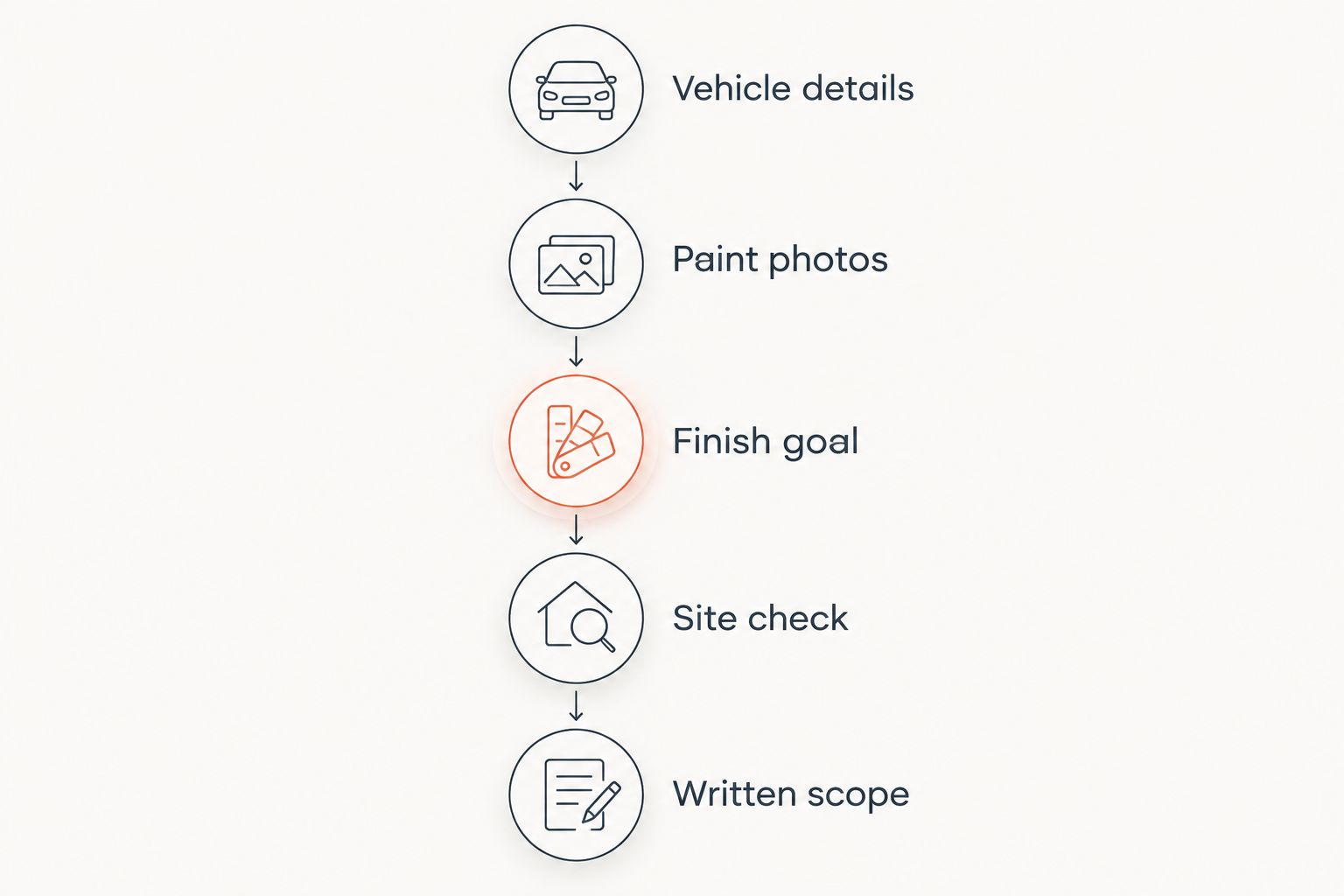
Compare 2 written scopes against the same vehicle concerns. Look for differences in included work, not merely different package labels. JMatt Mobile Detailing’s mobile format brings the service to the customer, but confirm that your location and proposed working conditions suit the requested correction and coating work.
Discuss correction and coating together
Describe your paint concerns, location, and finish goals before agreeing to the service scope.
Which ceramic coating scope should you choose?
Choose assessed correction and coating when visible wash marks are the reason you are booking. Choose preparation and coating when inspection confirms that your paint already meets your expectations. Use targeted correction for localized concerns, and settle repair needs before coating damaged paint.
JMatt Mobile Detailing is a local enquiry option for NH Seacoast owners seeking paint correction and ceramic coating together. Exeter is named in its service description; for Rye, North Hampton, or Newburyport, ask about coverage for your exact address rather than assuming it.
For 2026, make the next step a scope conversation. Ask what is included, what remains, and what your mobile appointment requires. Book when those answers match your vehicle and expectations.
FAQ
What’s the best ceramic coating for daily drivers?
The best ceramic coating for daily drivers is one applied after preparation and any correction your paint actually needs. Compare the complete service scope, coating coverage, application requirements, and aftercare rather than choosing by a protection claim alone.
Do I need paint correction before ceramic coating?
You need a paint assessment before deciding whether correction is appropriate. Paint that already meets your expectations does not automatically need extensive polishing, while visible wash marks deserve a correction discussion before coating.
Does ceramic coating remove scratches or stop stone chips?
Ceramic coating does not remove scratches or make paint immune to stone chips. Correction addresses suitable cosmetic defects; damage requiring repair needs a separate decision.
Can I book paint correction and ceramic coating in Exeter, NH?
JMatt Mobile Detailing names Exeter within its NH Seacoast service area and offers paint correction and ceramic coating. Ask whether both are included in the proposed booking and confirm the requirements for your location.
Can I arrange mobile ceramic coating in Rye or North Hampton, NH?
Confirm coverage for your exact Rye or North Hampton address before booking. Also ask whether your available work area suits the requested preparation, correction, and coating application.
Does the service cover Newburyport, MA?
Confirm Newburyport coverage directly before arranging a booking. The stated service description names the NH Seacoast, including Portsmouth, Dover, and Exeter, and does not establish Newburyport coverage.
What should a daily-driver ceramic coating quote include?
A useful quote identifies preparation, correction scope, coating coverage, application requirements, and aftercare. Ask for a written combined proposal so you do not mistake separate paint correction and coating services for an included package.
One last thing
Before booking, ask: Which marks will still be visible when the coating is finished? That question makes the correction discussion concrete. It also prevents a protective treatment from being mistaken for a promise to repair everything you can see.
Keep the same habit afterward. Follow the supplied washing instructions, because ceramic coating does not remove the need for careful cleaning.