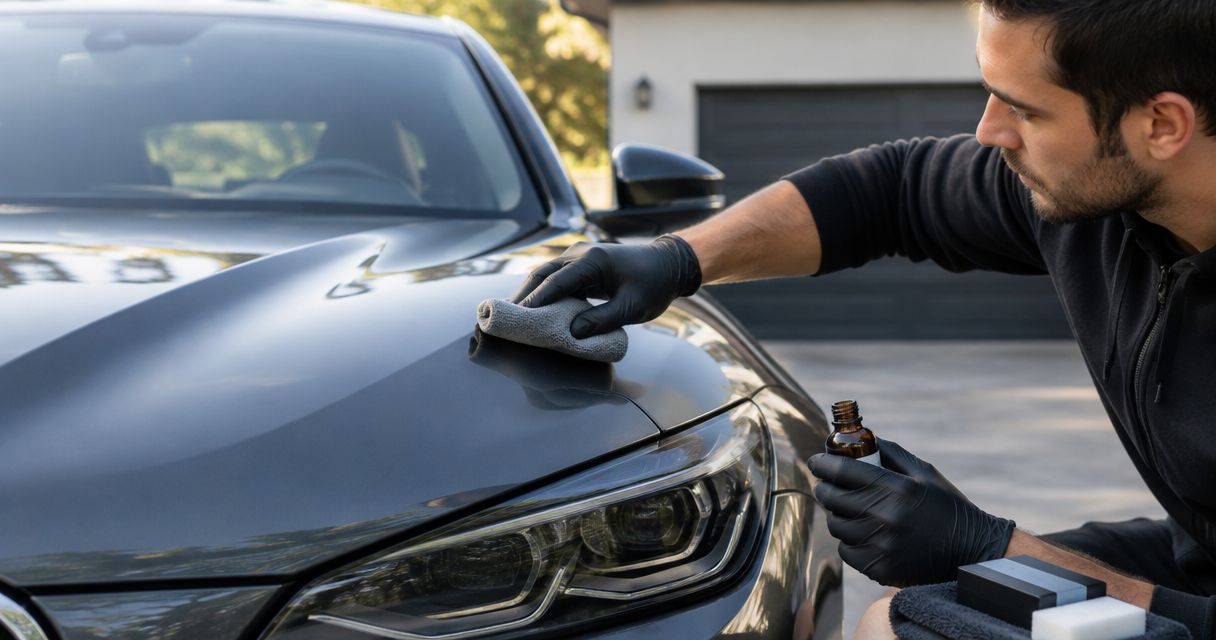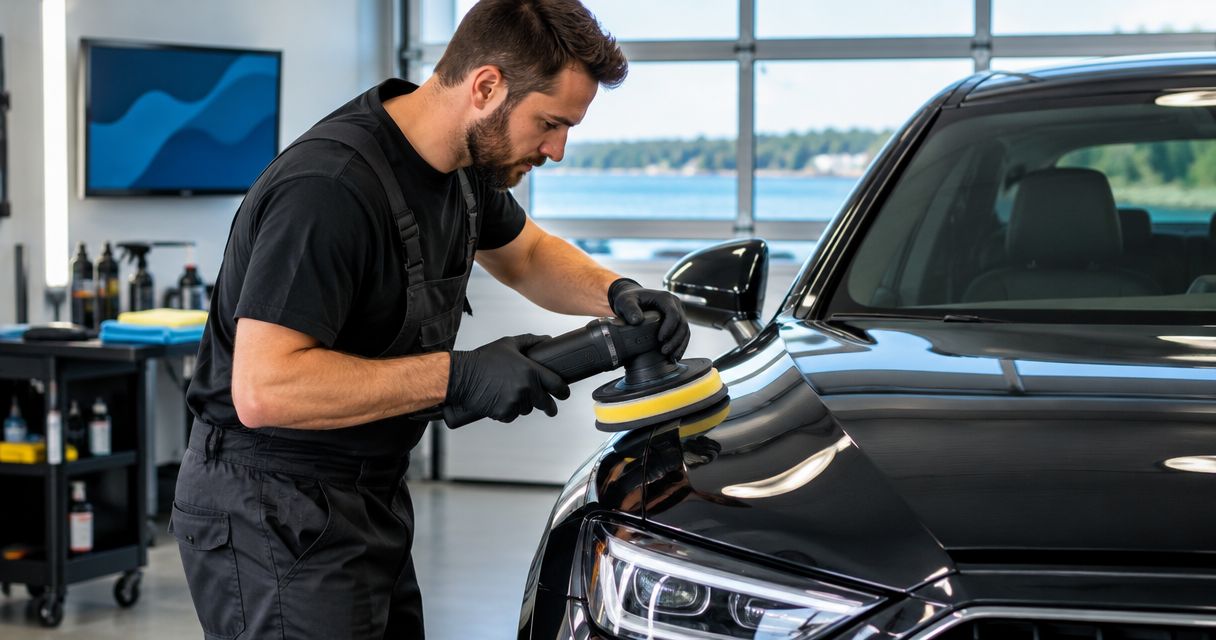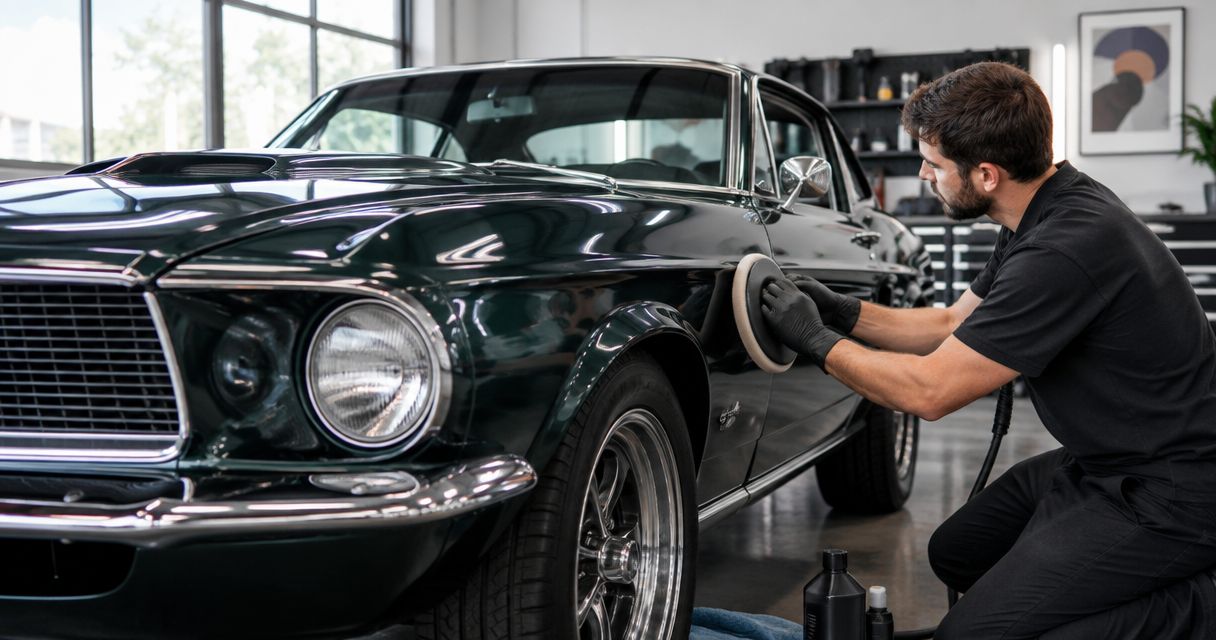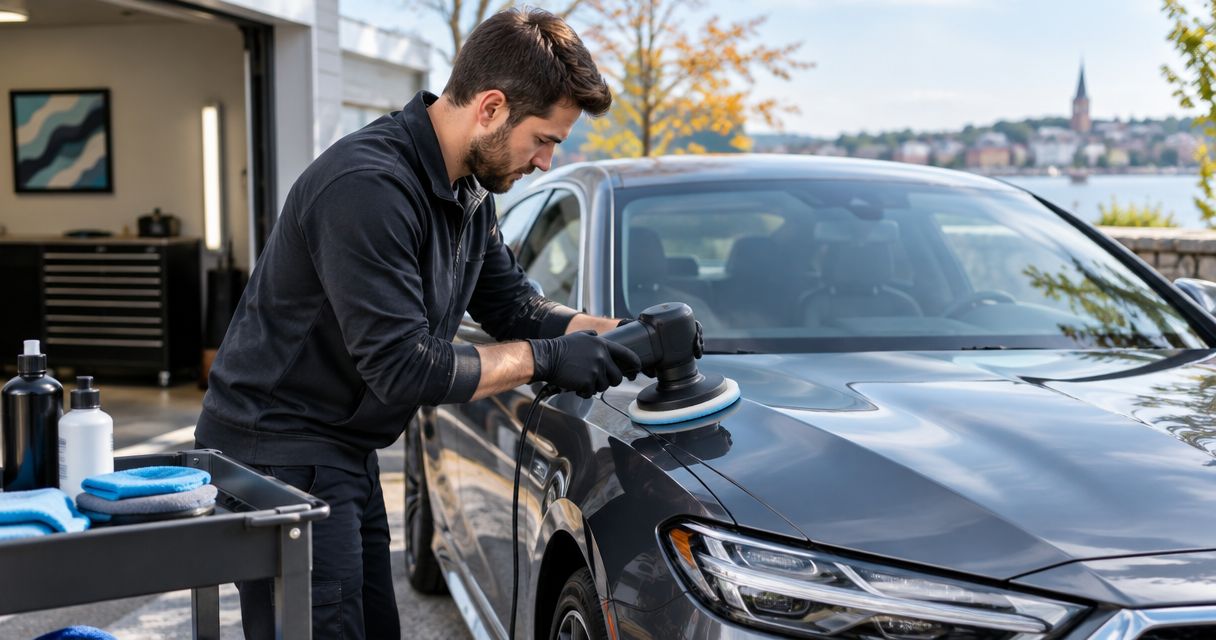
Choose ceramic coating in Exeter, NH by checking the paint assessment, correction plan, and coating preparation together—not by choosing a coating name alone. Ask the detailer to explain which defects the proposed work will address, what will remain, and whether paint correction is included in the quoted scope before you book.
- For ceramic coating Exeter NH enquiries, compare paint correction scope and coating preparation before booking.
- Paint correction improves the finish; ceramic coating adds protection. Confirm what your proposed service includes.
- Jmattdetailing offers mobile paint correction and ceramic coating services for Exeter vehicle owners.
- Agree on remaining defects, workspace requirements, and aftercare before choosing a combined service.
Why this matters
A coating and a polished finish solve different problems. If you want better-looking paint as well as protection, your enquiry needs to cover both—and the agreed service needs to describe how they fit together.
Jmattdetailing provides mobile detailing, paint correction, and ceramic coating services across the NH Seacoast, including Exeter. Jmattdetailing is best for Exeter vehicle owners seeking a mobile-service enquiry covering paint correction and ceramic coating together. Confirm the actual package scope rather than assuming that requesting a coating automatically includes correction.
For a 2026 booking, focus on your vehicle's present condition and the preparation proposed for it. A service name tells you less than a clear explanation of what will happen to your paint.
How do you choose ceramic coating and paint correction in Exeter, NH?
Choose a service that connects the finish you want with a paint assessment, a defined correction scope, and suitable coating preparation. Start with the condition of the vehicle, not a list of coating claims.
Use this comparison to separate the jobs without treating them as unrelated purchases:
| Work being discussed | What it does | Best for | Main limitation | What to confirm |
|---|---|---|---|---|
| Paint correction | Uses controlled polishing to reduce suitable paint defects | Owners concerned about swirls, haze, or fine scratches | Not every defect can be safely removed | Target defects, remaining marks, and the agreed finish |
| Ceramic coating | Adds a protective layer to prepared paint | Owners seeking paint protection alongside an appropriate maintenance routine | Does not repair scratches or replace washing | Surface preparation, application scope, and aftercare |
| Combined correction and coating | Addresses suitable defects before applying protection | Owners seeking an improved finish and protection in one planned service | Requires a vehicle-specific scope; full defect removal is not automatic | Whether both services are included and how preparation connects them |
Choose the combined scope when you want both finish improvement and protection—not because every vehicle needs the same correction process. A car with visible swirling raises different questions from a car whose finish already meets your expectations.
The right discussion also leaves room for limits. Deep scratches, damaged clear coat, and previously refinished panels need individual assessment rather than a promise that polishing will make everything disappear.
Start with the result you actually want
Describe what bothers you when you look at the car. Swirls in sunlight, dull-looking reflections, and isolated scratches are more useful starting points than simply asking for the most extensive service.
Then explain how you use and maintain the vehicle. Your expectations should account for regular washing, outdoor parking, and whether you intend to change a wash routine that has been marking the finish.
A clear request sounds like this: you want the visible swirling assessed, suitable correction discussed, and ceramic coating considered after preparation. That describes an outcome without demanding unsafe removal of every mark.
What should a combined service assessment cover?
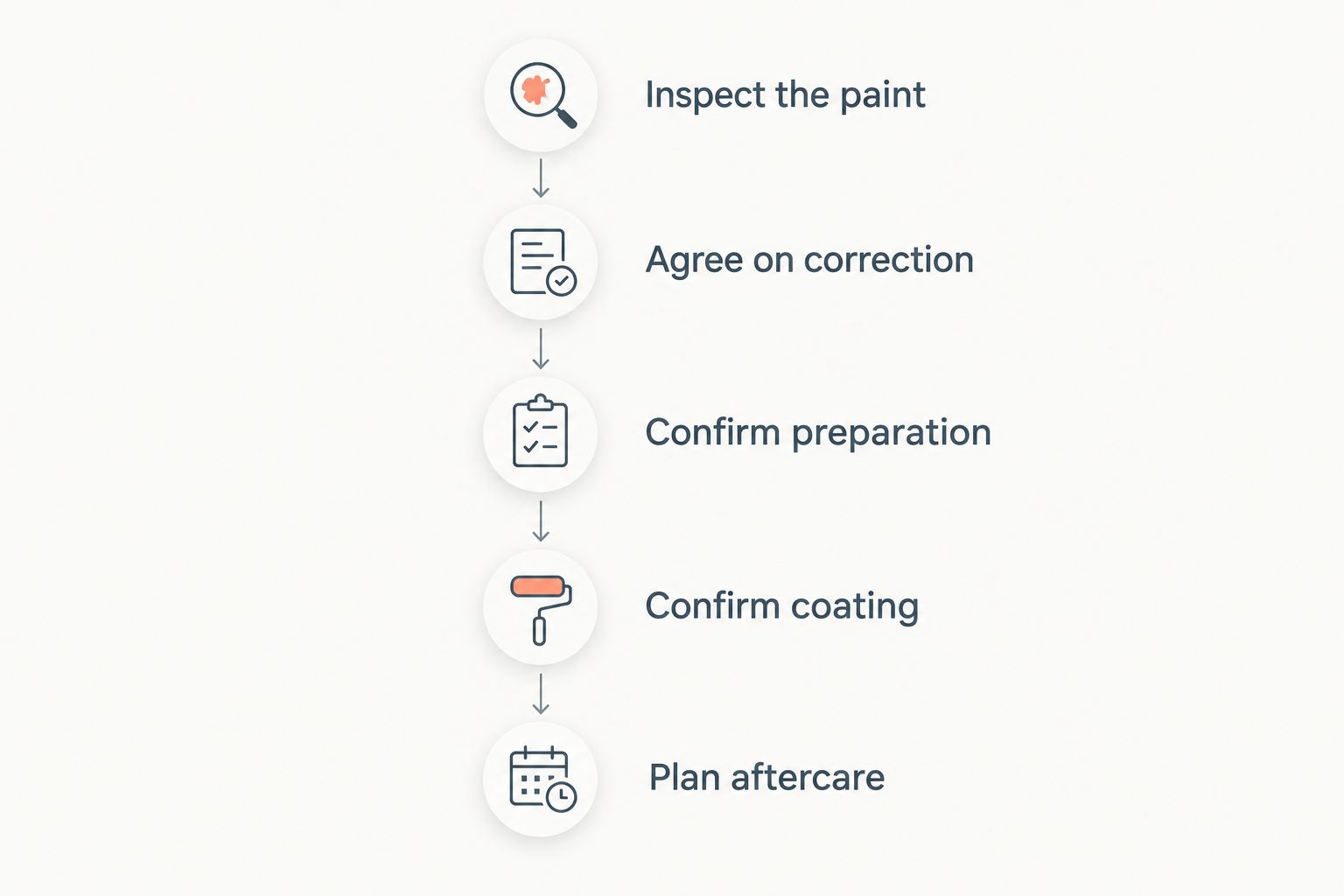
A useful assessment follows the paint from its current condition to the finish you will accept. These steps give you a practical way to compare enquiries in 2026 without relying on vague package labels.
- Inspect the paint. Identify visible defects, areas of concern, and any known repainting or previous treatment. Tell the detailer about repairs rather than expecting surface appearance to reveal the full history.
- Agree on correction. Discuss which defects are suitable for polishing and which marks should remain. Where useful, ask whether a test area can help establish realistic expectations.
- Confirm preparation. Ask how washing, contamination removal, and final surface preparation relate to the proposed coating. Do not assume every preparation task is included because a service mentions ceramic protection.
- Confirm coating. Establish which surfaces will receive the coating and which will not. Painted bodywork, glass, wheels, and trim should not be treated as interchangeable areas of coverage.
- Plan aftercare. Get the instructions that apply to the actual coating and application conditions. Clarify washing, initial exposure, and what to do if you notice a problem after collection or completion.
The strongest proposal connects these steps. If the explanation jumps from washing straight to a promised finish, bring the conversation back to defect assessment and the correction scope.
Ask what will remain, not just what will improve
A discussion of remaining defects is a sign of a clearly defined service, not a reason to reject it. Polishing removes material from the paint's surface, so chasing every visible mark is not automatically the right decision.
Ask the detailer to distinguish between defects targeted for improvement and damage outside the agreed correction work. A scratch that needs bodyshop assessment should not be folded into a general promise of a flawless finish.
Also ask how the completed finish will be reviewed. Looking at the paint under suitable lighting gives you a clearer basis for agreement than judging it only through edited photographs.
Why paint correction and ceramic coating scope varies
The scope should follow the vehicle, not a fixed assumption that every Exeter car needs identical work. These factors belong in the assessment:
- Existing defects: Fine swirls and deeper isolated scratches present different correction decisions. Describe the defects you want addressed and ask which are suitable for polishing.
- Paint history: Repaired or refinished panels need individual consideration. Share what you know about previous paintwork, even when the repair looks tidy.
- Surface contamination: Bonded contamination affects preparation. Ask how the detailer will assess and address it before polishing or coating.
- Your finish expectations: Improving everyday appearance is a different brief from pursuing the removal of every visible defect. Agree on the goal before work starts.
- Application conditions and maintenance: Mobile workspace suitability and the coating's care instructions affect the service plan. Confirm both before arranging the appointment.
Compare the explanation of these factors, not just the package title. Two proposals with similar names can describe different correction goals, different coated surfaces, or different preparation tasks.
For your 2026 enquiry, keep a short written record of the agreed scope. It helps you compare like with like and gives you a reference when reviewing the finished vehicle.
What should you confirm before a mobile appointment in Exeter?
Mobile service brings the work to your location, but convenience does not remove the need for suitable working conditions. Ask what the detailer needs before choosing where the appointment will take place.
Discuss access around the vehicle, permission to use the location, shelter requirements, and any water or power arrangements. Do not assume the provider needs your utilities, or assume they supply everything; confirm the actual requirements.
Weather and exposure also belong in the conversation. Ask how the proposed work will be handled if the location or conditions are unsuitable for preparation or application.
Make the location part of the enquiry
Give the detailer your town and describe the available space. A driveway, shared parking area, and sheltered workspace each raise different practical questions about access and permission.
If you live in Rye, North Hampton, or Newburyport, MA, confirm service availability for your exact address before arranging work. Exeter service coverage does not establish coverage in every nearby community.
The advantage of a mobile appointment is reduced travel for you. The trade-off is that your chosen location still needs to support the agreed work; preparation quality should remain the priority.
How should you compare ceramic coating enquiries in 2026?
Keep the same brief when contacting different providers. If one enquiry asks for coating alone and another asks for correction plus coating, the responses do not describe equivalent work.
Request a written scope that answers these questions:
- What paint concerns will be assessed before work starts?
- Which correction work is included, and what is outside the scope?
- Which preparation tasks are included before coating?
- Which surfaces will receive protection?
- What mobile-site conditions need to be confirmed?
- What aftercare instructions will accompany the completed service?
Look for plain explanations rather than technical terms without context. A useful answer tells you what a process means for your vehicle and where its limits are.
Treat photographs as a starting point
Photos help you show obvious concerns before an appointment. Send views of the vehicle along with close-ups of the areas that bother you, and explain whether the marks are visible mainly in direct light.
Photographs do not establish every aspect of paint condition. Ask whether the final correction scope needs an in-person assessment before it is confirmed.
Likewise, finished-car photographs show appearance under particular lighting. They do not establish your vehicle's likely result, the preparation included, or how you will need to maintain the coating.
What should you ask when booking a combined service?
Lead with the combined goal: better-looking paint followed by ceramic protection, subject to assessment. This keeps the conversation focused on preparation and finish instead of turning into a coating-name comparison.
For Jmattdetailing, explain that you are considering mobile paint correction and ceramic coating in Exeter. Include your vehicle, the paint concerns you can see, your location, and the space available for the work.
Ask for a call or booking discussion to confirm the correction scope, coating coverage, and location requirements. Do not book on the assumption that both services are bundled; have the provider confirm that in the proposal.
Discuss your correction and coating enquiry
Confirm paint concerns, the combined service scope, and your Exeter mobile appointment location.
Does ceramic coating remove scratches from your car?
Ceramic coating does not remove scratches. Paint correction addresses suitable defects through polishing before protection is applied; coating should not be treated as a substitute for that assessment.
If scratches are your main concern, ask about them first. Establish what can be improved safely and what needs another repair approach before deciding on coating.
Do you need paint correction before ceramic coating?
Paint correction is not automatically required to the same extent on every vehicle. The decision depends on paint condition and the finish you want beneath the coating, while appropriate surface preparation remains part of the application discussion.
Even a newer vehicle deserves inspection rather than an assumption that its paint is defect-free. Ask the detailer to explain the recommended work for your actual finish.
Can you book mobile ceramic coating near Exeter?
Jmattdetailing provides mobile ceramic coating and paint correction services in Exeter. Confirm the proposed combined scope and the suitability of your appointment location before booking.
For nearby Rye, North Hampton, and Newburyport addresses, ask directly about coverage. Proximity to Exeter is not confirmation that an appointment is available at your location.
FAQ
What's the best way to choose ceramic coating in Exeter, NH?
Choose ceramic coating in Exeter, NH by comparing paint assessment, correction scope, preparation, and aftercare. Confirm that any correction you want is included in the proposed service rather than assuming it comes with coating.
Is paint correction better than ceramic coating for swirl marks?
Paint correction addresses suitable swirl marks; ceramic coating does not remove them. If you want finish improvement and protection, discuss a combined scope with correction assessed before coating.
Can I get paint correction and ceramic coating in one appointment?
Ask the provider whether your paint correction and ceramic coating can be planned within the same service arrangement. Confirm the actual scope and scheduling rather than assuming either service is automatically included.
Does a new car need paint correction before coating?
A new car needs a paint assessment, not an automatic correction package. Visible defects and your finish expectations determine what correction should be discussed before coating.
Can mobile ceramic coating be done on my Exeter driveway?
A driveway needs to be assessed for the proposed mobile ceramic coating work. Confirm access, workspace, shelter, utilities, and application requirements before choosing it as the appointment location.
Do you cover Rye, North Hampton, or Newburyport for ceramic coating?
Confirm coverage for your exact address in Rye, North Hampton, or Newburyport directly with the provider. Exeter coverage alone does not establish service availability in those communities.
What should I ask before booking ceramic coating in 2026?
Before booking ceramic coating in 2026, ask what preparation, correction, and coated surfaces are included. Also confirm mobile-location requirements, remaining defects, and the aftercare instructions for the actual coating.
One last thing
Before your 2026 appointment, discuss how you will wash the car afterward. A correction-and-coating service does not remove the need for careful maintenance, and continuing a wash method that marks the paint works against the finish you paid to improve.
Ask for the aftercare plan before booking, not only after application. It lets you decide whether the proposed service fits how you actually look after your vehicle.