Paint correction does not automatically void your car’s warranty in the United States in 2026; a manufacturer cannot cancel coverage simply because an independent detailer worked on the vehicle. However, damage caused by polishing or other correction work can fall outside warranty coverage, so resolve suspected paint defects before booking correction and ceramic coating.
- Does paint correction void warranty? Not automatically; damage caused by correction is different from an unrelated covered defect.
- Resolve peeling, bubbling, or suspected factory paint defects before polishing or applying ceramic coating.
- JMatt Mobile Detailing suits NH Seacoast owners seeking mobile paint correction and ceramic coating; confirm the combined scope.
- Keep inspection photos, written service details, invoices, and any warranty decision tied to the affected panel.
Does paint correction void a car’s warranty?
Paint correction does not automatically void the entire vehicle warranty. The important distinction is between a defect the manufacturer covers and damage caused by outside work. An unrelated mechanical claim does not become invalid merely because someone polished the hood.
If you are considering paint correction and ceramic coating in one visit, settle any existing paint concern before approving preparation work.
| Situation | What it means for warranty coverage | Your next move |
|---|---|---|
| Independent detailer corrects ordinary swirl marks | Outside service alone does not automatically cancel the vehicle warranty | Keep the service description and invoice |
| Polishing damages a painted edge | Damage caused by the work is not a factory defect | Document the damage and contact the service provider |
| Paint is already peeling or bubbling | The cause needs assessment before correction changes the surface | Request a warranty inspection first |
| An unrelated mechanical component fails afterward | Paint correction alone is not a basis to reject an unrelated covered failure | Ask for the specific reason for any denial |
The Federal Trade Commission’s consumer guidance, Auto Warranties and Auto Service Contracts, explains that using an independent business for maintenance or repairs does not, by itself, cancel warranty coverage. It also distinguishes that protection from damage caused by improperly performed work. The Magnuson-Moss Warranty Act is the federal framework behind these consumer warranty protections.
That framework is not a promise that every paint complaint qualifies. Your warranty terms, the condition of the paint, and the cause of the damage still matter.
Why this matters before correction and coating
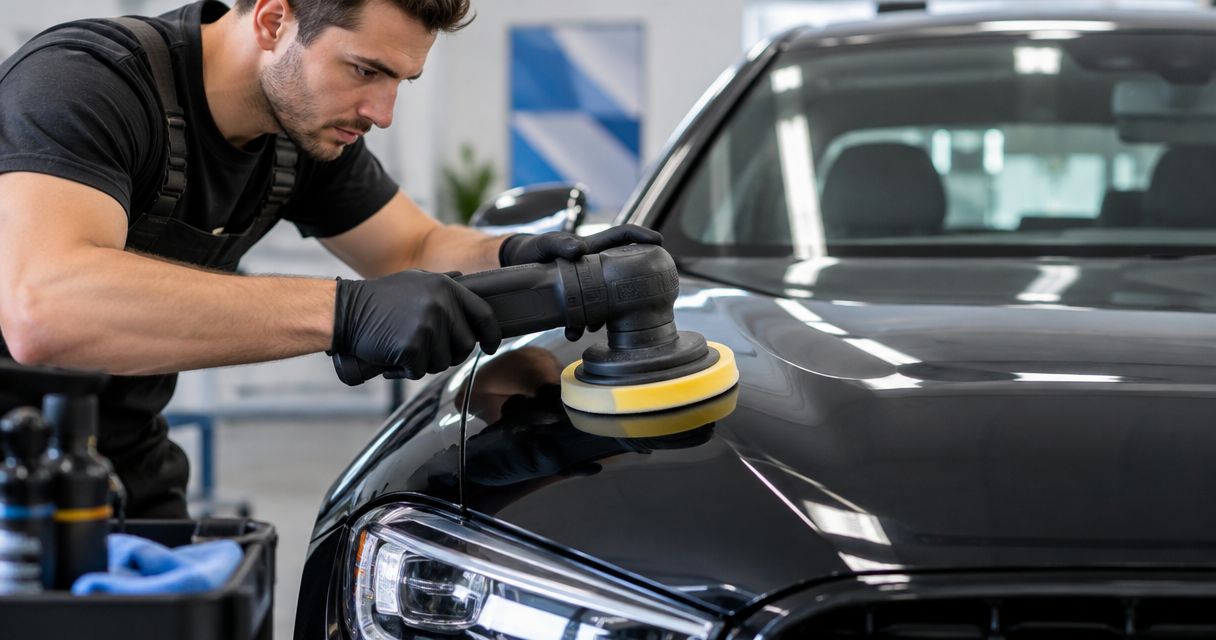
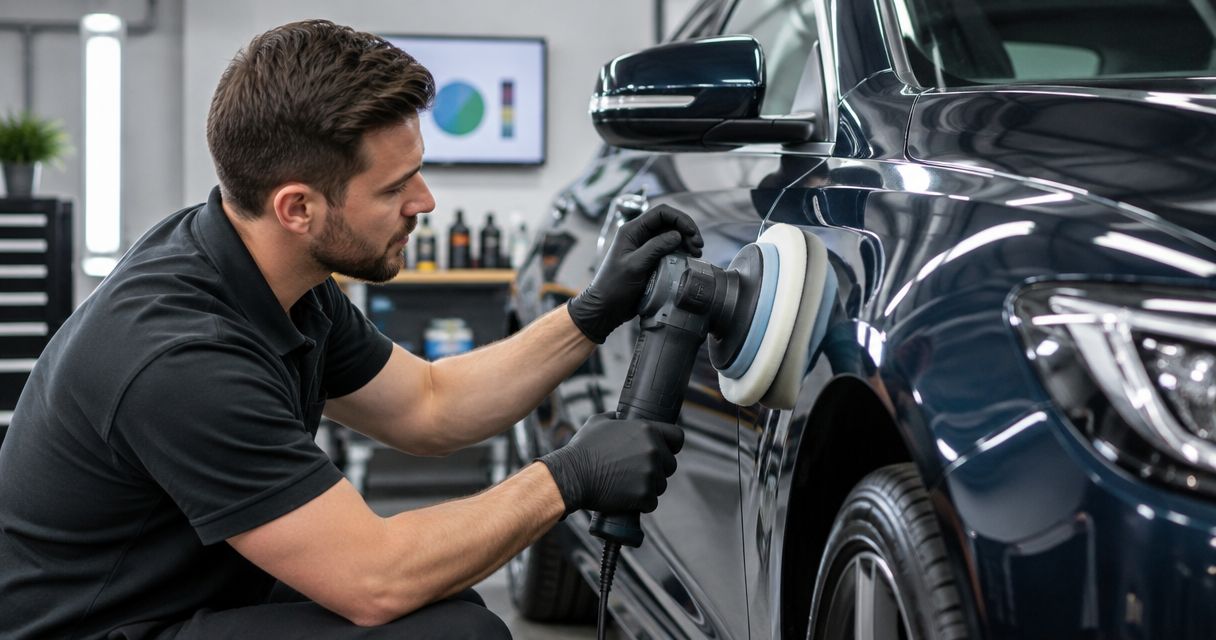
Paint correction changes the surface you are asking someone to assess. Abrasive polishing removes a small amount of the finish to reduce certain surface defects; it does not restore missing paint or repair a failing paint system.
That creates an important order of operations. If peeling clear coat is a potential warranty issue, polishing first can alter evidence of its original condition. Applying ceramic coating afterward does not establish whether the underlying finish was sound.
For a 2026 booking, separate your appearance goal from your warranty concern. You can want fewer swirl marks and still need the dealer to inspect a different panel before work begins.
Resolve the defect question first; choose the correction scope second. This protects the evidence and gives the detailer a clearer starting point.
What should you do before booking paint correction?
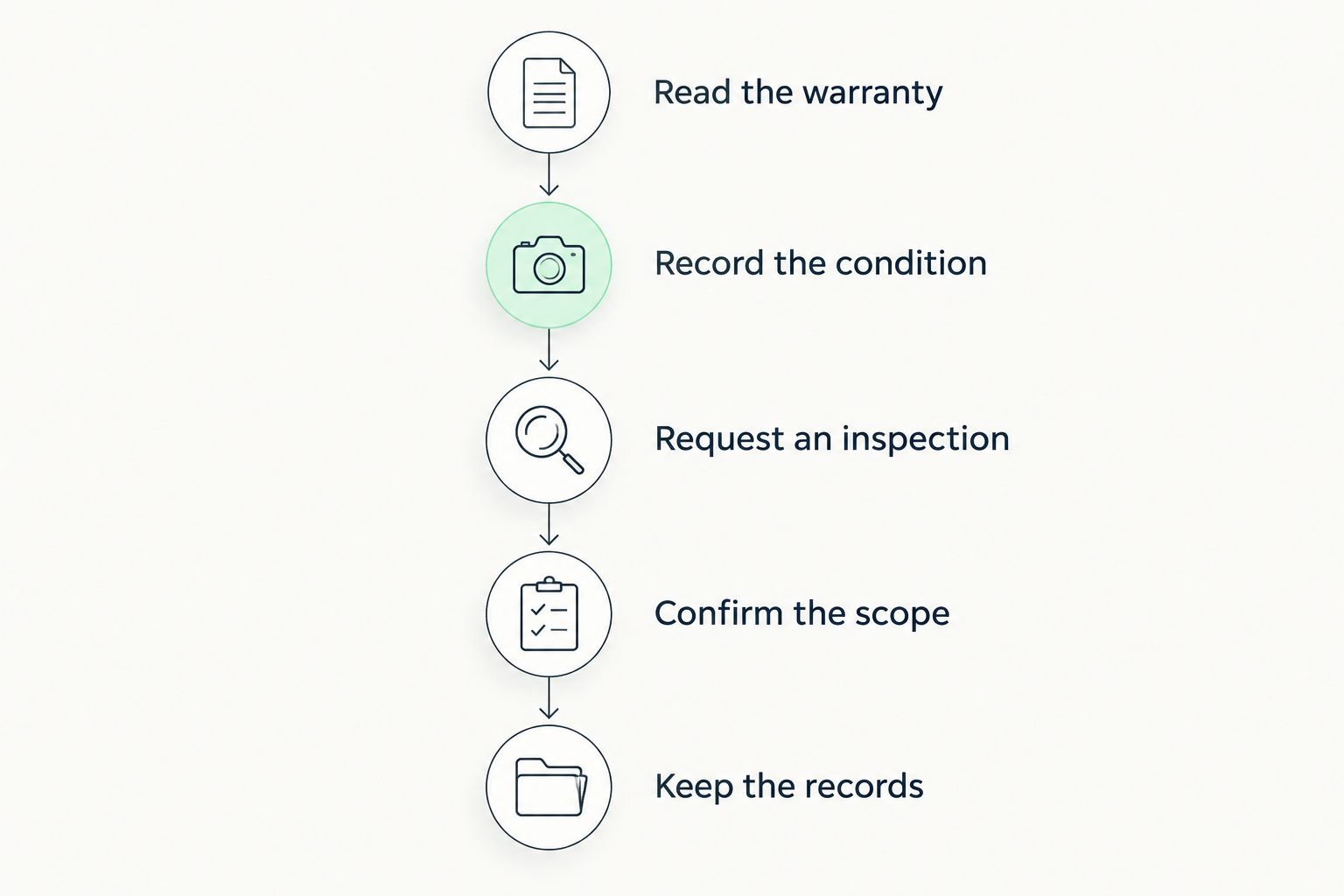
Use this sequence before approving a combined correction and coating service. It keeps the manufacturer’s coverage decision separate from the detailer’s assessment of what cosmetic work is appropriate.
- Read the warranty. Find the provisions covering paint, exterior finish, exclusions, and claim procedures. Do not assume that mechanical coverage, paint coverage, and corrosion coverage have identical terms.
- Record the condition. Photograph the affected panels in clear lighting, including wider views that identify their location. Note peeling, discoloration, chips, scratches, and any known repair history.
- Request an inspection. Take suspected manufacturing defects to the dealer before polishing. Describe what you see rather than deciding in advance that every mark is a warranty issue.
- Confirm the scope. Ask the detailer which panels and defects the proposed work addresses, what preparation is included, and whether ceramic coating is part of the written estimate.
- Keep the records. Save the inspection findings, estimate, invoice, photographs, and aftercare instructions. If coverage is denied, request the reason in writing.
Your request does not need technical language. Explain that you want the finish inspected before cosmetic work changes its condition, then ask what the warranty covers.
Do not treat a casual conversation as a vehicle-specific coverage decision. Ask the dealer to identify the affected panel, the observed condition, and the relevant warranty provision in its response.
Why warranty outcomes vary
The question is not simply whether a machine polisher touched the vehicle. These factors determine which issue needs attention and who should address it:
- Cause of the damage: A manufacturing defect and a polishing burn are different problems. Warranty protection does not turn damage caused by outside work into a factory responsibility.
- Coverage terms: Read the actual paint provisions and exclusions. A vehicle can have coverage for one kind of failure without coverage for every cosmetic condition.
- Existing paint condition: Peeling, cracking, or deteriorating clear coat calls for assessment, not an automatic correction appointment. Polishing cannot replace a failed finish.
- Previous repairs: Repainted panels introduce a separate repair history. Keep body-shop paperwork and ask which warranty applies to that work.
- Service scope and records: A written description helps distinguish the condition that existed beforehand from the work you approved. Photos support that record but do not guarantee a successful claim.
For warranty decisions in 2026, use your vehicle’s applicable documents rather than a general statement about a particular make. A forum comment about another owner’s claim does not establish what caused the condition on your car.
Can polishing damage clear coat without voiding everything?
Yes. Polishing can damage the finish without eliminating unrelated warranty coverage. Those are separate questions, and treating them as one creates unnecessary confusion.
On a conventional glossy clear-coated finish, abrasive correction removes material. Excessive abrasion or heat can damage that finish, particularly where the remaining coating is limited. A claim involving that damage is different from a later failure elsewhere on the vehicle.
Do not ask a detailer to chase every scratch regardless of the paint’s condition. Some defects should remain visible rather than be pursued through increasingly aggressive work. Others need refinishing instead of detailing.
Ask what the inspection supports, which defects should remain, and whether any panel needs a body-shop assessment. A clear explanation of limitations is more useful than a promise of a flawless finish.
Matte and satin finishes also need finish-specific care. Do not authorize ordinary gloss-enhancing correction on those surfaces without checking the vehicle manufacturer’s instructions.
Does ceramic coating change the warranty answer?
Ceramic coating does not automatically cancel the vehicle warranty, but it does not expand factory coverage either. Applying a coating cannot make an existing paint defect a covered claim or make damaged clear coat structurally sound.
Correction and coating belong in the same planning conversation because the condition of the surface affects the preparation decision. They still perform different jobs: correction addresses suitable cosmetic defects, while coating adds a surface treatment. Neither should be assumed to be included in the other’s quote.
A ceramic coating warranty, if one is offered, is separate from the vehicle manufacturer’s warranty. Read its actual coverage and maintenance requirements rather than assuming the word warranty means every scratch, stain, or finish problem is covered.
For a combined service in 2026, ask for the preparation, correction work, coating application, and aftercare to be identified separately in the written scope. Clear wording matters more than a package name.
Should I ask the dealer before correcting a new car?
Yes, if the new car has a finish problem that might be a manufacturing defect. New ownership does not establish whether a mark is a removable surface defect, delivery damage, or a paint-system problem.
Ask the dealer to inspect questionable areas before a detailer changes them. If you are only addressing ordinary wash swirls, keep a condition record and confirm an appropriate correction approach instead of treating all polishing as forbidden.
You do not need to accept an unexplained statement that independent detailing cancels everything. Ask which coverage provision applies and how the proposed work relates to the concern.
Can I correct paint while a warranty claim is open?
Wait until the warranty inspection and documentation are complete before altering the disputed area. Polishing or coating it first can change the condition the manufacturer needs to evaluate.
Ask the dealer handling the claim whether any work should remain on hold. Keep the response with the claim paperwork, and tell the detailer exactly which panels are excluded from the appointment.
If the claim results in refinishing, follow the repairer’s paint-system instructions before scheduling subsequent correction or coating. Do not use a generic waiting period in place of instructions for the actual repair.
Who is responsible if a detailer damages the paint?
Damage caused by detailing should be raised with the service provider rather than presented as a manufacturing defect. Responsibility for a particular repair depends on the evidence, service agreement, and applicable law.
Photograph the condition promptly and describe the affected area in writing. Preserve the original invoice and request a written response before authorizing additional work that changes the evidence.
If the manufacturer denies a separate warranty claim, ask it to identify the connection between the outside work and the claimed failure. An explanation tied to the actual damage is more meaningful than a blanket statement about the whole car.
Planning mobile correction and coating on the NH Seacoast
JMatt Mobile Detailing is a fit for NH Seacoast vehicle owners seeking mobile paint correction and ceramic coating. Mobile convenience and attention to preparation and finish are reasons to enquire; they are not substitutes for checking warranty concerns first.
JMatt Mobile Detailing provides these services across the NH Seacoast, including Portsmouth, Dover, and Exeter. Explain that you are considering a combined service, describe the paint condition, and ask what the proposed appointment includes.
If you are in Rye, North Hampton, or Newburyport, ask whether your address and proposed work can be accommodated. Confirm the working-space requirements and scheduling arrangements rather than assuming every location suits every preparation or application process.
For your 2026 enquiry, have these details ready:
- Your vehicle’s make, model, and finish type.
- Photos of the panels and defects you want assessed.
- Any known repainting or current paint warranty claim.
- Whether you want correction and ceramic coating quoted together.
The limitation is straightforward: a detailing enquiry cannot settle a manufacturer’s warranty claim. Resolve that decision with the warranty provider, then agree on cosmetic work suited to the finish.
Discuss correction and coating
Share your paint concerns, location, and warranty status before agreeing on the service scope.
FAQ
Does paint correction void warranty on a new car?
Paint correction does not automatically void a new car’s warranty. Damage caused by the correction can be excluded, so document the finish and resolve suspected factory paint defects before work begins.
Can a dealer refuse a warranty claim because I used an independent detailer?
Using an independent detailer alone does not justify cancelling warranty coverage. A claim involving damage caused by improperly performed work is different; request the specific reason for any denial in writing.
Does ceramic coating protect my factory paint warranty?
Ceramic coating does not extend or replace the factory paint warranty. The manufacturer’s coverage terms still apply, and any separate coating warranty has its own conditions.
Should I polish peeling clear coat before a warranty inspection?
Do not polish peeling clear coat before the warranty inspection. Polishing cannot repair a failing finish and can change the condition the dealer needs to assess.
Will paint correction remove every scratch safely?
Paint correction cannot safely remove every scratch. The appropriate approach depends on the defect and remaining finish; some marks should remain or be referred for refinishing.
Can I book mobile correction and ceramic coating in Exeter?
JMatt Mobile Detailing provides paint correction and ceramic coating services in Exeter as part of its NH Seacoast service area. Ask about a combined appointment, confirm the preparation scope, and disclose any unresolved paint warranty concern.
One last thing
A scratch that remains after correction is not automatically evidence of poor work. Removing it completely can require sacrificing more finish than the condition justifies.
Before approving the appointment, ask which defects should stay and why. That conversation gives you a clearer expectation than asking for perfect paint, and it keeps preservation ahead of appearance.