Paint correction takes as long as the inspected paint condition and agreed finish require; a dependable completion time comes from assessing your vehicle, not applying a universal hourly estimate. For a combined paint correction and ceramic coating appointment in 2026, ask for the full vehicle downtime, including preparation, coating application, and any product-specific restrictions afterward.
- How long does paint correction take? Paint condition, correction scope, and preparation determine the appointment length.
- Paint correction and ceramic coating need a combined schedule; polishing time alone does not describe total vehicle downtime.
- Jmattdetailing offers mobile paint correction and ceramic coating services; confirm the combined scope before booking.
- Ask when you can drive, expose the vehicle to water, and wash it after the work.
Why this matters
You need to know when you can use your car again, not just when the polishing machine stops. A correction estimate that excludes cleaning, inspection, final preparation, or coating requirements leaves you with an incomplete schedule.
If you want both services, start with the scheduling questions in Can paint correction and ceramic coating be done in one visit?. Then ask for an appointment plan tied to your vehicle and the work you actually want.
Judge the booking by the agreed finish and total downtime, not by the shortest advertised turnaround. A shorter appointment is useful only when its scope matches your expectations.
How long does paint correction take?
There is no single paint correction duration that applies to every vehicle. The useful answer separates preparation, correction, and handover, then adds coating-related requirements when you book the services together.
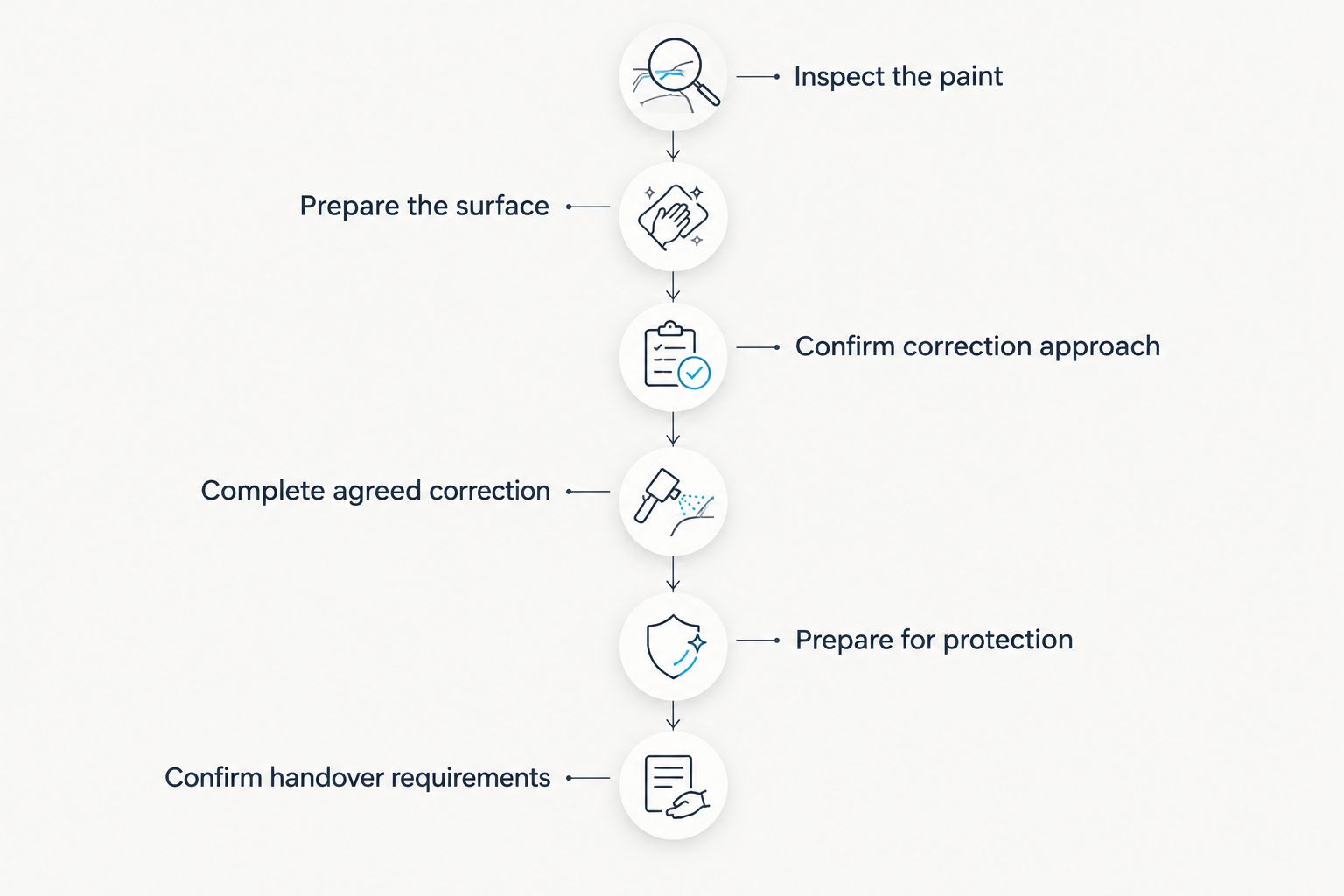
Ask the detailer to explain the sequence before you commit to a date:
- Inspect the paint. Identify swirls, scratches, previous repairs, and the finish you want improved. Share any known repainting or existing protection.
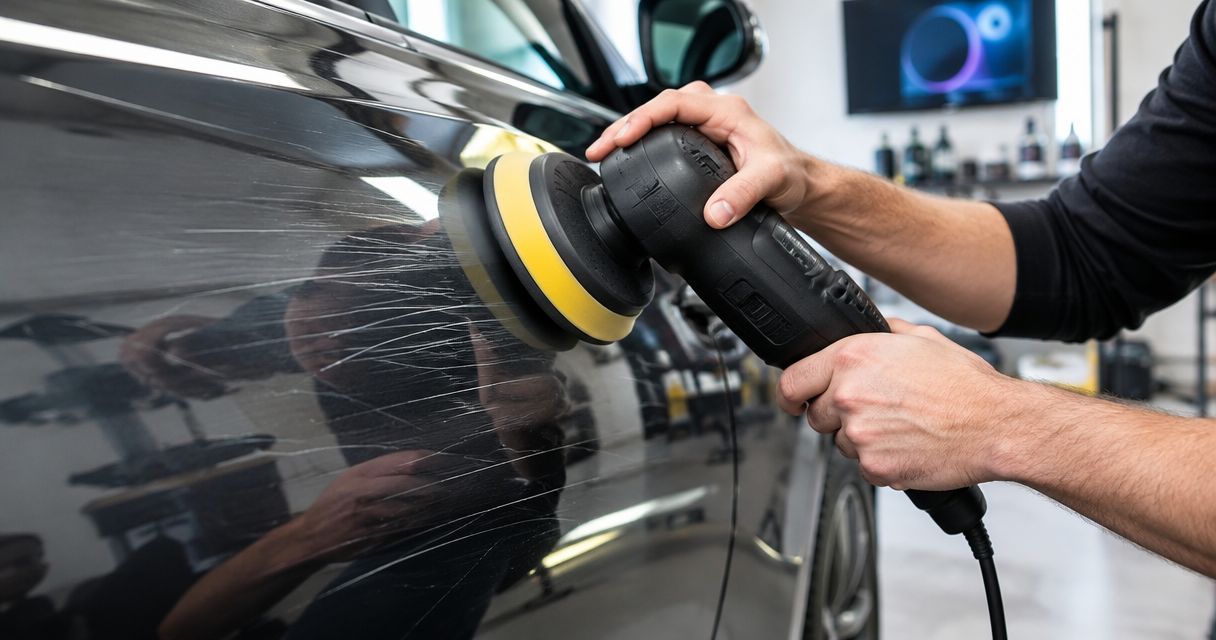
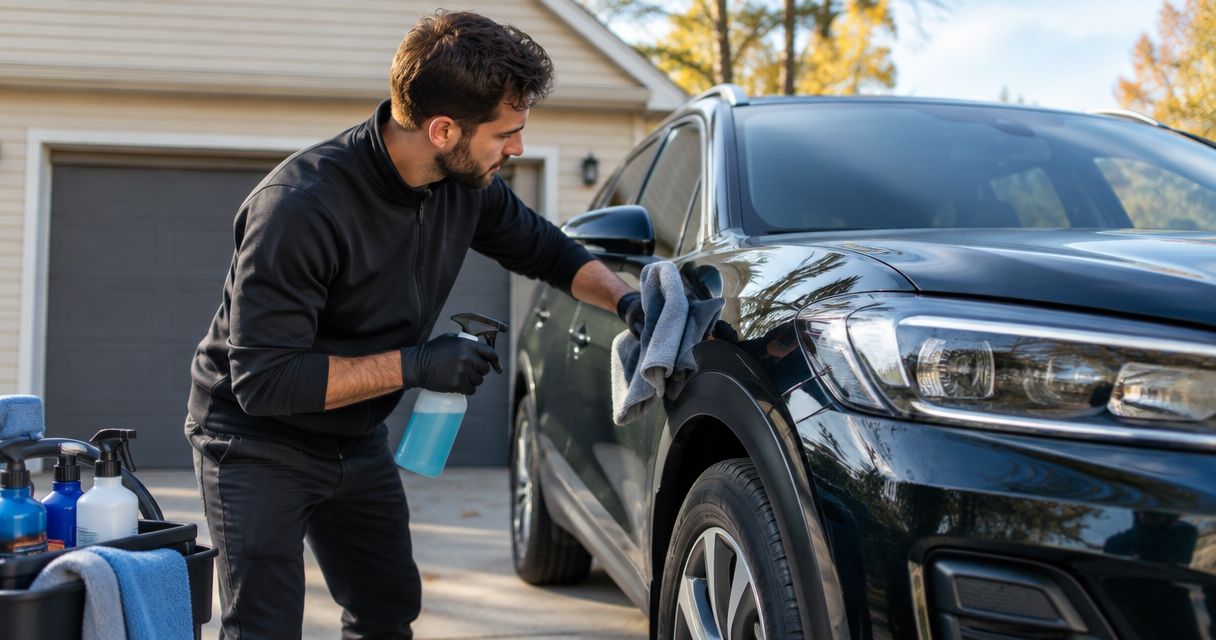
- Prepare the surface. Washing and appropriate decontamination let the detailer assess and polish the paint rather than work over contamination.
- Confirm the correction approach. A test area helps establish what the selected polishing process achieves on that paint.
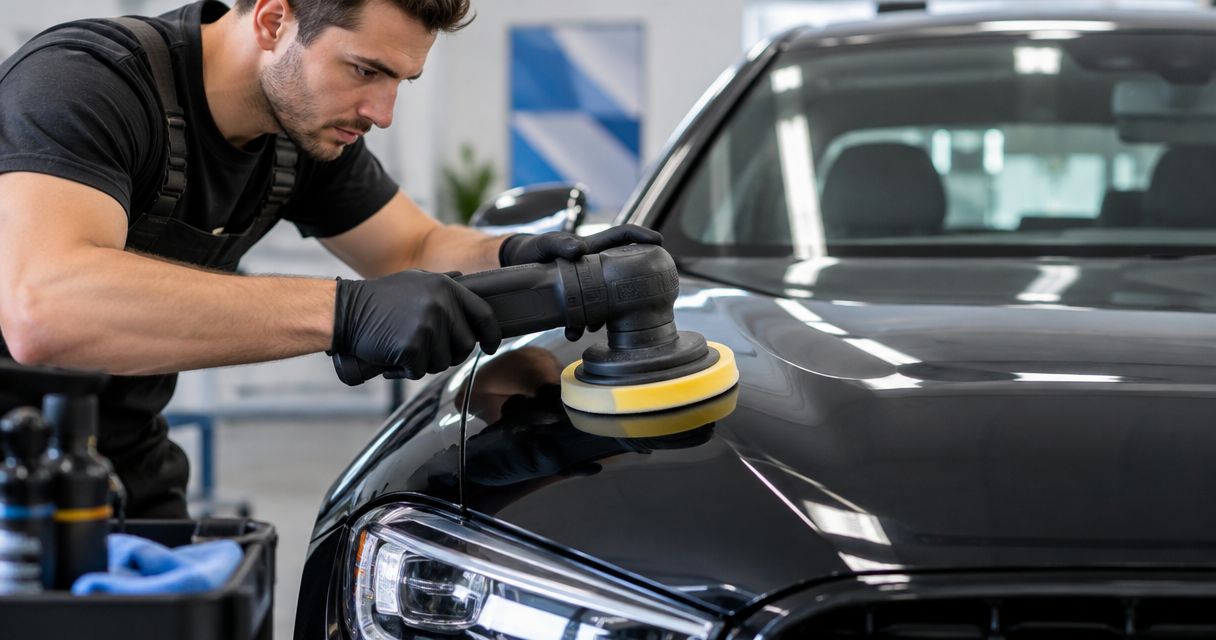
- Complete the agreed correction. Work across the specified panels, checking the result rather than assuming every area responds identically.
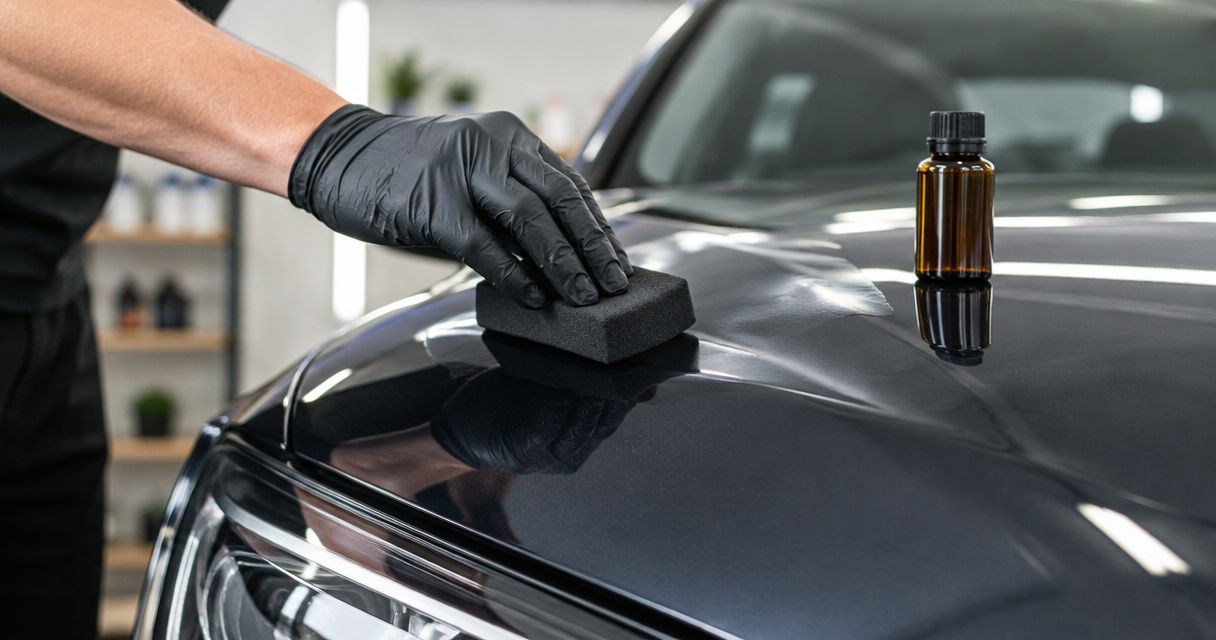
- Prepare for protection. If ceramic coating is included in the agreed scope, follow the coating system's surface-preparation instructions.
- Confirm handover requirements. Get clear instructions for driving, water exposure, and washing before you arrange your next trip.
This sequence is a planning framework, not a statement that every appointment includes every service. Your written scope should identify which steps are included and when your vehicle is ready for its intended use.
How correction scope changes the schedule
Correction descriptions are not interchangeable. A label such as single-stage correction tells you something about the intended process, but it does not establish a universal finish standard or completion time.
Use this comparison to discuss the work, not to assume that a particular package exists. These are general approaches rather than named Jmattdetailing packages.
| Approach | Best for | Main benefit | Limitation to discuss |
|---|---|---|---|
| Single-stage correction | Owners seeking a defined improvement in overall finish | Uses a polishing approach aimed at the agreed improvement | Does not promise removal of every visible defect |
| Multi-stage correction | Owners discussing a more involved finish goal | Separates more intensive correction from subsequent refinement | Adds work and still has limits set by paint condition |
| Selected-panel correction | Owners concerned about specific areas | Focuses attention on the panels included in the scope | Untreated areas can retain a different appearance |
The right choice starts with what bothers you about the paint. Tell the detailer whether you want reduced wash swirls, better clarity, or attention to a particular panel, rather than requesting the most aggressive process by default.
Single-stage correction: confirm the finish target
Single-stage correction uses a polishing stage selected for the intended improvement. It suits a conversation about improving the overall finish without assuming that every mark will disappear.
Its advantage is a more limited correction scope than a process involving separate cutting and refining stages. Its trade-off is the finish limit: deeper defects or paint that needs further refinement can remain outside the agreed result.
Ask what improvement the test area demonstrates and which defects will remain. That answer is more useful than treating a stage label as a completion-time guarantee.
Multi-stage correction: confirm why extra work is needed
Multi-stage correction separates correction and refinement into distinct polishing stages. The purpose is to address the agreed defects and then refine the finish, not simply to spend longer on the car.
The benefit is a process with room for additional correction and finishing work. The drawback is extra labor, and abrasive correction still removes paint material rather than replacing it.
Choose additional correction only when the paint condition and your finish goal justify it. A detailer should explain the limits before you approve a more involved process.
Selected-panel correction: confirm the boundaries
Selected-panel correction focuses on specified areas instead of treating the whole exterior as an identical task. It is relevant when your concern is concentrated on particular panels.
The advantage is a clearly bounded scope. The limitation is visual consistency: improving one area does not improve the surrounding paint automatically, so ask how the finished areas will look together.
Why paint correction time varies
For a 2026 booking, the schedule should reflect the vehicle in front of the detailer. These factors explain why an estimate based only on make and model is incomplete:
- Paint condition. Light surface marks and deeper scratches require different decisions. Some damage should remain rather than be chased through excessive abrasion.
- Paint response. The polishing combination that finishes one paint well does not establish the right process for another. A test area helps resolve that question.
- Vehicle size and access. More painted surface and difficult-to-reach contours change the work involved. Trim and edges also need appropriate care.
- Surface contamination. Bonded contamination and existing residues affect preparation. Polishing should begin on a suitably prepared surface.
- Agreed finish. Improving a daily driver's appearance is a different brief from pursuing more extensive defect correction. State your priorities before the appointment.
- Combined service requirements. Ceramic coating adds its own preparation, application, and aftercare instructions. Confirm those requirements for the actual coating being applied.
None of these factors gives you a reliable hour count on its own. Together, they explain what the detailer needs to inspect before giving you a useful schedule.
Does ceramic coating add time after paint correction?
Ceramic coating adds work when it is part of the confirmed service. Correction changes the paint's appearance through polishing; coating is a separate application over the prepared surface, and it does not replace defect correction.
For a combined appointment in 2026, request separate answers for correction completion, coating application completion, and vehicle handover. Those milestones do not necessarily mean the same thing.
Ask which coating instructions apply to driving, getting the surface wet, and the first wash. Do not substitute a generic online curing period for the instructions supplied with the coating actually used.
Also confirm what happens if the inspection changes the correction plan. Agreeing on how additional work is approved keeps the finish target and the schedule connected.
Can mobile paint correction fit around my day?
Mobile service removes the journey to a detailing location, but it does not remove the time your vehicle needs to remain available for work. Plan around the car's downtime rather than assuming you can use it between polishing stages.
Jmattdetailing is best for NH Seacoast vehicle owners seeking mobile paint correction and ceramic coating services. Mobile convenience is a reason to enquire; the actual combined scope, suitable working conditions, and handover arrangements still need confirmation.
For your 2026 enquiry, explain where the vehicle will be parked and ask what the working area needs. Discuss access, shelter, and any site requirements before treating a driveway or parking space as suitable.
If you are in Exeter, NH, include your address and intended parking location. For Rye or North Hampton, NH, or Newburyport, MA, ask whether the address can be served before building your schedule around a mobile visit; a nearby town name alone does not confirm coverage.
What should I send before requesting a booking?
Give the detailer enough information to discuss the work without guessing. Useful information includes:
- Your vehicle's make, model, and body style.
- Clear photographs showing the paint in different lighting.
- The panels or defects that concern you most.
- Any known repainting, body repairs, or existing coating.
- Your preferred outcome and whether you want ceramic coating considered with correction.
- Your location, parking arrangements, and next essential use of the car.
Photos help start the conversation, but they do not replace an inspection. Reflections, lighting, and camera processing can hide or exaggerate surface marks.
You can start a booking enquiry through Jmattdetailing. Ask for a combined paint correction and ceramic coating assessment rather than assuming either service is automatically included with the other.
Ask about your correction and coating visit
Share your paint concerns, location, and next essential trip to discuss the scope and vehicle downtime.
What should a useful completion estimate include?
A useful estimate gives you a work window and explains what that window covers. It also tells you which decisions remain open until the paint is inspected.
Before accepting a 2026 appointment, confirm these points in writing:
- Included work: which panels, preparation steps, correction approach, and protection are covered.
- Finish expectations: which defects the detailer intends to improve and which are outside the agreed scope.
- Timing assumptions: whether the estimate depends on inspection, a test area, or suitable working conditions.
- Change approval: how you will approve any proposed change to the work or schedule.
- Handover instructions: when you can drive and what restrictions apply afterward.
A cautious finish limit is not a weakness. Because abrasive correction removes material, preserving the paint matters more than promising to erase every visible scratch.
Do not approve extra polishing solely to meet an imagined flawless standard. Ask what the additional work achieves and whether the remaining defect is better left alone.
FAQ
How long does paint correction take on my car?
Paint correction time depends on your car's paint condition, preparation needs, and agreed correction scope. Request a vehicle-specific estimate that identifies what is included and when you can use the car again.
Can I book paint correction and ceramic coating together?
You can request a combined paint correction and ceramic coating appointment, but confirm that both services are included in the agreed scope. Ask for total downtime, including coating-related handover instructions.
Will paint correction remove every scratch?
Paint correction does not guarantee removal of every scratch. Deep damage and paint condition can limit safe correction, so agree on realistic defect improvement before work begins.
Can I drive immediately after paint correction and coating?
Follow the handover instructions for the actual services and coating applied. Ask separately about driving, water exposure, and washing rather than assuming that completed polishing means unrestricted use.
Is mobile paint correction faster than taking my car to a shop?
Mobile paint correction saves you the journey to a service location; it does not establish a shorter correction process. Paint condition, working conditions, and agreed scope still determine the work involved.
Can I get mobile paint correction in Exeter, Rye, or North Hampton?
Jmattdetailing identifies Exeter within its NH Seacoast service area. Confirm your exact address and working arrangements, and ask directly about coverage in Rye or North Hampton before booking.
Can I book mobile paint correction in Newburyport, MA?
Confirm Newburyport coverage directly before planning a mobile appointment. Provide your address, parking details, and whether you want paint correction and ceramic coating assessed together.
Does a new car need paint correction before ceramic coating?
A new car needs a paint inspection before you decide on correction. Its age alone does not establish whether polishing is necessary or what level of correction is appropriate.
One last thing
Ask this before you book: When can I use the car the way I actually need to use it? Mention outdoor parking, an upcoming journey, or a planned wash so the handover advice addresses your real schedule.
That question is more useful than asking only when polishing ends. It connects the correction work, the coating instructions, and your next trip without assuming they share a single finish time.