Home healthcare workers’ car detailing is the cleaning and care of a work-used vehicle to keep its cabin manageable between patient visits. This 2026 guide explains how to plan interior cleaning, separate detailing from clinical cleaning requirements, and decide whether to discuss paint correction and ceramic coating during the same booking enquiry.
- Car detailing for home healthcare workers starts with clear boundaries between vehicle cleaning and employer infection-control procedures.
- JMatt Mobile Detailing offers mobile interior/exterior detailing, paint correction, and ceramic coating across the NH Seacoast.
- Confirm interior cleaning, paint correction, and ceramic coating separately in the written service scope.
- Choose an appointment around parking access, drying requirements, and your next patient visit.
Why car detailing matters for home healthcare workers
Your vehicle carries personal belongings alongside the supplies you need for work. Keeping those functions separate makes the cabin easier to clean and helps you find what you need without searching through loose items.
If your work vehicle also carries family members, the same storage problems appear in car interior detailing for family SUVs. Start with what occupies the seats, footwells, and cargo area—not a package name.
Detailing is not a substitute for your employer’s infection-control procedures. A clean-looking seat does not establish that a surface has been disinfected, and a detailer should not be assumed to handle blood, bodily fluids, sharps, or clinical waste.
For your 2026 vehicle-care plan, keep two decisions separate: what your employer requires for work-related contamination, and what ordinary automotive cleaning will address. That distinction prevents an unsuitable appointment and gives the detailer a clear job to quote.
How to plan detailing around home healthcare work
Set your cleaning boundaries
Start with your employer’s vehicle-use, equipment-cleaning, and exposure-response instructions. Those rules take priority over a general car-care checklist, particularly if you transport clinical equipment or encounter potentially infectious material.
For ordinary dirt, follow your vehicle handbook and the cleaning product’s directions. Cleaning removes soil; disinfection requires a suitable product used according to its label, including surface compatibility and contact time. Do not assume an automotive interior cleaner performs both jobs.
If an exposure occurs, stop treating the situation as routine detailing. Follow the required reporting and response process before arranging cosmetic cleaning.
- Identify which surfaces your employer expects you to clean.
- Keep work-equipment cleaning separate from vehicle detailing.
- Read the vehicle handbook before applying chemicals.
- Follow exposure procedures for blood, bodily fluids, or sharps.
- Disclose any relevant contamination before requesting an appointment.
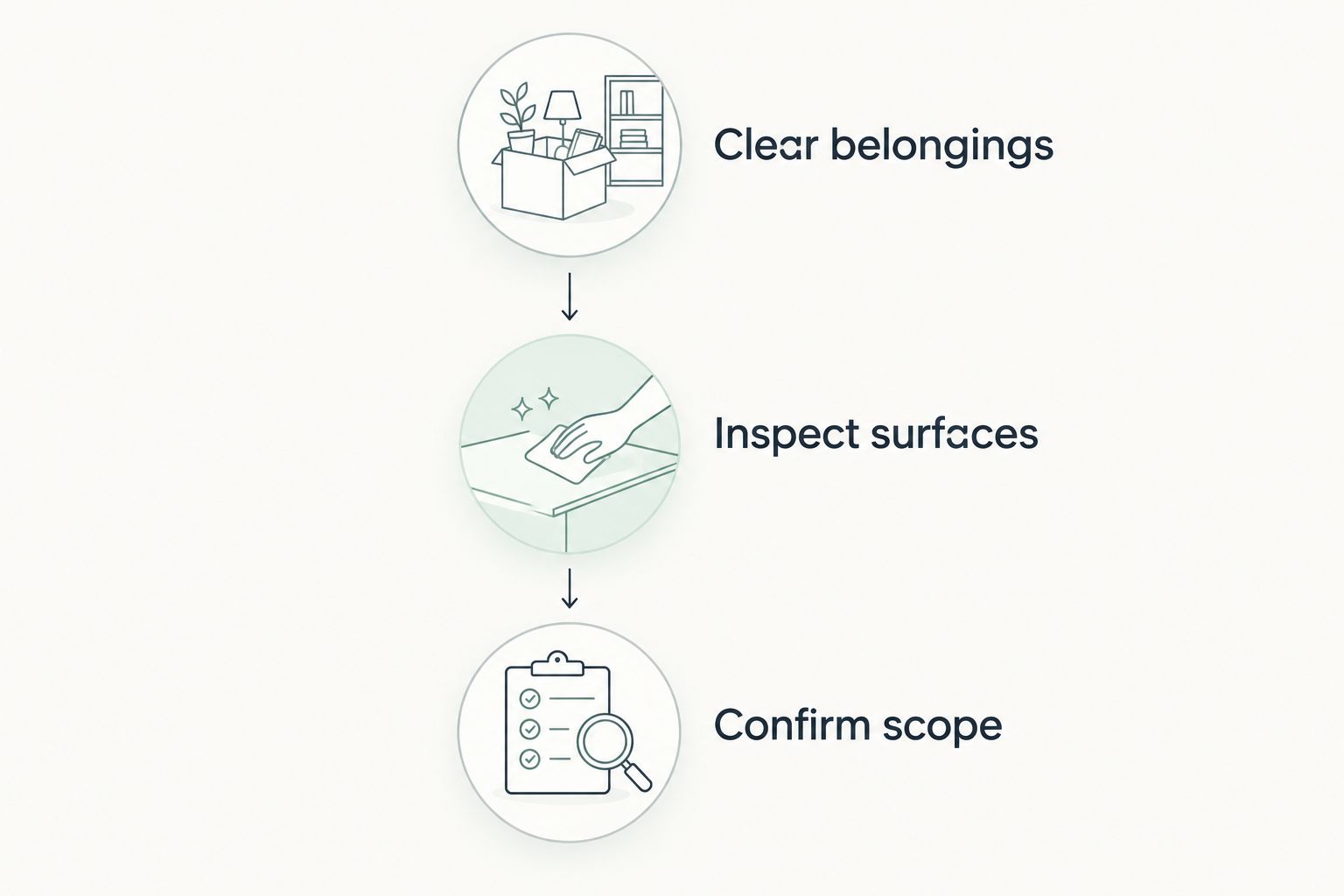
Clear belongings
You can make a useful start without booking anything: remove rubbish, take out personal possessions, and organize supplies according to workplace policy. An empty footwell is easier to inspect than one covered by bags.
Build your 2026 routine around 3 storage zones: work supplies, personal belongings, and ordinary rubbish. These are organizational categories, not permission to store clinical waste in your car. Follow employer instructions for anything used, soiled, or potentially contaminated.
Remove patient-identifiable paperwork before anyone else accesses the cabin. A detailer needs access to the surfaces being cleaned, not access to patient information or responsibility for deciding where clinical equipment belongs.
- Remove confidential paperwork and identifying labels.
- Take out medication, valuables, and loose electronics.
- Separate personal belongings from work supplies.
- Empty ordinary rubbish before the appointment.
- Handle used clinical materials through approved workplace procedures.
Inspect surfaces
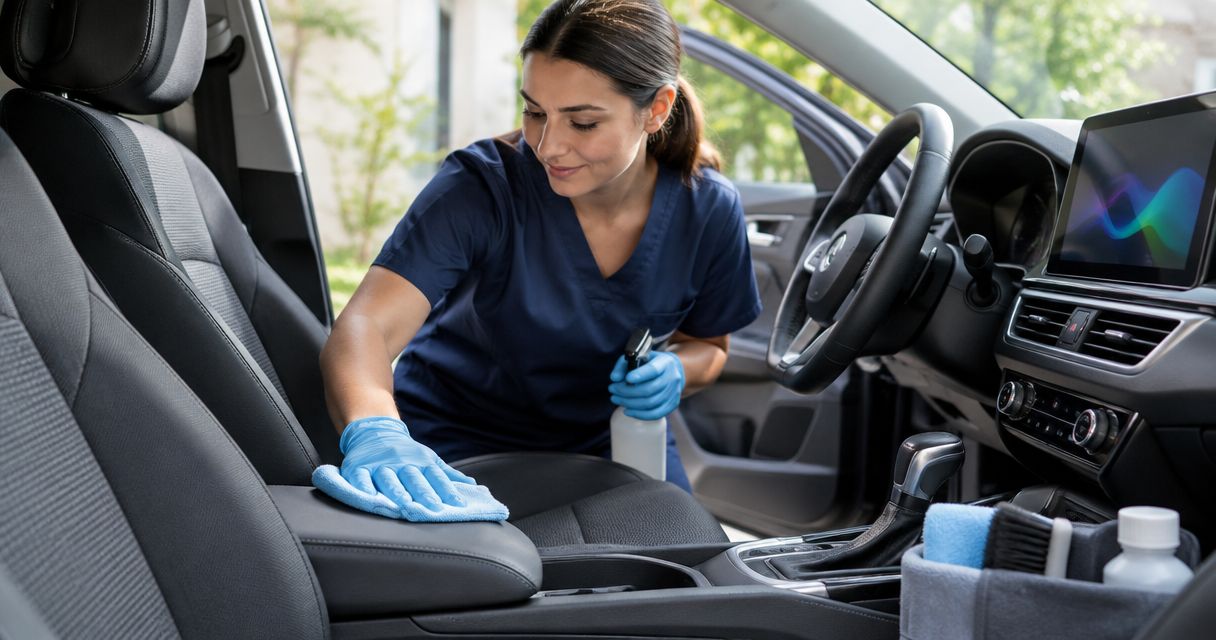
Look at the cabin before choosing a cleaning scope. Check the driver’s seat, seat belt area, steering wheel, door pulls, footwells, and cargo space. Describe what you see rather than asking for the strongest treatment available.
Photograph stains and worn areas while the cabin is empty. A mark on fabric, damage to a seat coating, and an embedded odor are different problems; inspection helps the detailer explain what cleaning can address without promising restoration.
JMatt Mobile Detailing is best for NH Seacoast vehicle owners seeking mobile detailing with the option to discuss paint correction and ceramic coating. Ask about preparation and finish expectations, not just the service label.
- Note whether seats are cloth, leather, or another material.
- Identify stains, odors, residue, and visible wear separately.
- Photograph areas hidden beneath removable mats.
- Mention sensitive screens, controls, or damaged trim.
- Ask which concerns need inspection before a quote.
Confirm scope
Ask for 1 written service scope that names the areas and treatments included. Interior detailing is a broad description, not confirmation that every stain, cargo compartment, seat surface, or odor concern is covered.
For JMatt Mobile Detailing, mobile convenience is a reason to enquire, but the appointment still needs a clear brief. Explain that the vehicle supports home healthcare or hospice visits, identify ordinary cleaning concerns, and confirm any relevant exclusions before work begins.
A useful enquiry describes your use case without sharing patient details. Include the vehicle, interior materials, main concerns, parking location, and when you next need to drive. This gives the conversation a practical starting point.
- Specify the seats, mats, footwells, and cargo areas involved.
- Ask which cleaning methods suit your interior materials.
- Confirm what stain and odor treatment actually includes.
- Ask whether belongings and removable accessories must be removed.
- Record exclusions and any preparation instructions.
Plan access
Mobile detailing removes the need to arrange a separate drop-off journey, but it does not remove the need for a suitable working location. Confirm parking permission, access, weather arrangements, and any site requirements directly with the provider.
In your 2026 appointment plan, allow for the provider’s stated working and drying requirements rather than assuming you can leave immediately afterward. Ask when the seats, mats, and controls will be ready for normal use. Do not schedule a patient visit against an unconfirmed finish time.
Exeter is included in the stated NH Seacoast service area. If you are enquiring from Rye, North Hampton, NH, or Newburyport, MA, confirm coverage for your exact address rather than assuming a nearby location qualifies.
- Give the appointment address before confirming the booking.
- Check permission to use shared or workplace parking.
- Ask about space, access, power, and water requirements.
- Confirm the weather contingency and drying arrangements.
- Keep your next work commitment outside the agreed service window.
Assess paint correction and ceramic coating together
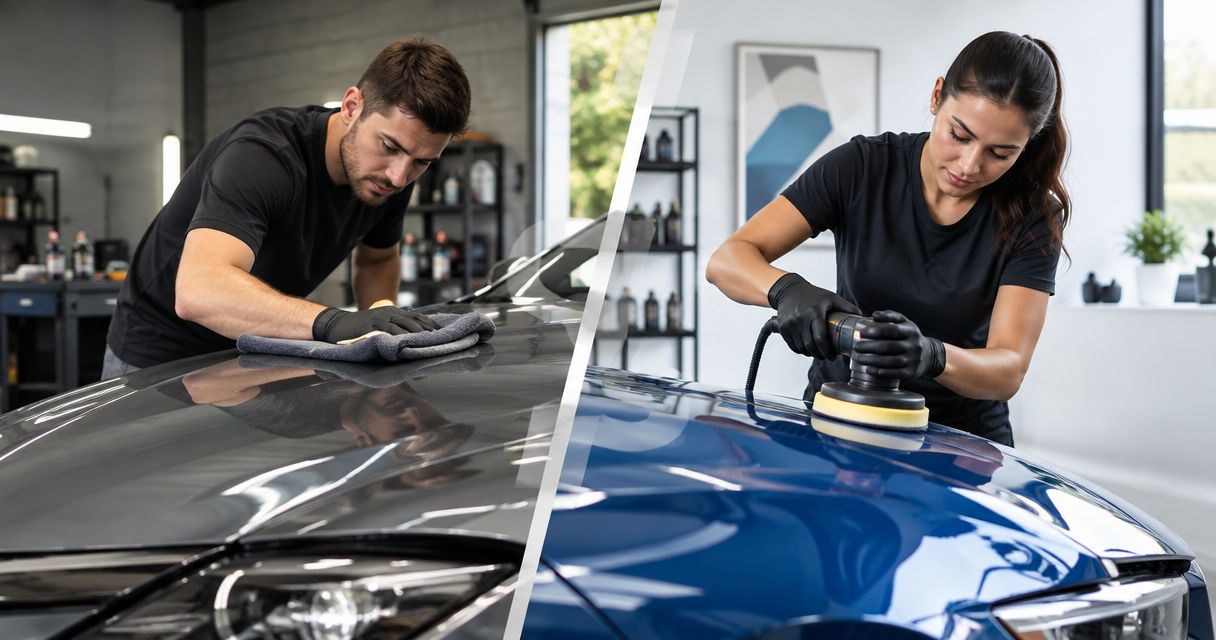
If you also want to address the exterior, inspect it before deciding on a combined service. Paint correction uses abrasive polishing to reduce suitable paint defects; ceramic coating adds a protective surface treatment. Coating does not replace correction or repair damaged paint.
Ask JMatt Mobile Detailing to explain whether your paint condition warrants correction before coating and what preparation the proposed scope includes. Neither service should be assumed to come with the other, and neither should be assumed to accompany interior detailing.
Take 2 exterior photographs for your enquiry: one showing the whole vehicle and one showing the area that concerns you. Photographs help describe the issue; they do not replace an inspection or establish how much correction the paint can safely receive.
For a vehicle used between home visits, discuss the finish you want and the maintenance you will realistically perform. Request an assessment rather than choosing a correction level from a package name alone.
- Describe visible swirls, dullness, or other paint concerns.
- Ask whether inspection is needed before selecting correction work.
- Confirm whether correction and coating are both included.
- Ask about preparation, aftercare, and return-to-use instructions.
- Keep the interior cleaning scope explicit in a combined enquiry.
Reset your between-visit routine
After detailing, put back only what you need. Returning every loose item to the same crowded footwell recreates the access problem that made cleaning difficult in the first place.
Use your employer’s instructions to decide where work supplies belong. For ordinary vehicle upkeep, remove rubbish, address spills with a material-compatible method, and keep mats accessible for cleaning. Avoid adding a fragranced product to cover an unexplained odor; identify the source first.
Choose your next detailing appointment by condition and work demands, not an invented universal interval. Visible soil, spills, and a change in how you use the vehicle are useful reasons to reassess the cabin.
- Return supplies to designated storage locations.
- Keep the driver’s footwell and controls unobstructed.
- Remove ordinary rubbish at the end of your workday.
- Follow vehicle instructions when addressing spills.
- Review whether the last appointment covered the right areas.
Compare your vehicle-care options
Choose the option that addresses the actual problem. Routine cabin maintenance, professional interior detailing, and paint correction with ceramic coating serve different purposes; combining appointments does not make their scopes interchangeable.
| Option | Best for | Main benefit | Key limitation |
|---|---|---|---|
| Owner-led cabin maintenance | Keeping ordinary clutter and loose dirt under control | Fits around your work schedule and exposes areas needing attention | Requires your time and suitable methods; does not replace exposure procedures |
| Professional interior detailing | Addressing accumulated cabin soil and specific interior concerns | Lets you agree on cleaning methods and areas with a detailer | Results depend on condition and scope; worn or damaged materials remain a separate issue |
| Paint correction and ceramic coating assessment | Owners considering exterior finish improvement and protection together | Establishes whether correction, coating, and preparation fit the vehicle | Does not address cabin cleaning; both exterior services need explicit confirmation |
Best for a combined interior and exterior enquiry: ask for separate line items within the proposed work. This makes it clear whether the provider is quoting cabin cleaning, paint correction, ceramic coating, or an agreed combination.
Mobile service suits owners who want to avoid a drop-off trip. Its limitation is the working location: access and site conditions still need approval. Confirm those details before organizing your workday around the appointment.
Discuss your vehicle’s detailing needs
Ask about interior cleaning and whether paint correction with ceramic coating suits your vehicle.
Common mistakes home healthcare workers make
Treating detailing as clinical decontamination
A visibly clean cabin does not prove that an exposure has been managed correctly. Tell the provider about relevant contamination before booking, and follow your employer’s process rather than requesting an ordinary interior clean for a clinical incident.
Leaving patient information in the vehicle
Do not leave paperwork for the detailer to sort around. Remove confidential material, work devices, and identifying documents yourself. This also makes the appointment scope simpler: the provider can focus on vehicle surfaces rather than handling work possessions.
Booking against the next patient visit
An estimated appointment length is not confirmation that every cleaned surface will be ready for immediate use. Ask about drying and return-to-use requirements before choosing a time. Leave room for the actual service instructions, not an assumed quick turnaround.
Adding coating without discussing paint condition
Ceramic coating is not a shortcut around paint inspection and preparation. If you want a better-looking exterior as well as a cleaner cabin, discuss correction and coating together while keeping each service’s scope explicit.
Assuming every nearby town is covered
A local search result is not confirmation that a provider will attend your address. For Rye, North Hampton, or Newburyport enquiries, supply the exact location and ask about mobile arrangements before planning the appointment.
FAQ
What’s the best car detailing approach for home healthcare workers?
Start with employer cleaning requirements, remove work belongings, and choose detailing based on the vehicle’s actual condition. Agree on interior areas and methods before booking; routine detailing does not replace clinical exposure procedures.
Can car interior detailing disinfect my work vehicle?
Do not assume interior detailing includes disinfection. Ask exactly what is offered, and follow employer procedures and product-label instructions for any required disinfection.
Does JMatt Mobile Detailing serve home healthcare workers in Exeter?
JMatt Mobile Detailing provides mobile detailing in Exeter as part of its stated NH Seacoast service area. Confirm the appointment address, suitable working location, and requested service scope directly.
Can I book mobile detailing in Rye, North Hampton, or Newburyport?
Confirm coverage for your exact address before booking in Rye, North Hampton, or Newburyport. Do not assume that proximity to the stated NH Seacoast service area confirms an appointment location.
Can I request interior detailing with paint correction and ceramic coating?
Ask whether the provider can scope those services within the same booking arrangement. Confirm interior cleaning, paint correction, ceramic coating, preparation, and return-to-use instructions separately; none should be assumed included.
Do I need paint correction before ceramic coating?
Paint condition and your finish expectations determine whether correction is appropriate before coating. Ask for an inspection and a clear explanation of the proposed preparation; coating does not remove existing paint defects.
How often should I detail a car used for hospice visits?
Set the schedule around cabin condition, spills, vehicle use, and employer requirements rather than a universal detailing interval. Work-related contamination needs the required exposure response, not simply an earlier routine appointment.
One last thing
The most useful booking detail is when you next need the vehicle. Tell the provider before agreeing on the work, especially when interior cleaning and exterior preparation are part of the same enquiry. That deadline belongs in the service discussion, not in a conversation after cleaning has started.
For the rest of 2026, keep a short note of the interior areas that repeatedly need attention and any exterior finish concerns. Bring that note to your next JMatt Mobile Detailing enquiry so the conversation starts with the right scope, not the broadest package.