Rideshare drivers’ mobile detailing is vehicle cleaning and finish care delivered to an agreed location, with the aim of keeping a working car presentable without a separate trip to a shop. This 2026 guide explains how to plan around passengers, food deliveries, and driving shifts, and when to request paint correction and ceramic coating together.
- Mobile detailing for rideshare drivers should fit the work schedule without rushing cleaning, drying, or required coating aftercare.
- JMatt Mobile Detailing suits NH Seacoast owners seeking mobile service and a paint correction and ceramic coating assessment.
- Prioritize cabin cleanliness for passengers; assess exterior defects separately before approving correction and coating.
- Confirm package scope, working conditions, and vehicle release instructions before booking.
Why mobile detailing matters for rideshare drivers
A rideshare car is both transportation and a passenger space. Delivery work adds another concern: keeping food containers, insulated bags, and spills away from upholstery and personal items. Choose care around the condition of your car, not a package name.
Mobile service removes the separate drive to a detailing location. It does not remove the need to stop using the vehicle while work happens, or to follow any drying and coating instructions afterward.
JMatt Mobile Detailing provides mobile interior and exterior detailing, paint correction, and ceramic coating across the NH Seacoast, including Portsmouth, Dover, and Exeter. Ask about preparation and the intended finish when discussing a combined correction-and-coating service; do not assume both are included in an exterior detail.
Build your 2026 detailing plan around the vehicle
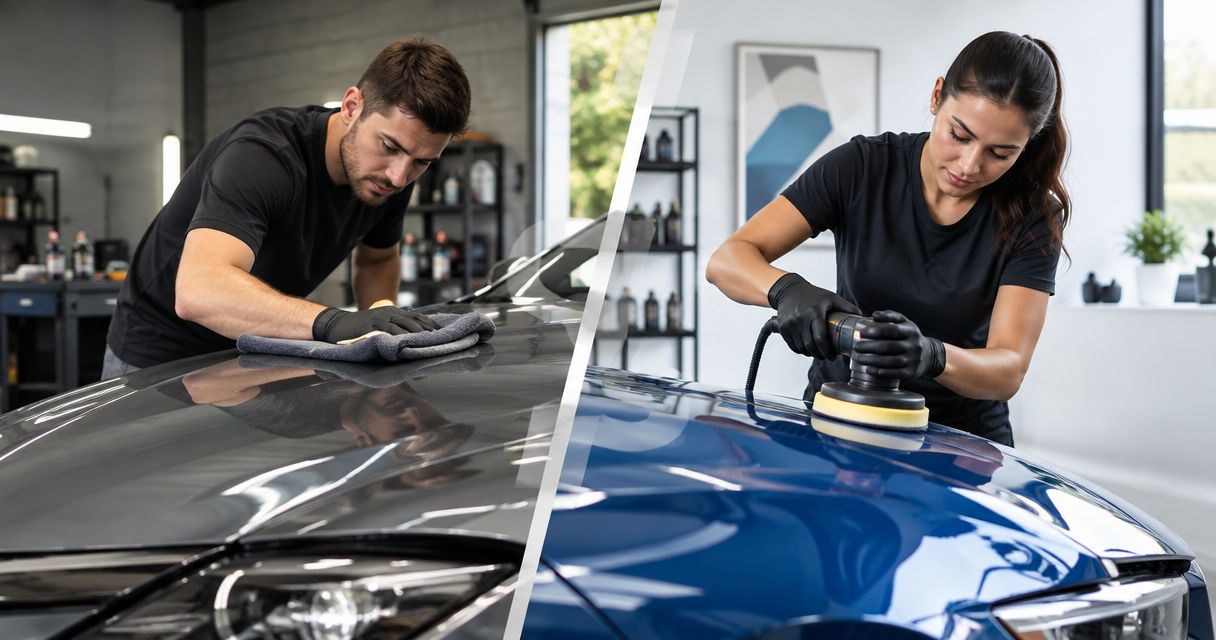
The useful distinction is between maintaining cleanliness and changing the paint’s condition. Cleaning removes dirt. Paint correction uses polishing to address suitable paint defects, while ceramic coating adds a protective surface treatment after appropriate preparation.
Neither exterior treatment cleans a passenger seat or removes a spill from carpet. A working car can need cabin attention and a separate exterior assessment, with different priorities for each.
1. Inspect the areas your work affects
Start with a parked-car inspection in daylight. Look at the back seat from a passenger’s position, then inspect the cargo area and exterior. Record the problem rather than deciding on the treatment yourself.
Take 3 reference photos: the passenger area, the delivery storage area, and the paint concern. These are enquiry aids, not a substitute for an in-person assessment. Describe odors separately because a photograph cannot show their source.
For mixed rideshare and delivery work, explain where you carry food and whether passengers use the same space. That context helps keep the requested work specific.
- Check seats, seat belts, mats, and door pockets for visible contamination.
- Inspect the trunk or cargo floor beneath delivery bags.
- Note sticky surfaces, damp areas, and recurring odors.
- Photograph swirls or scratches under lighting that makes them visible.
- Identify loose belongings that need removing before service.
2. Separate cabin needs from finish goals
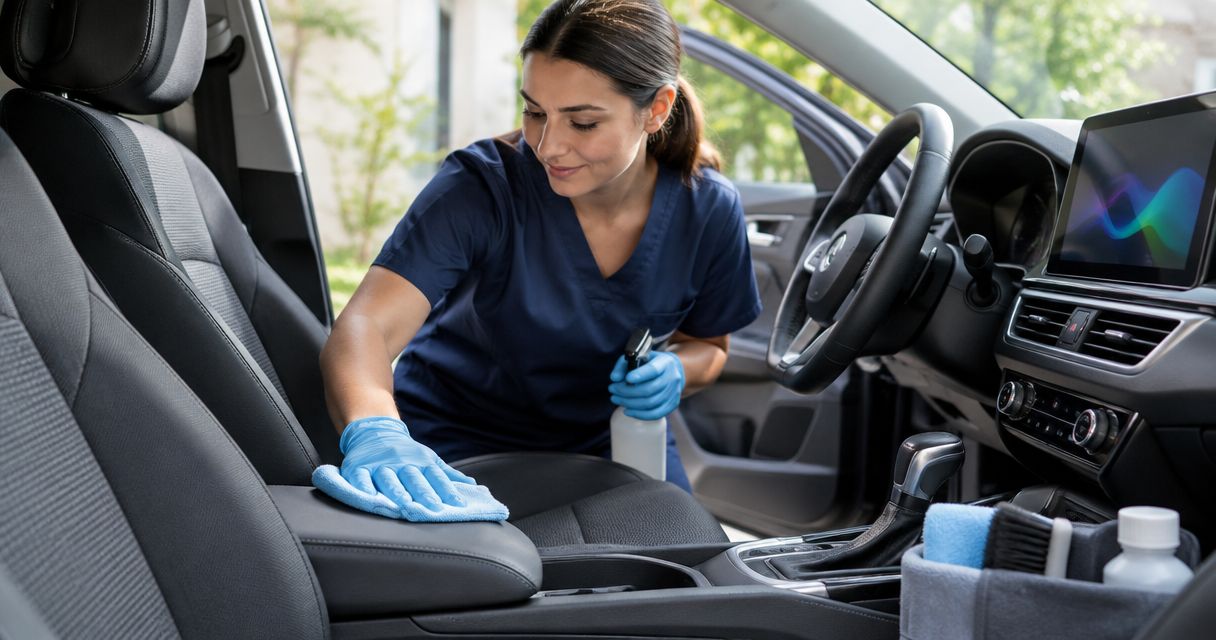
The manual starting point is straightforward: remove rubbish, vacuum accessible debris, and clean suitable surfaces according to the vehicle’s care instructions. Do not apply an unfamiliar chemical across a seat or screen without checking compatibility.
Then make 2 lists: cabin problems and exterior goals. This stops an enquiry about scratched paint from becoming a conversation only about vacuuming, or a spill problem from being mistaken for an exterior-service need.
JMatt Mobile Detailing offers both interior/exterior detailing and paint correction and ceramic coating services. For drivers considering a longer-term exterior-care decision, request an assessment for correction and coating together while keeping cabin work explicitly listed.
- Describe stains by location and known source.
- Explain whether an odor returns after basic cleaning.
- State which paint defects bother you most.
- Ask which requested tasks belong in the proposed service.
- Keep unconfirmed extras out of your booking assumptions.
3. Request a combined correction-and-coating assessment
If the paint’s appearance is your concern, washing alone does not answer whether correction is appropriate. Start by inspecting clean paint and asking which defects can be addressed safely. Paint correction removes a small amount of the surface being polished, so the most aggressive approach is not automatically the right choice.
A coating is not a substitute for correcting defects you want addressed. Equally, correction and coating are not automatically a single package. Approve the preparation, correction scope, and coating scope together before work begins.
JMatt Mobile Detailing is best for NH Seacoast drivers seeking mobile care and a combined paint correction and ceramic coating assessment. The practical limit is that your vehicle’s condition and the working location still need checking; mobile convenience alone does not establish suitability.
- Ask what preparation the proposed service includes.
- Identify the defects targeted by paint correction.
- Ask which defects will remain or need a different repair.
- Confirm whether ceramic coating is included in the written scope.
- Request vehicle-specific washing and aftercare instructions.
4. Confirm the location and working conditions
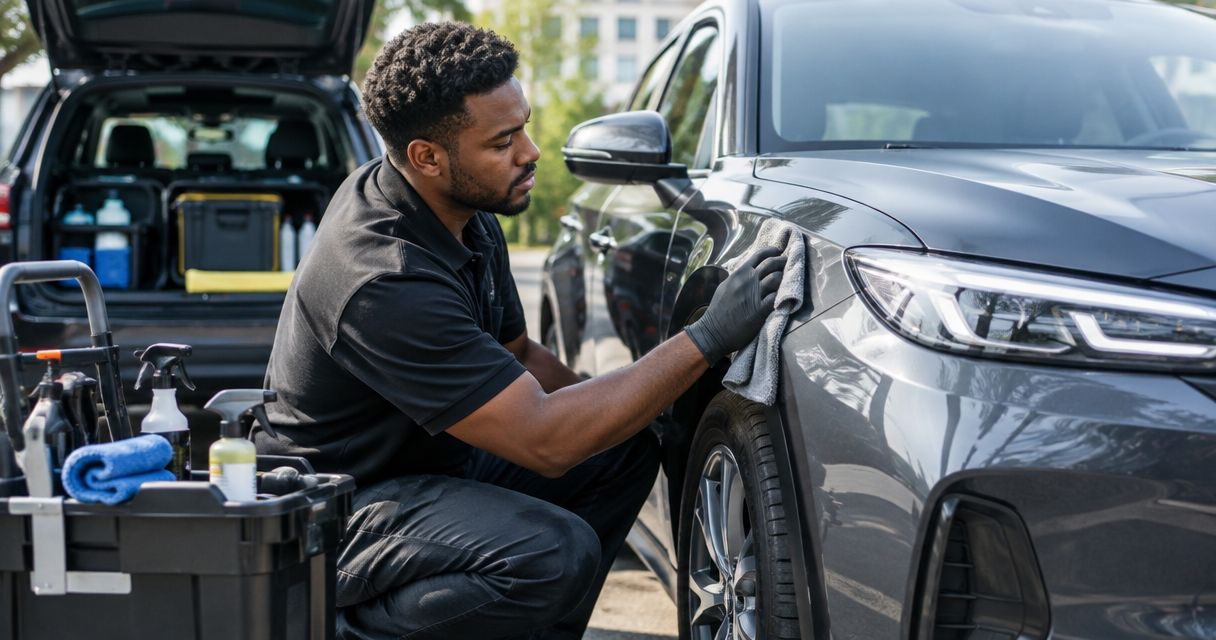
For a 2026 mobile booking, give the detailer the actual address and parking arrangement before choosing an appointment. A shared lot, roadside space, and private driveway present different access questions. Permission to park does not necessarily mean permission to perform detailing work.
Preparation matters as much as arrival convenience. Ask what space, shelter, utilities, and weather conditions the proposed work requires. Do not assume the requirements for cabin cleaning are identical to those for paint correction and ceramic coating.
Exeter is included in the stated service area. For an address in Rye or North Hampton, NH, or Newburyport, MA, confirm coverage directly rather than treating a locally titled guide as proof of service.
- Provide the address and describe the parking surface.
- Confirm permission from the property owner or manager.
- Ask whether water or electrical access is required.
- Discuss weather and shelter requirements for the proposed work.
- Agree on access to the vehicle and secure key handover.
5. Schedule around release conditions, not arrival time
Start with your own work calendar and identify a period when you can leave the vehicle parked. Then ask the provider what the proposed service requires. A gap between trips is useful only if it also accommodates the work and any restrictions afterward.
For correction and coating, ask whether the work fits one appointment or needs a different arrangement. The guide to whether paint correction and ceramic coating can be done in one visit covers a useful booking question, but your appointment needs its own confirmation.
Separate arrival time, completion time, and permission to resume driving. Those are different decisions. In 2026, schedule to the instructions for the actual service rather than an assumed turnaround.
- State when you need the vehicle back for work.
- Ask about seat, carpet, and mat drying where relevant.
- Confirm when driving can resume after the proposed coating.
- Ask about rain exposure and the first wash.
- Leave room in your schedule for the agreed release conditions.
6. Check the finish and plan routine care
Before returning to work, review the agreed tasks with the provider. Look at the areas you identified at booking and ask about anything you do not understand. An inspection should compare the result with the confirmed scope, not an imagined promise of flawless paint.
Then make 1 handover checklist covering completed work, remaining concerns, and aftercare. Store it somewhere accessible so you do not have to rely on memory when the vehicle next needs cleaning.
For the cabin, use simple habits between appointments. For coated paint, follow the instructions supplied for that treatment. A coating does not eliminate washing or make poor washing technique harmless.
- Inspect the passenger area and delivery storage space.
- Review corrected paint under suitable lighting.
- Ask about defects deliberately left untreated.
- Keep written washing and aftercare instructions.
- Remove rubbish and address spills promptly between services.
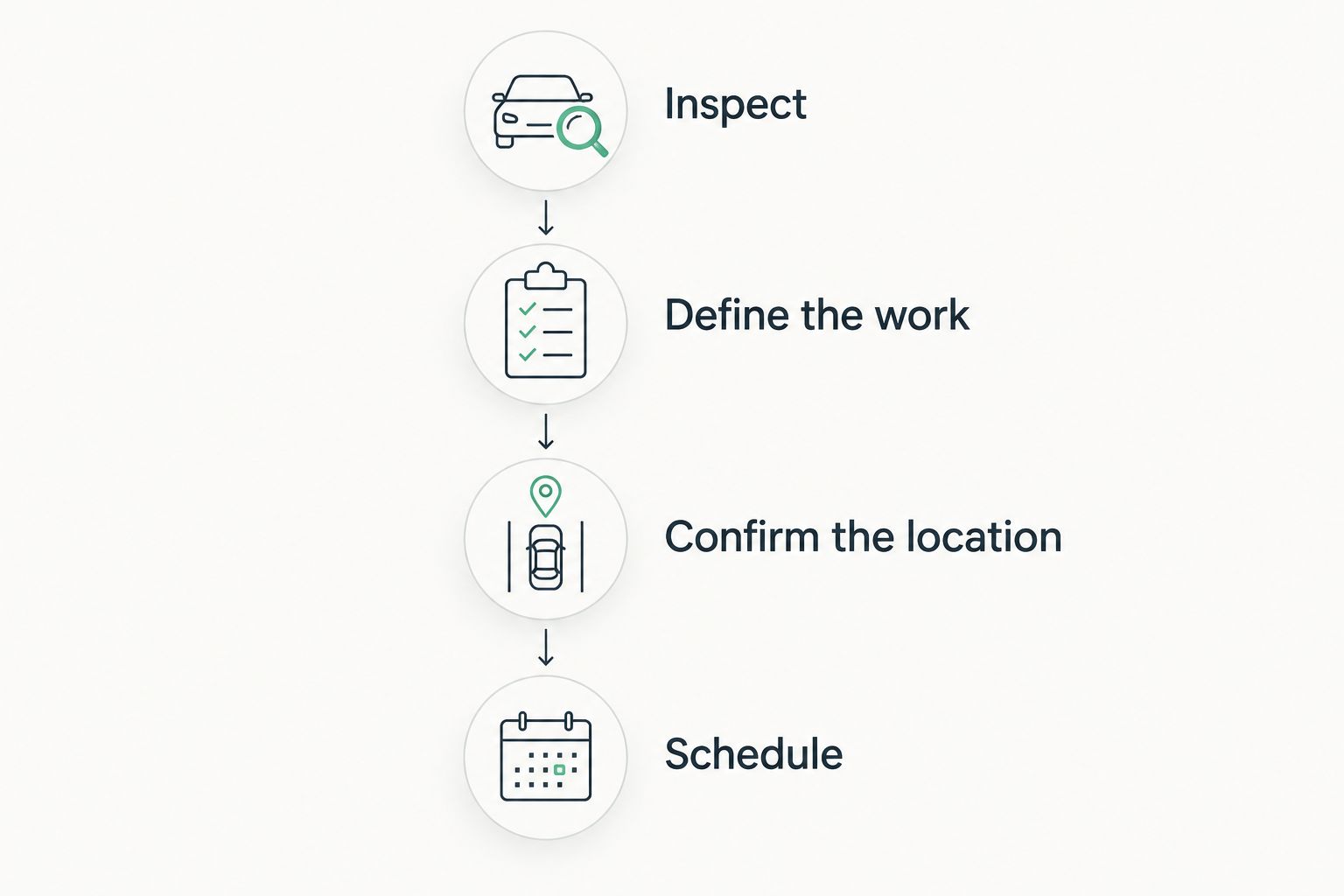
The sequence is simple: inspect, define the work, confirm the location, then schedule. Agree on the job before reserving the downtime. That is more useful than choosing an appointment first and discovering later that the setup does not suit the service.
Compare your 2026 vehicle-care options
These options solve different problems. The right choice depends on whether you need routine upkeep, a service location that fits your day, or a prepared exterior finish with correction and coating considered together.
Do not compare unlike scopes. A cabin-focused appointment and a correction-and-coating proposal are not interchangeable, even when both are described as detailing.
| Option | Best for | Main advantage | Key limitation |
|---|---|---|---|
| Owner-managed upkeep | Between-shift rubbish removal and basic cleaning | You control when simple tasks happen | Does not replace specialist stain assessment or paint correction |
| Mobile interior/exterior detailing | Drivers who want cleaning at an agreed location | Avoids a separate trip to a detailing shop | Requires suitable access and time out of service; confirm included tasks |
| Shop-based detailing | Drivers who can leave the car at a fixed location | Provides an alternative when the parking setup does not suit mobile work | Requires travel and a plan for leaving the vehicle |
| Combined paint correction and ceramic coating | Owners seeking assessed paint improvement followed by a coating | Connects finish preparation with the protective treatment | Needs condition assessment, confirmed scope, and aftercare; does not solve cabin problems |
A combined correction-and-coating enquiry makes sense when you want to address paint appearance and discuss protection in the same conversation. It is not the answer to every working-car problem. If the urgent issue is a damp carpet or spilled drink, explain that first.
Request a vehicle assessment
Describe your driving work, paint concerns, location, and interest in correction and coating together.
Common mistakes rideshare and delivery drivers make
Booking exterior work to solve a cabin problem
A ceramic coating does not clean upholstery or remove a food spill. If passengers will use the back seat, list the cabin concerns explicitly and confirm whether they are included alongside any exterior work.
Treating correction and coating as automatic extras
An exterior detail does not establish that paint correction or ceramic coating is included. Ask for both by name when that is your goal, then confirm the preparation and intended finish before approving the service.
Returning to work before the vehicle is ready
An appointment ending is not the same as every surface being ready for normal use. Ask about drying, driving, weather exposure, and washing restrictions relevant to the work actually performed.
Assuming every parking space suits mobile service
An apartment lot or customer workplace needs a suitability check, not an assumption. Confirm permission and access before booking, and disclose restrictions that affect setup or vehicle movement.
Expecting cleaner paint to stay clean without care
Correction and coating do not remove the need to wash a working car. Discuss a maintenance approach you can follow between shifts, especially if you regularly use automated washes or unfamiliar cleaning chemicals.
FAQ
What's the best mobile detailing for rideshare drivers?
The best fit is a service with a confirmed scope, suitable working location, and release instructions that match your driving schedule. JMatt Mobile Detailing offers mobile interior/exterior detailing and paint correction and ceramic coating services across the NH Seacoast; discuss your vehicle before choosing the work.
Should I book paint correction and ceramic coating together for a rideshare car?
Request a combined assessment if you want paint defects addressed before a coating is applied. Confirm both services in the proposed scope rather than assuming either is included, and keep cabin-cleaning needs separately listed.
Can I drive passengers immediately after mobile detailing?
Resume passenger work only after the provider confirms the vehicle is ready for that use. Ask specifically about damp upholstery, mats, and any restrictions associated with the exterior treatment.
Will ceramic coating stop scratches from rideshare use?
Ceramic coating does not make paint scratch-proof. It also does not protect interior trim or upholstery from passenger wear, so discuss the actual surfaces covered and continue careful cleaning.
Can I book mobile detailing in Exeter, NH?
Exeter is included in the stated service area. Provide your exact address and parking arrangement so the provider can confirm that the location suits the work you want.
Is mobile correction and coating available in Rye, North Hampton, or Newburyport?
Confirm service coverage for your exact address in Rye or North Hampton, NH, or Newburyport, MA, before booking. Also ask whether the location supports the preparation and working conditions required for your proposed service.
What should delivery drivers remove before a detailing appointment?
Remove food, delivery bags, rubbish, personal belongings, and loose work equipment unless the provider instructs otherwise. Identify spills and odors in advance so the enquiry describes the actual cleaning problem.
One last thing
Before making your 2026 booking enquiry, stand where a passenger enters and where you load deliveries. Those views often reveal different priorities from the driver’s seat. Send those observations with your paint concerns, then ask for a clear scope covering the work you actually want.