Yes—ceramic coating is worth it for a daily driver in 2026 if you want easier routine cleaning, care about the paint’s appearance, and will maintain the finish. It is not worth it if you expect protection from stone chips, freedom from washing, or removal of existing scratches without paint correction. The deciding factor is the preparation and correction your car needs, not the coating alone.
- Is ceramic coating worth it for a daily driver? Yes, for easier cleaning—not stone-chip protection or maintenance-free ownership.
- Paint correction addresses existing finish defects; ceramic coating does not replace that preparation.
- JMatt Mobile Detailing fits NH Seacoast owners seeking mobile paint correction and ceramic coating services.
- Confirm correction scope, application requirements, and aftercare before booking a combined service.
Why this matters
Your daily driver faces road grime, dirty wash equipment, bird droppings, and repeated cleaning. A coating changes how the paint surface interacts with water and contamination, but it does not remove those exposures. You still need a washing routine that avoids dragging dirt across the finish.
JMatt Mobile Detailing fits NH Seacoast owners seeking mobile paint correction and ceramic coating services. Start with a JMatt Mobile Detailing enquiry that describes your car’s condition and asks about a combined service. Confirm what correction is included rather than treating coating as an automatic fix for tired paint.
Is ceramic coating worth it for a daily driver in 2026?
Ceramic coating is worth considering when you want to preserve a prepared finish and make regular cleaning more manageable. The strongest case is a car you intend to keep, whose appearance matters to you, and which you will continue washing carefully. The weakest case is a car you want to stop maintaining.
The options below address different needs. None removes the need to wash, and none should be confused with repairing damaged paint.
| Approach | Best for | Main benefit | Main limitation |
|---|---|---|---|
| Paint correction with ceramic coating | Owners wanting finish improvement and ongoing surface protection | Addresses suitable existing defects before adding a protective coating | Requires an agreed correction scope and continued care |
| Ceramic coating after appropriate preparation | Owners whose paint does not need substantial correction | Adds surface protection without unnecessary polishing | Does not remove existing scratches or swirl marks |
| Wax or paint sealant | Owners comfortable renewing surface protection | Provides another way to protect and dress the finish | Requires renewal according to the product’s instructions |
| Careful washing without added protection | Owners prioritizing basic cleanliness | Removes accumulated dirt when done correctly | Does not add a protective layer |
Choose the approach around the paint’s condition and your maintenance habits. A neglected finish does not become corrected because a coating is applied over it. Equally, a car with sound paint should not receive aggressive correction simply because you request coating.
The relevant question is not whether coating is the most impressive option. It is whether the preparation, finish improvement, and aftercare fit how you use your car.
When a combined correction-and-coating service makes sense
Paint correction and ceramic coating have connected roles: correction improves suitable paint defects, while coating protects the prepared surface. That makes them a sensible combined enquiry when visible wash marks or dullness bother you. It does not mean both services are automatically necessary or included.
A daily driver with swirl marks needs an assessment before you choose the correction scope. Polishing removes material from the paint surface, so the aim should be an appropriate improvement rather than chasing every mark regardless of paint condition. Deep scratches, failed clear coat, and damaged paint require a different conversation.
Best for: owners who want a cleaner-looking finish and are willing to care for it afterward. The benefit is addressing appearance and protection together. The limitation is that safe correction cannot promise removal of every defect.
When comparing ceramic coating packages for daily drivers, focus on preparation, correction scope, and aftercare rather than the package name. Ask whether the proposal includes polishing, what defects it targets, and what will remain visible.
When coating without substantial correction makes sense
A car with paint already in good condition needs a different assessment from a heavily swirled vehicle. Preparation still matters, but extensive polishing should have a reason. Newness alone does not establish the paint’s condition; inspect the finish rather than assuming it is defect-free.
Best for: owners satisfied with their current finish who want added surface protection. The benefit is avoiding correction that the paint does not need. The limitation is that any existing defects left uncorrected remain underneath the coating.
Ask the detailer to explain the preparation and inspection separately from the correction decision. This keeps the enquiry centered on the result you want without implying that correction and coating are unrelated purchases. The final written scope should identify what work is actually included.
When ceramic coating is not the right next move
Skip coating as your immediate priority if your goal is stone-chip protection. A ceramic coating is not a physical impact barrier like paint protection film. It also does not make paint immune to scratches from poor washing or contact with abrasive material.
If the clear coat is peeling or the paint needs repair, address that condition first. Coating is not a substitute for bodywork or refinishing. Ask for an assessment instead of requesting a coating application over visibly failing paint.
Best for basic washing instead: owners whose main goal is cleanliness rather than finish improvement. Careful washing serves that goal directly, but it leaves the question of added paint protection separate. Choose coating only when its actual benefits matter to you.
A realistic decision in 2026 starts with the problem you want solved. Easier cleaning and a maintained finish support a coating enquiry; eliminating chips, scratches, and upkeep does not.
Why ceramic coating value varies
Ceramic coating does not deliver the same practical value to every driver. These factors explain the difference without relying on a claimed lifespan or an assumed package:
- Paint condition: Existing swirls, scratches, and damage determine whether correction or repair needs attention before coating.
- Your appearance goal: Wanting a visibly improved finish creates a different scope from protecting paint you already like.
- Washing habits: Clean equipment and careful washing matter because a coated car can still acquire wash marks.
- Exposure: Outdoor parking and everyday driving keep the vehicle exposed to contamination that needs removal.
- Service scope: Preparation, correction, application, and aftercare must be clear before you compare proposals.
- Ownership plans: Your reason for keeping or changing the vehicle helps determine whether finish improvement is a priority.
Do not use water beading as your only decision tool. Beading shows water behavior at the surface; it does not prove that the paint is free of damage or that the underlying preparation was good. Look at the finish and understand the maintenance instructions as well.
How do you assess a combined service before booking?
Use this sequence to make your 2026 enquiry specific. You do not need detailing terminology; describe what you see and what you want changed.
- Inspect the finish. Look at the clean paint under clear lighting. Identify whether your concern is swirl marks, isolated scratches, dullness, or damaged clear coat.
- Define the goal. Decide whether you want visible defect improvement, easier upkeep, or both. Mention any marks you particularly want assessed.
- Confirm the scope. Ask what cleaning, surface preparation, and paint correction the proposed service includes. Request an explanation of defects that will remain.
- Check the setup. For mobile work, describe your parking location and ask what working conditions the provider requires. Do not assume every driveway suits every coating application.
- Plan aftercare. Ask when the vehicle can get wet or be washed, which cleaning products suit the applied coating, and what ongoing care is required.
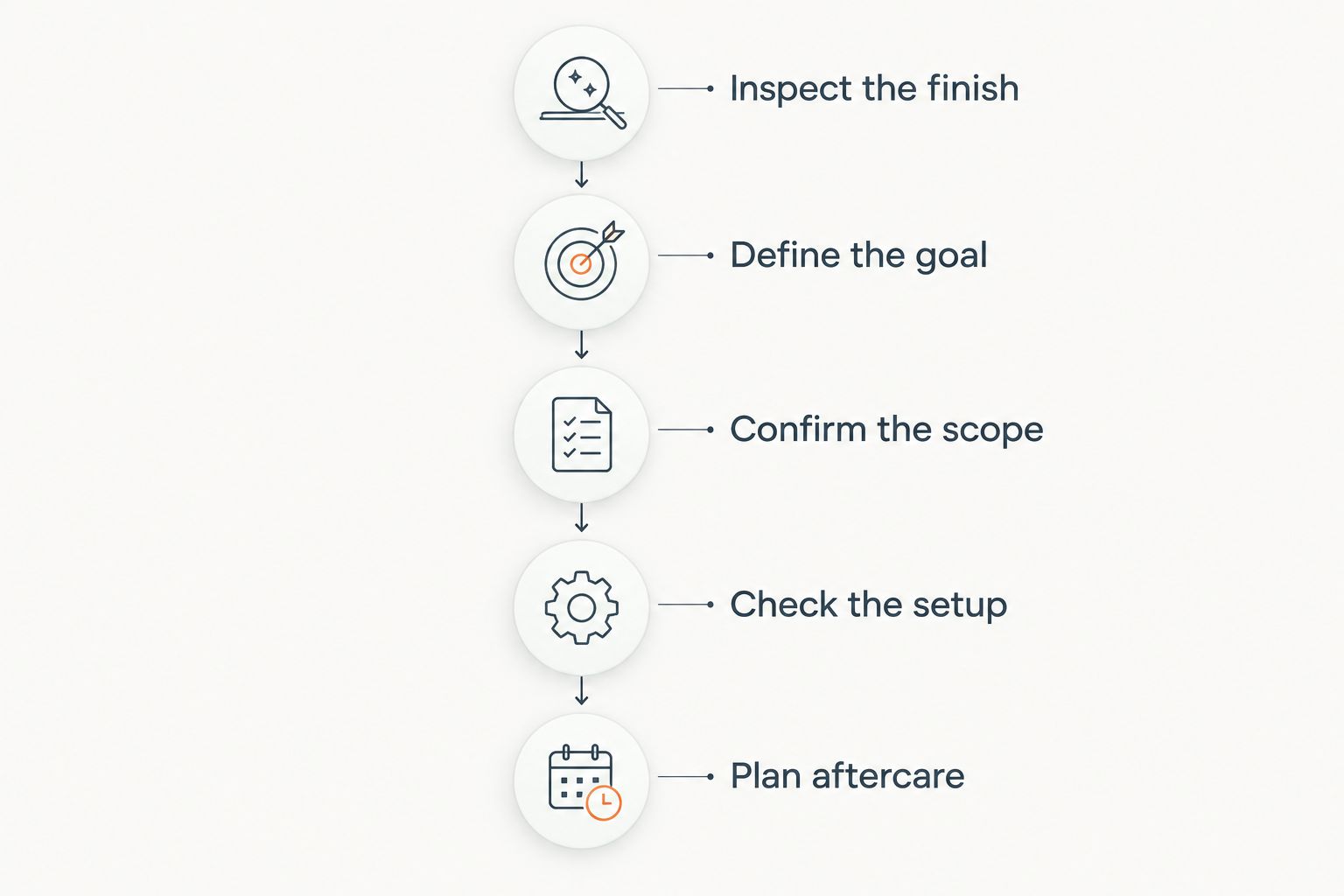
A useful proposal explains the work in plain language. It distinguishes an inspection from a promise, and it connects the correction plan to your paint’s condition. If you cannot tell whether polishing is included, ask before booking.
For JMatt Mobile Detailing, describe your vehicle, location, visible paint concerns, and interest in a combined correction-and-coating service. Mobile convenience matters, but suitable working conditions and an agreed preparation plan still need confirmation.
Ask about correction and coating
Describe your vehicle, paint concerns, and location to confirm the service scope and mobile setup.
What should local owners confirm about mobile service?
Mobile detailing avoids taking the car to a separate premises when the provider can perform the agreed work at your location. For a combined correction-and-coating enquiry, the important detail is whether that location supports the required preparation and application conditions. Convenience should not replace that discussion.
JMatt Mobile Detailing provides services across the NH Seacoast, including Portsmouth, Dover, and Exeter. Owners in Rye, North Hampton, NH, and Newburyport, MA should confirm coverage for their exact address before planning an appointment. A location-specific guide does not establish appointment availability or package scope.
When you enquire, describe whether the vehicle sits outdoors, under cover, or in a garage. Ask about access, working space, weather arrangements, and any site requirements. Let the provider confirm what applies rather than assuming you need a particular setup.
For local enquiries in 2026, confirm the address and the combined service together. That prevents a routine-detailing request from being mistaken for the correction-and-coating assessment you actually want.
Will ceramic coating stop scratches on my daily driver?
No—ceramic coating does not make your daily driver scratch-proof. Dirt dragged across paint, abrasive washing, and physical contact can still mark the finish. Use careful washing rather than treating the coating as permission to scrub harder.
Correction also has limits. Ask which existing marks can be improved safely and which should remain rather than being chased through excessive polishing.
Do I still need to wash a ceramic-coated car?
Yes—you still need to wash a ceramic-coated car. The coating can make contamination easier to release, but road film, grime, and deposits still accumulate. Follow the applied product’s aftercare instructions and remove contamination appropriately.
In 2026, the practical benefit remains easier upkeep, not the end of upkeep. If you will not maintain the finish, coating is a poor match for your expectations.
Does every daily driver need paint correction before coating?
No—not every daily driver needs substantial paint correction before coating. The paint’s actual condition and your finish goals determine the appropriate work. Inspection and preparation are still necessary parts of making that decision.
Do not buy a correction level from a label alone. Ask what defects the proposed work addresses and why that approach suits your vehicle.
FAQ
Is ceramic coating worth it for a daily driver in 2026?
Yes, ceramic coating is worth considering for a daily driver when easier cleaning and maintaining a prepared finish matter to you. It does not replace washing, remove existing scratches, or stop stone chips.
Is paint correction included with ceramic coating?
Paint correction is included only when the agreed service scope says so. Ask which preparation and polishing steps are included, what defects they address, and what will remain visible.
Is ceramic coating better than wax for my daily driver?
Ceramic coating is a better fit when its surface-protection benefits and required aftercare match your goals; wax remains an alternative for owners comfortable renewing protection. Neither repairs existing paint defects or eliminates washing.
Can I put ceramic coating on a car with scratches?
A coating can be applied to appropriately prepared paint with remaining scratches, but it does not remove those scratches. Have the paint assessed and agree on any correction before application.
Can mobile paint correction and ceramic coating be done at my home?
Mobile correction and coating require a location suitable for the provider’s process. Describe your parking area and confirm working conditions, access, and weather arrangements before booking.
Does JMatt Mobile Detailing cover Exeter, Rye, North Hampton, and Newburyport?
JMatt Mobile Detailing lists Exeter within its NH Seacoast service area. Confirm service for your exact address in Rye, North Hampton, NH, or Newburyport, MA, along with the combined correction-and-coating scope.
What should I ask before booking ceramic coating?
Ask what preparation and paint correction are included, what finish improvement is realistic, and what aftercare the applied coating needs. Confirm the mobile location requirements and request a clear written scope.
One last thing
Judge the finish before judging the water beads. A dramatic beading display cannot tell you whether swirl marks were corrected or whether the preparation matched your paint’s needs. Look at the clean paint under useful lighting and compare it with the improvement you agreed on.
Before booking in 2026, ask: what will be improved, what will remain, and how should I care for the finish? Those answers tell you more about the suitability of a combined service than a coating name alone.