Contractors’ ceramic coating is a treatment for vehicle paint with the aim of making a working truck easier to maintain and present professionally. Ceramic coating for work trucks makes sense when you want easier cleaning and a prepared finish—not protection from tool strikes, stone chips, or every jobsite contaminant.
- Ceramic coating for work trucks supports easier maintenance; it does not replace washing or prevent impact damage.
- JMatt Mobile Detailing suits NH Seacoast owners seeking mobile paint correction and ceramic coating services.
- Confirm paint correction, coated surfaces, worksite requirements, and return-to-work instructions before booking.
- Choose preparation and a realistic maintenance plan over promises of a maintenance-free finish.
Why ceramic coating matters for contractors
A contractor’s truck has competing jobs: carry equipment, travel between sites, and arrive at customers’ properties looking cared for. The useful question is not whether the paint can look perfect indefinitely. It is whether the preparation and coating fit how you actually use the vehicle.
For your 2026 service decision, separate appearance problems from physical damage. Paint correction addresses suitable surface defects through polishing; ceramic coating adds a protective treatment after preparation. Neither repairs dents, replaces missing paint, or makes a loading area resistant to dropped equipment.
JMatt Mobile Detailing provides mobile detailing, paint correction, and ceramic coating across the NH Seacoast, including Portsmouth, Dover, and Exeter. JMatt Mobile Detailing is best for NH Seacoast vehicle owners seeking mobile paint correction and ceramic coating services. Confirm the combined scope before booking; listing both services does not establish that both are included in a particular quote.
Plan ceramic coating around your working truck
1. Identify what you want the service to solve
Start with a walkaround rather than a package name. Wash the truck using an appropriate method, inspect the paint in good light, and distinguish ordinary dirt from swirls, chips, staining, and damaged trim. Do not polish an unfamiliar defect just to find out what it is.
Take 3 photos to begin your enquiry: the whole vehicle, a representative paint defect, and the parking area proposed for mobile work. Add close-ups when necessary. These photos support a conversation; they do not replace an inspection or establish what correction is safe.
A truck used for customer estimates has different appearance priorities from one used mainly for hauling demolition material. Name the result you want without asking for a guarantee the finish cannot provide.
- Identify the panels customers see when you arrive.
- Photograph defects without filters or editing.
- Flag repainting, body repairs, wraps, and lettering.
- Explain whether easier washing or paint appearance matters most.
2. Separate correctable marks from damage
Paint correction and ceramic coating do different jobs within a combined service. Polishing can reduce suitable surface defects; coating does not remove those defects by itself. Deep scratches, failing paint, and exposed metal need a different assessment.
Begin by showing the detailer your concerns. Ask what improvement is appropriate for the paint, rather than requesting the most aggressive correction available. Removing more clear coat is not automatically a better result for a vehicle that remains in daily service.
For a 2026 work-truck booking, ask 2 questions: which defects will be addressed, and which will remain? A useful answer describes the expected scope without promising a flawless finish.
- Point out scratches around handles, tailgates, and tool access areas.
- Identify chips separately from swirl marks.
- Disclose known repainting and previous coatings.
- Ask whether any damage needs body repair before detailing.
3. Confirm the combined preparation and coating scope
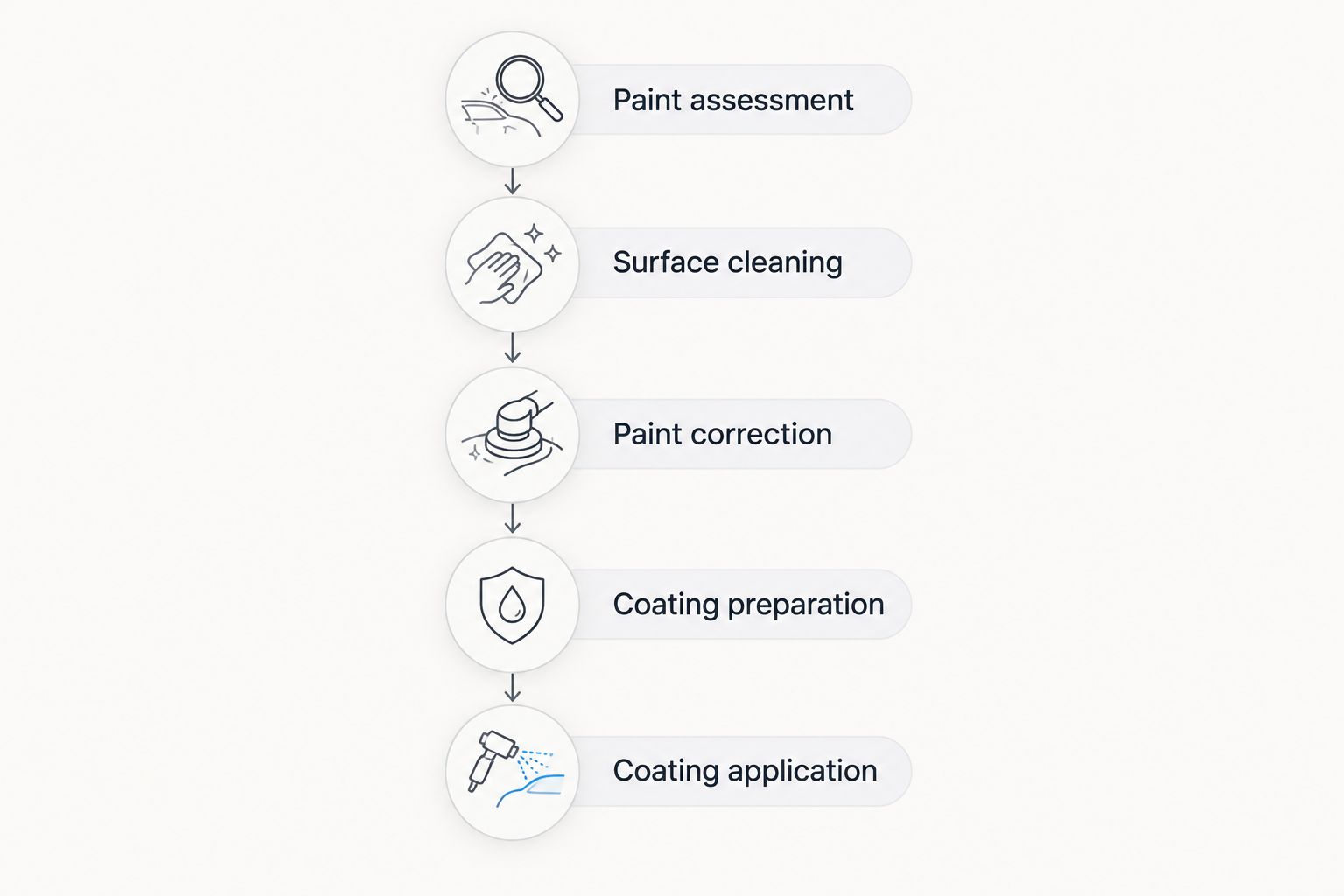
Write your own checklist before comparing quotes. Look for a clear sequence: assessment, cleaning and decontamination, agreed correction, surface preparation, and coating application. The appropriate method depends on the vehicle and coating; do not assume every quote describes the same work.
JMatt Mobile Detailing offers mobile paint correction and ceramic coating, giving you a way to discuss both services with the same provider. Ask for confirmation of the preparation, correction, and coating included in your proposed booking. Mobile convenience does not remove the need for suitable working conditions.
Use these headings when you record the agreed scope:
- Paint assessment
- Surface cleaning
- Paint correction
- Coating preparation
- Coating application
4. Check the location before scheduling mobile work
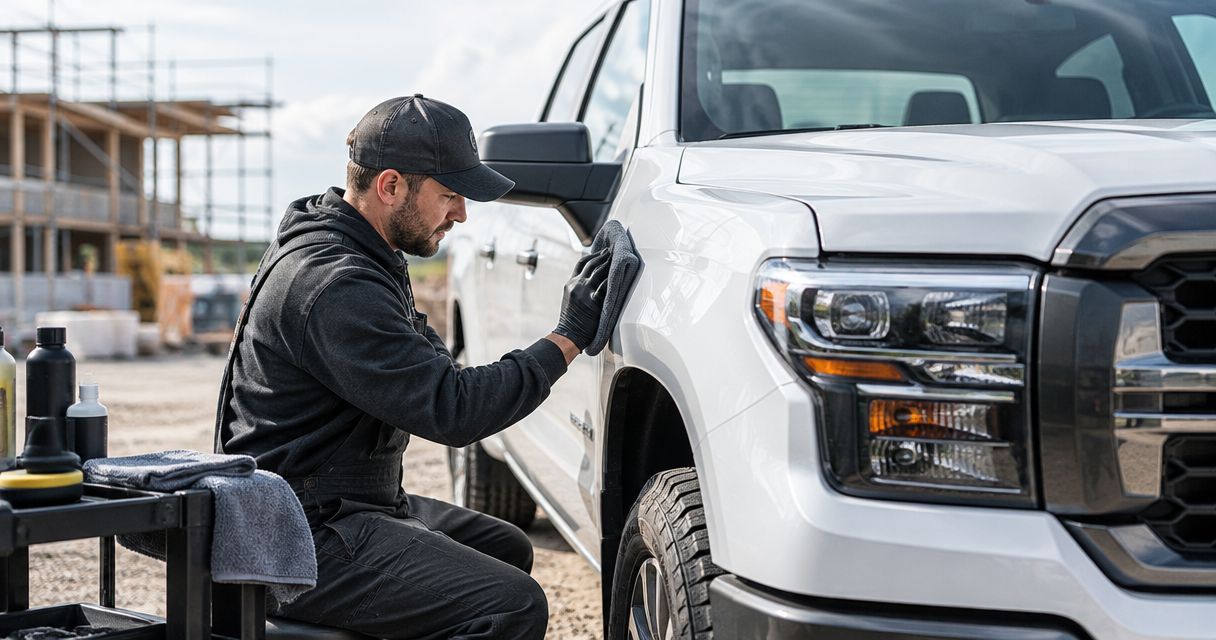
Start by describing your parking space honestly. A level driveway is not automatically an approved coating location, and an active construction site introduces questions about dust, vehicle movement, weather exposure, and access. Ask the provider what conditions the proposed service requires.
Mobile service can remove the need to arrange a vehicle drop-off, but it still needs a workable location. Confirm shelter, power, water, clearance, and permission requirements rather than assuming the provider supplies everything or can work anywhere.
For 2026 enquiries in Exeter, Rye, North Hampton, NH, or Newburyport, MA, provide the exact service address. Exeter is within the stated service area; confirm coverage for the other locations before planning your day. The local paint correction and ceramic coating guide provides a starting point for those location-specific questions.
- Send a photograph of the intended work area.
- Explain nearby construction activity and airborne dust.
- Confirm site access and property-owner permission.
- Ask what happens if conditions are unsuitable.
5. Agree on downtime and return-to-work instructions
Check your own calendar first. Identify when the truck can stay parked without interrupting deliveries, estimates, or crew transport. Then ask the detailer to explain the service schedule and any restrictions after application.
Do not copy curing instructions from another coating’s website. Water exposure, washing, storage, and return-to-service guidance depend on the actual product and application instructions. A promised completion time is not necessarily permission to drive straight into a muddy jobsite.
If you manage several vehicles, begin with 1 truck as a scheduling trial before arranging the others. This tests your own handover and work arrangements; it does not establish a coating-performance result.
- Separate application time from aftercare restrictions.
- Ask when driving, washing, and outdoor parking are permitted.
- Arrange another vehicle when the work schedule requires it.
- Obtain the relevant instructions in writing.
6. Build maintenance into your normal routine
Start with the washing arrangements you already use. Tell the detailer whether you wash at home, use a commercial wash, or depend on employees to clean the truck. The useful maintenance plan is one you can follow consistently.
Ceramic coating does not make dirt harmless or eliminate washing. Follow the coating-specific instructions, use suitable cleaning products, and ask how to handle unusual contamination. Do not use aggressive solvents on the assumption that coated paint tolerates anything.
For a 2026 maintenance plan, assign responsibility for cleaning and reporting problems. An owner-operated pickup needs a simple routine; a shared trade vehicle also needs clear instructions for everyone who washes it.
- Keep the coating’s care instructions with the vehicle records.
- Tell anyone washing the truck what methods are permitted.
- Ask about prompt removal of bird droppings and other contamination.
- Photograph unfamiliar staining before attempting aggressive treatment.
Discuss your work truck
Ask about combined paint correction, ceramic coating, and mobile-service requirements for your address.
Compare the options for a working vehicle
Choose the treatment around the problem, not the most impressive package name. Routine cleaning, paint correction, coating, and physical protection address different needs. Ask the provider to explain what belongs in your scope and what does not.
| Option | Best for | Main benefit | Key limitation |
|---|---|---|---|
| Routine washing and detailing | Owners primarily dealing with dirt and everyday presentation | Cleans the vehicle without committing to a coating | Does not substitute for paint correction or physical damage repair |
| Paint correction without coating | Owners whose immediate concern is suitable paint defects | Addresses the existing finish through polishing | Does not include ceramic coating unless specifically agreed |
| Paint correction with ceramic coating | Owners seeking paint improvement followed by a protective treatment | Combines preparation, finish work, and coating in an agreed sequence | Still requires washing and does not stop impacts |
| Ceramic coating without substantial correction | Owners whose paint assessment supports limited correction | Adds coating without unnecessary polishing | Existing defects remain unless addressed separately |
| Paint protection film assessment | Owners primarily concerned about chips and abrasion in exposed areas | Evaluates a physical protective film rather than a liquid coating alone | Requires a separate suitability and installation assessment |
Paint protection film is a different category, not a stated JMatt Mobile Detailing service. If physical damage is your main concern, seek a suitable assessment rather than expecting ceramic coating to serve as an impact barrier.
Common mistakes contractors make
Treating the whole truck as one surface
Painted panels, textured trim, glass, wraps, lettering, bed liners, and toolboxes are not interchangeable. A quote for paint coating does not establish that every exterior surface is included or suitable for the same product.
Ask for the coated surfaces to be listed. Mention graphics and planned lettering changes before agreeing to the work.
Booking before checking the job calendar
A quiet morning on your calendar does not establish that the vehicle can return to unrestricted use that afternoon. Application and aftercare requirements need to fit the truck’s next assignment.
Confirm the provider’s instructions before promising the vehicle to a crew. Keep the service date separate from the date you need full working use.
Choosing correction by the biggest claim
A work truck does not automatically need the most intensive polishing. Paint condition and safe correction limits matter more than chasing every mark.
Ask what will improve, what will remain, and why. An explained limitation is more useful than an unsupported promise of perfection.
Expecting a coating to solve jobsite contamination
Construction dust, paint overspray, cement residue, and other trade-related contamination need identification before removal. Do not assume ceramic coating makes these substances safe to scrub or dissolve with whatever is in the van.
Tell the detailer what the truck encounters. Ask for a response plan that fits the coating and contaminant rather than improvising after exposure.
FAQ
Is ceramic coating worth it for a contractor’s work truck?
Ceramic coating is worth considering when easier cleaning and a prepared paint finish match your priorities. It is not a substitute for washing, chip protection, or repair of damaged paint. Confirm the correction and coating scope before booking.
Does ceramic coating stop scratches from tools and ladders?
Ceramic coating is not an impact barrier for tools, ladders, or loading damage. Use suitable handling practices and physical protection where equipment contacts the truck. Do not choose coating on a promise that it makes paint scratch-proof.
Do I need paint correction before coating my work truck?
Your truck needs a paint assessment before the correction scope is decided. Correction addresses suitable existing defects; coating does not remove them. Ask which marks can be improved safely and which will remain.
Can a mobile detailer coat my truck at a construction site?
A construction site is suitable only if it meets the provider’s working requirements. Confirm dust exposure, shelter, access, utilities, and vehicle movement before scheduling. Mobile service does not mean every parking space is suitable for coating application.
Does JMatt Mobile Detailing cover Exeter, Rye, North Hampton, and Newburyport?
Exeter is included in JMatt Mobile Detailing’s stated NH Seacoast service area. Confirm service at your exact address in Rye, North Hampton, or Newburyport before booking. A location guide does not establish coverage for every property.
Can ceramic coating go over my truck’s business lettering?
Compatibility with business lettering must be confirmed for the specific graphics and coating. Tell the provider whether the truck has vinyl, a wrap, painted lettering, or planned replacement graphics. Do not assume a paint-coating quote includes those surfaces.
How soon can my coated work truck return to a jobsite?
Return-to-work timing must follow the instructions for the coating actually applied. Ask separately about driving, water exposure, washing, and dusty or muddy conditions. Confirm those instructions before assigning the truck to its next job.
One last thing
Before your 2026 booking, explain whether you plan to replace the truck’s lettering or repair a damaged panel. That information belongs in the preparation discussion, not in a message sent after the coating is applied.
Bring the detailer your work schedule and paint concerns, not just a request for ceramic coating. A useful booking enquiry names the vehicle, its condition, your location, and the combined correction-and-coating work you want assessed.