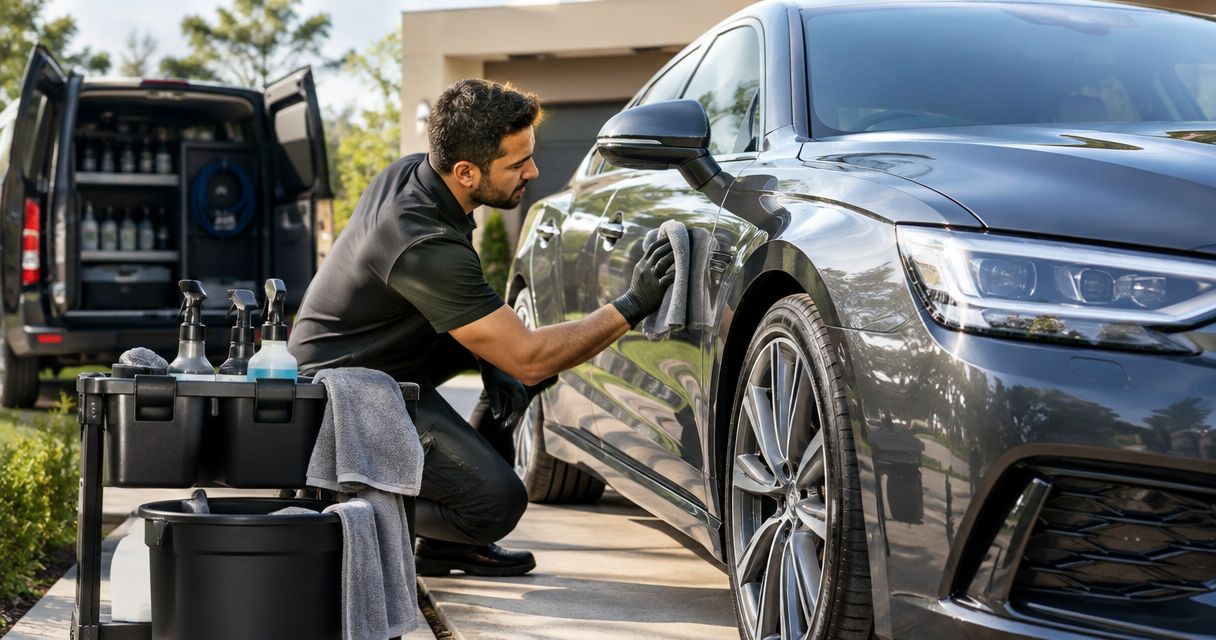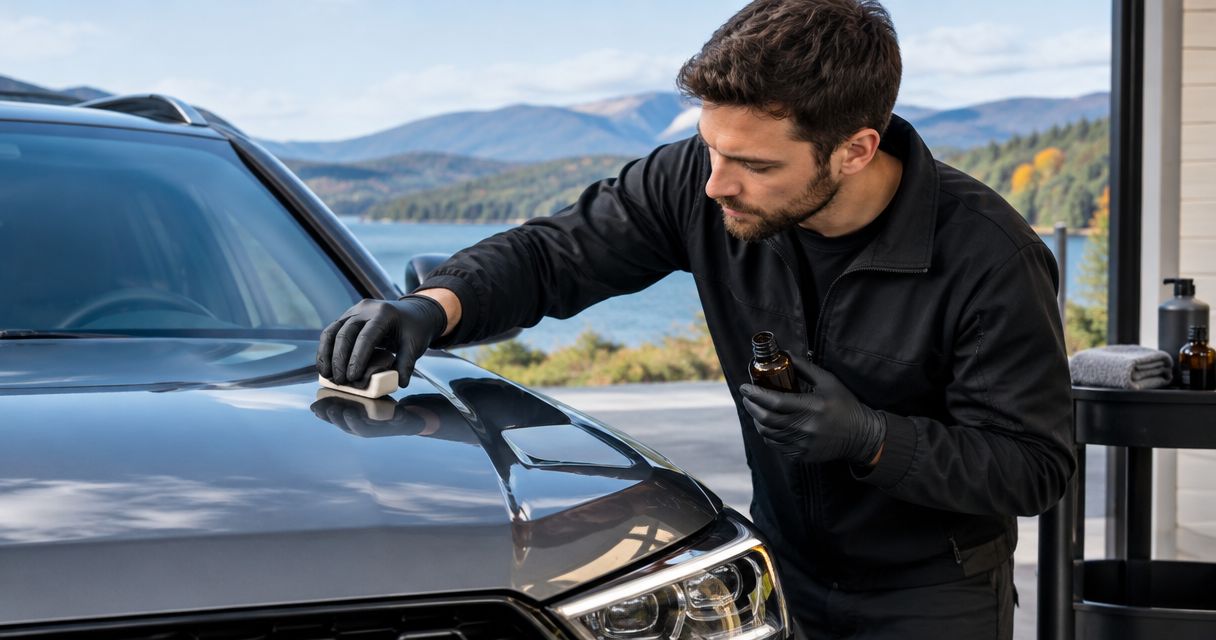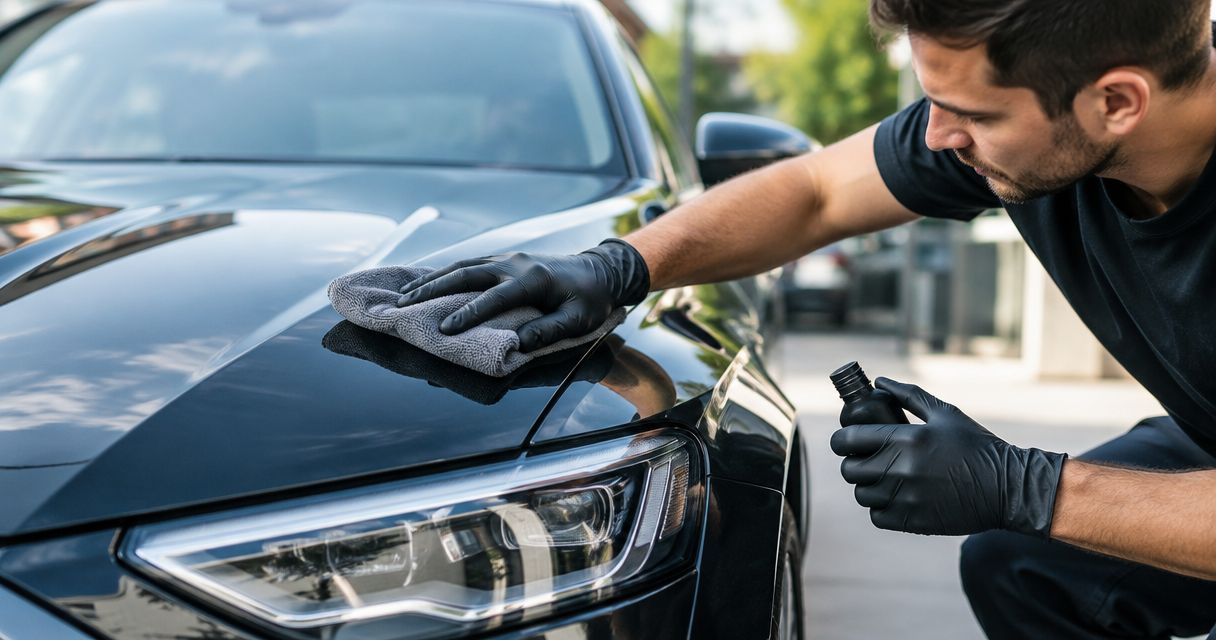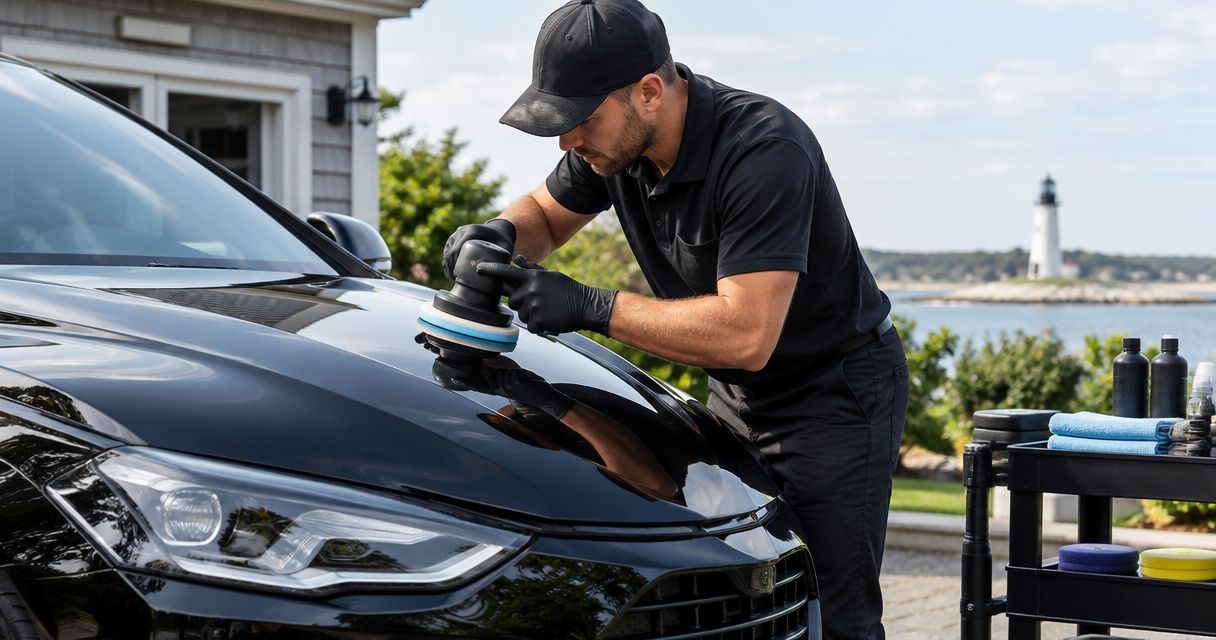
Exeter vehicle owners’ mobile detailing is car care performed at an agreed location to clean the vehicle and prepare its finish for the owner’s goals. This guide explains how to request paint correction and ceramic coating together, assess preparation, and confirm the practical arrangements for Exeter, Rye, North Hampton, and Newburyport.
- For car detailing exeter nh, ask about paint correction and ceramic coating together; never assume either is included.
- JMatt Mobile Detailing suits NH Seacoast owners seeking mobile service and a discussion about preparation and finish.
- Confirm your address, working conditions, correction scope, and coating aftercare before booking.
- For Rye, North Hampton, and Newburyport, confirm service coverage directly rather than assuming a town-specific page guarantees availability.
Why car detailing matters for Exeter vehicle owners
If you want a cleaner interior, book around cleaning needs. If you want to address paint swirls and then apply a coating, your enquiry needs a different starting point: paint condition, preparation, and the proposed finish. A clean car and corrected paint are not the same result.
JMatt Mobile Detailing provides mobile interior and exterior detailing, paint correction, and ceramic coating across the NH Seacoast, including Exeter. Mobile service brings the work to an agreed location, but you still need to confirm whether that location suits the proposed job.
JMatt Mobile Detailing is best for NH Seacoast owners who want to discuss mobile paint correction and ceramic coating together. That is a service-fit recommendation, not a promise that correction and coating come in one package. Ask for the actual scope before booking.
For your 2026 enquiry, make the desired outcome clear: cleaner paint, reduced visible defects, a coating, or a combination. That gives the conversation a useful direction without asking a provider to guess what you mean by a full detail.
Plan your paint correction and ceramic coating enquiry
Define the finish you want
Start with a free walk around your clean vehicle. Look at the bonnet, doors, roof, and rear panels in daylight, then use a handheld light to inspect areas where marks are difficult to see. Describe what bothers you rather than trying to name a treatment yourself.
Paint correction uses machine polishing to reduce suitable paint defects. Ceramic coating adds a protective surface layer; it does not replace correction or repair missing paint. If scratches, chips, or peeling paint concern you, separate those issues from your coating request.
For a 2026 booking, write down 3 priorities before making contact. These are your decision criteria, not an expected improvement score. For example, you might care most about visible swirls, the finish on the bonnet, and straightforward washing afterwards.
A daily driver does not need the same brief as a car kept mainly for display. Tell the provider how you use the vehicle and which visible defects you can live with. That helps define the work without demanding unnecessary polishing.
- Name the panels or marks that bother you most.
- Separate interior cleaning from your paint-finish goals.
- Describe whether the vehicle lives indoors or outdoors.
- Explain how you currently wash the car.
- Ask which defects polishing can address and which need another repair.
Inspect the paint before choosing the scope
You can make the first assessment yourself without buying equipment. Wash the car using a suitable method, inspect it when dry, and take clear photographs. Dirt can conceal marks, while reflections can make a photograph difficult to interpret.
Take 4 overview photos as a practical starting set: front, rear, and each side. Add close-ups of the specific defects you want assessed. The photo count is a suggested enquiry checklist, not a substitute for an in-person inspection.
JMatt Mobile Detailing offers paint correction and ceramic coating services, so use the enquiry to request an assessment of both. Photographs help explain your concerns; they do not establish paint thickness, previous repair quality, or the correction method the vehicle needs.
Ask the provider to explain the inspection process and how it affects the recommendation. A useful answer connects the work to your paint’s condition rather than assigning a package solely from the vehicle’s size or badge.
- Photograph clean, dry paint without filters.
- Include close-ups and wider views of the same panel.
- Disclose known repainting or previous correction work.
- Identify chips, deep scratches, and failing clear coat separately.
- Request an inspection before accepting a correction scope.
Confirm preparation and coating as one sequence
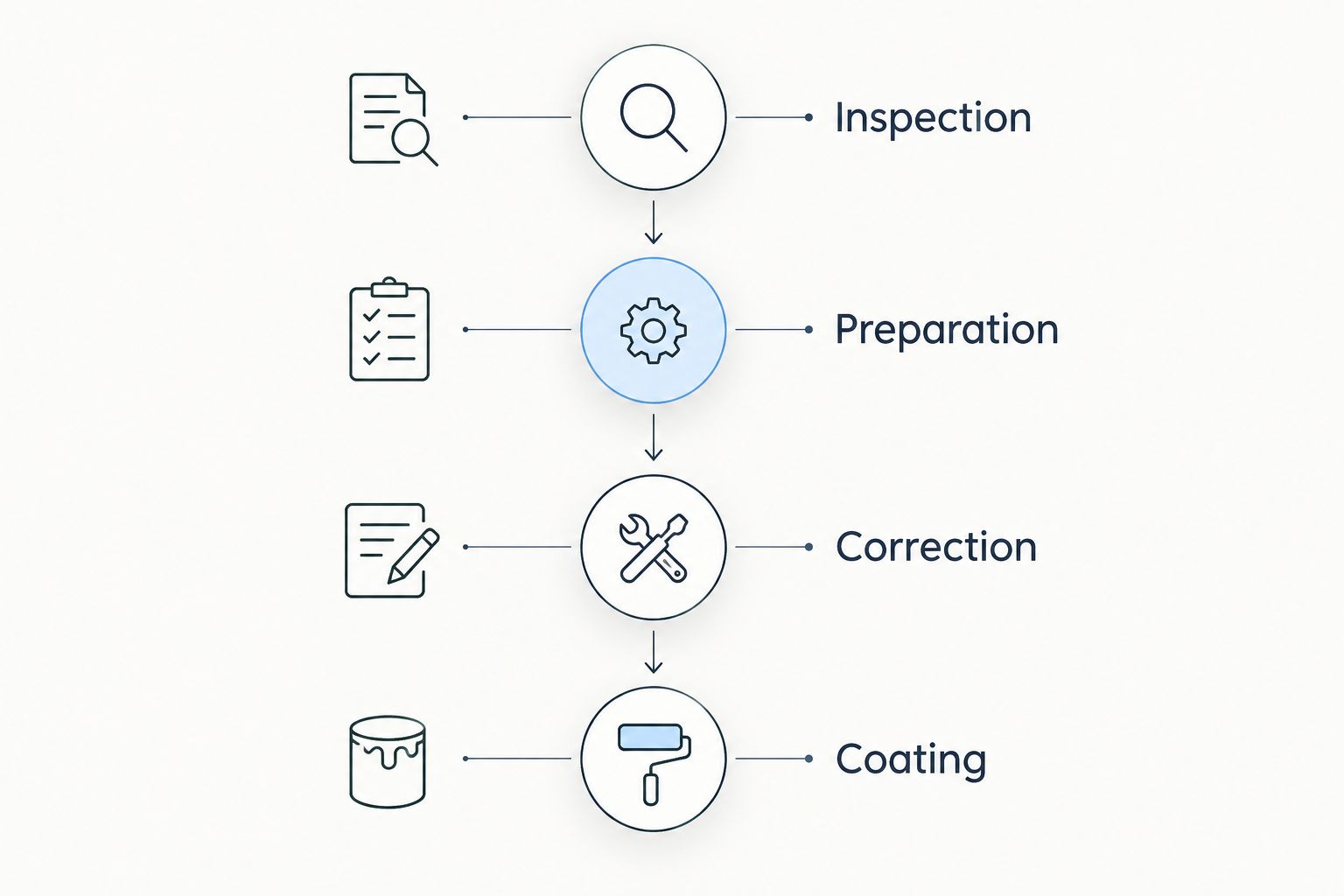
Start by writing down the proposed sequence yourself: inspection, preparation, correction where agreed, and coating application. Then ask the provider to explain what happens at each stage. This simple comparison exposes gaps more clearly than a long list of product names.
Preparation matters because a coating cannot substitute for cleaning or remove the swirls beneath it. Correction changes the paint’s visible condition; coating follows the agreed preparation. Approve the paint-finish target before approving the coating scope.
For your 2026 service enquiry, ask whether the quote includes correction, what correction is proposed, and what happens if inspection changes the recommendation. Do not infer inclusion from a service heading that mentions both treatments.
The finish also needs a sensible stopping point. Ask how the provider balances visible improvement with preserving the paint, particularly where repair history is unclear. An honest limitation is more useful than a promise to remove every mark.
- Confirm the cleaning and decontamination steps.
- Ask how the correction method is selected.
- Identify the finish you will review before coating.
- Confirm which surfaces the coating scope covers.
- Request written clarification when inspection changes the work.
Check your address and working conditions
Begin with a practical check of your proposed parking space. Note access, overhead cover, nearby obstructions, and whether the car can remain there after the work. You do not need to decide whether the site is technically suitable; you need to describe it accurately.
Mobile detailing removes the need to take the vehicle to a fixed premises for the appointment. It does not make every driveway, shared car park, or roadside space suitable for every process. Let the provider confirm the requirements for the actual job.
Exeter is explicitly included in the stated NH Seacoast service area. For Rye and North Hampton, NH, or Newburyport, MA, give the exact address and confirm coverage directly. A nearby town or a town-specific guide is not confirmation that your appointment can be accepted.
Before scheduling in 2026, ask how weather, shelter, and post-application conditions affect the arrangements. Avoid supplying your own assumptions about water, electricity, or indoor space: confirm what is needed.
- Provide the town and exact proposed working location.
- Describe parking access and overhead cover.
- Ask whether water or electricity is required.
- Confirm permission to work in a shared parking area.
- Ask what happens if weather makes the location unsuitable.
Compare written scopes instead of package labels
Make a free comparison sheet with the work each provider proposes. Use the same headings for every enquiry: inspection, preparation, correction, coating coverage, location requirements, and aftercare. A short written scope is easier to assess than a name such as premium detail.
For a combined service, the important distinction is what happens to the paint before coating. Ask whether correction is included, optional, or subject to inspection. Also confirm whether interior work is part of the enquiry or a separate request.
Use 2 checks before approving the appointment: does the scope address your stated finish goals, and can the proposed work be completed at the agreed location? These are booking checks, not a claim about how long the service takes.
Your 2026 comparison should also record exclusions. Chips, deep scratches, existing paint failure, and surfaces outside the coating scope deserve explicit discussion. A clearly limited proposal can fit your needs better than a vague promise of a complete transformation.
- Compare preparation steps using the same headings.
- Record the agreed correction scope and its limitations.
- Confirm the surfaces included in coating application.
- Keep interior requests distinct unless expressly included.
- Ask for changes and exclusions in writing.
Agree on aftercare before you book
Start by describing your existing wash routine and where you keep the car. If you use an automatic wash, wash at home, or depend on occasional professional cleaning, tell the provider. Aftercare instructions need to work with the way you actually maintain the vehicle.
A ceramic coating does not remove the need to wash the car. It also does not make paint immune to scratches or stone chips. Before accepting the service, ask for the instructions that apply to the proposed coating rather than relying on general advice from another product.
Confirm when the vehicle can be driven, exposed to water, and washed after application. Those directions depend on the coating and conditions; do not borrow a waiting period from an unrelated service page.
Then make the booking enquiry with your address, photographs, finish priorities, and any timing constraints. Ask for a combined correction-and-coating discussion, while making clear that you want the actual inclusions confirmed. This keeps the conversation focused on the higher-value paint work you are considering.
- Explain your normal washing and parking habits.
- Request coating-specific care instructions.
- Confirm restrictions immediately after application.
- Ask how to handle dirt or contamination during that period.
- Keep the written scope and aftercare guidance together.
Discuss your paint finish
Ask about correction, coating scope, and mobile arrangements for your vehicle and address.
Compare detailing routes for your vehicle
Choose the route that matches the paint condition and your goal, not the longest service description. The options below describe service approaches, not confirmed JMatt Mobile Detailing packages. Every inclusion still needs agreement.
| Option | Best for | Main benefit | Key limitation |
|---|---|---|---|
| Interior and exterior detailing | Owners whose main goal is cleaning | Addresses dirt and interior or exterior cleaning needs | Does not establish that paint correction or coating is included |
| Preparation and coating without correction | Owners whose paint assessment supports that scope | Focuses on preparing suitable paint for coating | Does not remove existing swirls through correction |
| Agreed correction followed by coating | Owners seeking visible paint improvement and a coating | Connects the finish work with the coating preparation | Needs inspection, clear exclusions, and suitable working conditions |
| Paint or body repair before detailing | Owners with damage beyond polishing | Addresses repair needs before finish care | Detailing and coating do not replace the repair |
New paint is not automatically defect-free, and older paint is not automatically a candidate for extensive correction. Ask for a condition-based recommendation. If the inspection supports less polishing than you expected, assess the explanation rather than treating additional work as better by default.
Common mistakes local vehicle owners make
Assuming every named town is covered
An Exeter enquiry and a Newburyport enquiry need address-specific confirmation. Do not use proximity as proof of coverage. Give the location before discussing appointment arrangements, especially if the car is kept somewhere other than your home.
Treating ceramic coating as scratch repair
A coating is not a replacement for correcting suitable defects or repairing damaged paint. If visible swirls are your main concern, make them part of the agreed scope before application. Otherwise, the service brief does not address the reason you enquired.
Assuming a combined heading means combined inclusions
Paint correction and ceramic coating can be discussed together without both being included automatically. Ask exactly what preparation and correction the proposal contains. Keep that answer in the written scope rather than relying on the package name.
Booking mobile work without checking the site
A convenient address is not necessarily a suitable working location. Shared parking rules, access, shelter, and post-application arrangements need confirmation. Discuss these details before reserving time, not when the provider arrives.
FAQ
What should I ask for when searching car detailing Exeter NH?
Ask for paint correction and ceramic coating together if your goal is to improve the visible finish and add a coating. Describe the paint defects, provide your Exeter address, and confirm the actual inclusions before booking.
Does JMatt Mobile Detailing offer service in Exeter?
JMatt Mobile Detailing lists Exeter within its NH Seacoast service area. Confirm the proposed address and working conditions for the specific correction and coating job.
Can I book mobile correction and coating in Rye or North Hampton?
Confirm Rye or North Hampton coverage directly before booking. Provide the exact address and ask whether the location suits the proposed paint correction and ceramic coating work.
Can I arrange mobile detailing in Newburyport, MA?
Confirm Newburyport service coverage directly with the provider. A town-specific guide does not confirm that a particular address or appointment can be accepted.
Does ceramic coating remove scratches and swirl marks?
Ceramic coating does not remove scratches and swirl marks through paint correction. Ask which defects need polishing, which need repair, and which will remain before agreeing to coating application.
Does a new car need paint correction before ceramic coating?
A new car needs a paint inspection before deciding whether correction is appropriate. Vehicle age alone does not establish the condition of the finish or justify a particular polishing scope.
What do I need to provide for mobile paint correction and coating?
Provide your address, clear vehicle photographs, finish goals, and a description of the proposed working space. Ask the provider to confirm access, shelter, utilities, and aftercare requirements rather than assuming them.
One last thing
Ask what should remain untouched. A useful correction discussion covers not only which marks can improve, but also where further polishing is inappropriate or where repair is the better route. That question keeps your 2026 booking focused on careful preparation rather than an unrealistic promise of flawless paint.