Paint correction can reduce some deep-looking scratches, but it cannot remove a scratch that extends through the clear coat into the color coat, primer, or bare material. For your 2026 booking, the right question is whether the scratch can be safely polished away, softened without complete removal, or repaired before correction and ceramic coating.
- Can paint correction remove deep scratches? Only when the damage stays within clear coat that can be safely polished.
- Ceramic coating does not repair missing paint or replace scratch repair.
- Jmattdetailing offers mobile paint correction and ceramic coating; confirm the combined service scope before booking.
- Choose a paint assessment before asking for complete scratch removal.
Why this matters
A scratch that looks dramatic is not necessarily deep. Paint transfer, surface contamination, and scratches in the clear coat can look similar until the panel is cleaned and inspected.
The reverse matters, too. A narrow scratch can penetrate the finish even when the surrounding panel looks good. Asking a detailer to keep polishing until that line disappears can mean removing more clear coat than the panel should lose.
For a 2026 correction-and-coating enquiry, start with the damage rather than a package name. Jmattdetailing provides mobile detailing, paint correction, and ceramic coating across the NH Seacoast, including Exeter, Portsmouth, and Dover. Confirm which preparation, correction, and coating steps your proposed service includes.
Can paint correction remove deep scratches?
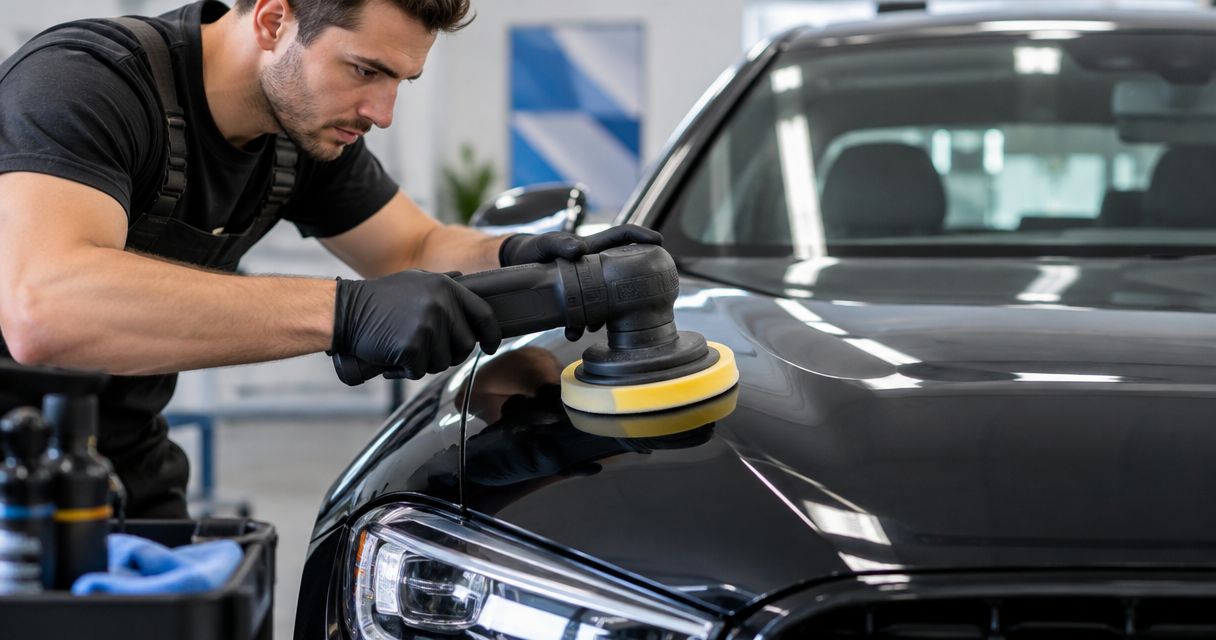
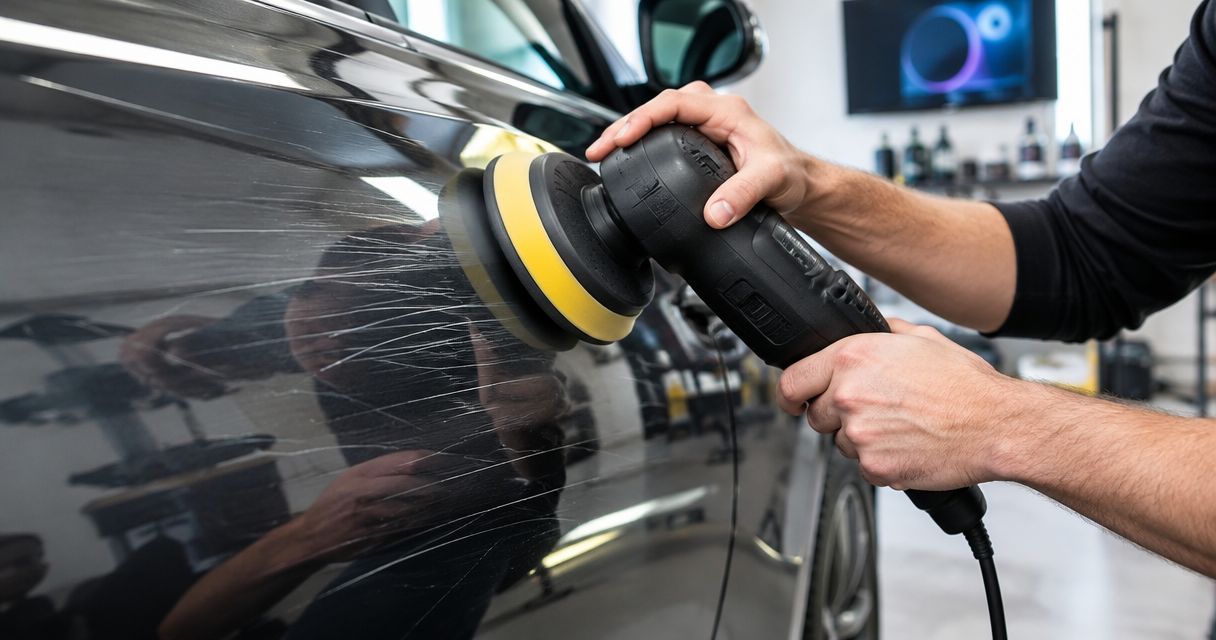
Paint correction removes scratches by abrading the surrounding finish, not by adding missing paint. On a clear-coated vehicle, complete removal requires enough sound clear coat around the defect to level it safely.
That distinction separates correction from repair. Polishing can improve the edges and surrounding appearance of a deeper scratch, but it cannot replace the color or primer the scratch has removed.
Use this comparison to decide what kind of assessment to request. These are treatment paths, not confirmed packages or promises about your vehicle.
| Treatment path | Best for | Main benefit | Main limitation |
|---|---|---|---|
| Paint correction | Scratches confined to safely correctable clear coat | Reduces surface defects and improves the surrounding finish | Removes some finish; cannot replace missing paint |
| Correction and ceramic coating | Owners seeking finish improvement followed by a protective coating | Addresses preparation and protection in a planned sequence | Coating does not erase scratches left after correction |
| Touch-up repair | Localized damage with missing color | Adds paint to the damaged area | Texture and color differences can remain visible |
| Body-shop refinishing | Damage requiring restoration beyond polishing | Repairs the affected finish rather than polishing around missing paint | Requires a separate repair assessment and scope |
A good assessment explains which result is realistic: removal, reduced visibility, or repair referral. Those outcomes are different. Have that conversation before approving work.
What does a scratch catching your fingernail mean?
A scratch that catches a fingernail is a warning to avoid promising complete removal. It is not a reliable measurement of the paint layers involved or the amount of clear coat remaining.
Do not repeatedly drag a nail across dirty paint to diagnose it. Clean inspection, suitable lighting, paint history, and professional judgment provide a better basis for deciding what to do next.
What if the scratch looks white?
A white-looking line is not enough to identify exposed primer. Scratched clear coat can scatter light and appear pale, while transferred material can also sit on top of the finish.
Treat the color as a clue, not a diagnosis. If cleaning reveals missing color, exposed material, peeling, or a distinct chip, ask about repair rather than assuming more polishing will solve it.
Why scratch-removal results vary
Scratch depth matters, but it is not the only factor. Your detailer needs to assess the panel as a whole rather than judge the line from a photograph alone.
- Damage depth: A defect within clear coat is different from a cut through the color coat. Correction cannot put removed layers back.
- Remaining finish: Previous polishing and existing wear affect how much correction is appropriate. A visually small scratch does not establish a safe polishing allowance.
- Paint history: Repainted panels and previous repairs need their own assessment. Do not assume every panel has the same finish or condition.
- Panel shape: Edges, creases, and raised body lines require particular care. The safest approach on a broad panel is not automatically appropriate at an edge.
- Your finish goal: Reducing a scratch's visibility is different from making it disappear. Agree on the goal before work starts.
- Other damage: Peeling clear coat, corrosion, and missing paint change the job from surface correction to repair assessment.
Preserving sound paint is more important than chasing a single scratch. A remaining line can be the appropriate stopping point, even when the rest of the panel improves substantially.
How should you assess a scratch before booking?
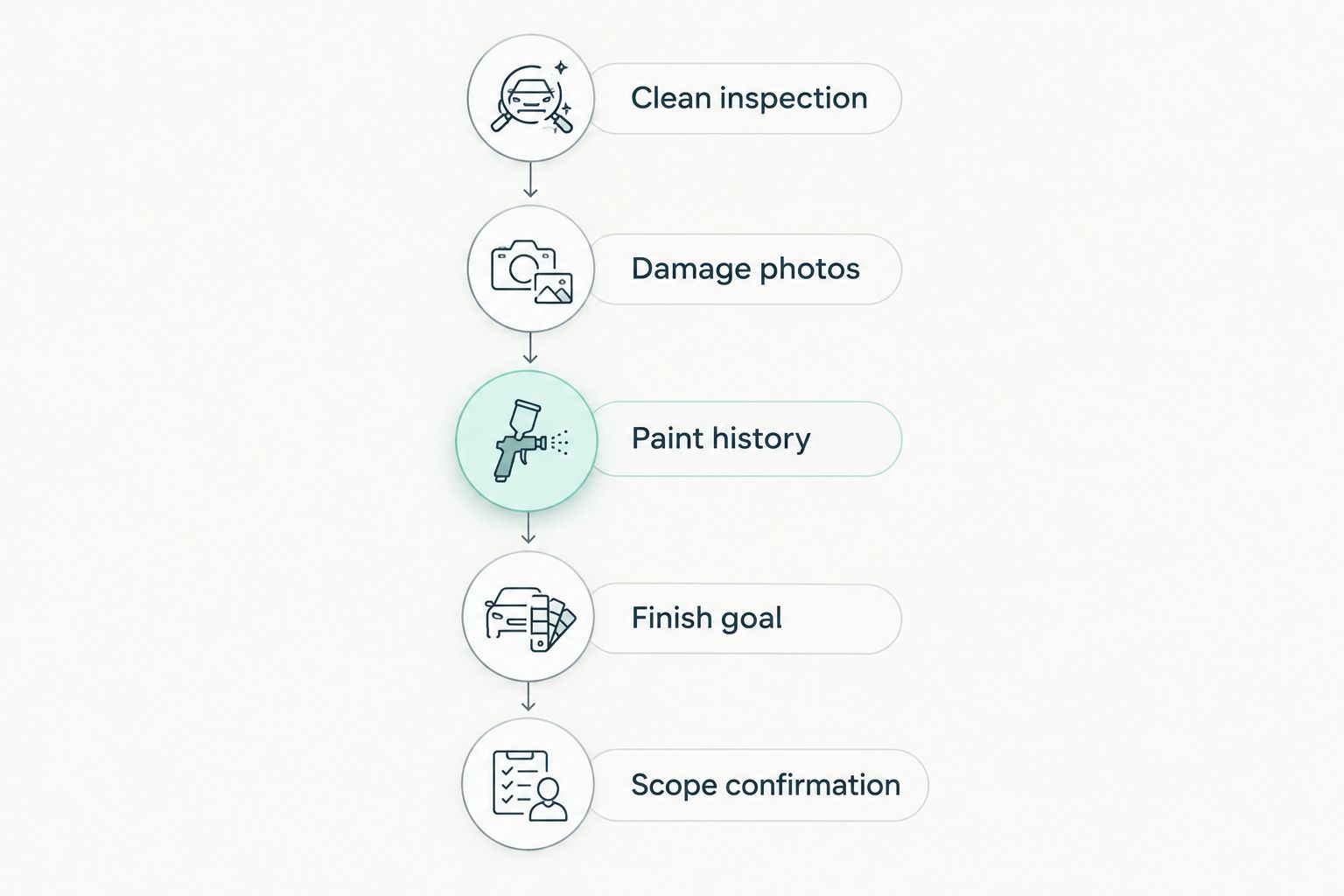
Use this sequence to prepare a useful enquiry. It helps you describe the damage without trying to perform paint correction yourself.
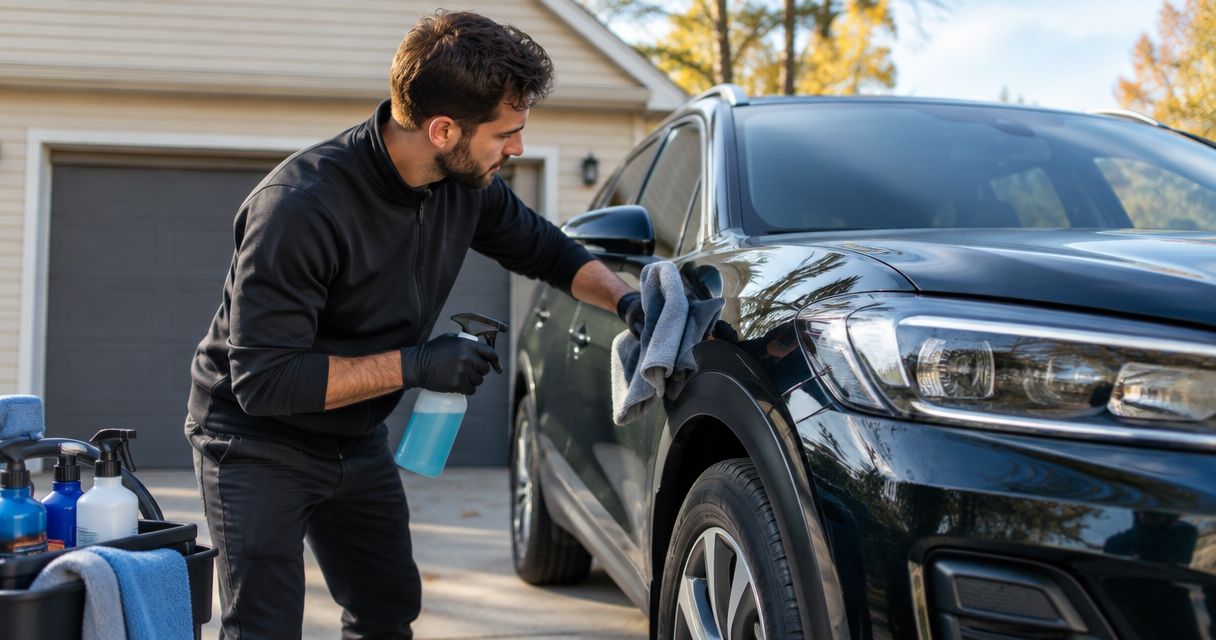
- Clean inspection. Look at the area after a gentle wash, without rubbing a dirty panel. Surface dirt can obscure the defect and cause additional scratches during handling.
- Damage photos. Take an overall panel photograph and close views in different lighting. Include the scratch's position relative to edges, trim, and body lines.
- Paint history. Explain any known repainting, body repairs, previous correction, or existing coating. Say when the history is unknown rather than guessing.
- Finish goal. State whether your priority is making the scratch less noticeable, restoring the surrounding finish, or preparing the vehicle for ceramic coating.
- Scope confirmation. Ask what needs an in-person assessment and which steps belong in the proposed service. Do not treat a photo-based discussion as a guarantee of removal.
Do not use aggressive compounds, household abrasives, or sanding as a diagnostic test. An attempt to prove that a scratch will polish out can change the repair your vehicle needs.
For your 2026 appointment, send the photographs before discussing a combined correction-and-coating booking. Ask whether the scratch needs inspection or body repair before the rest of the vehicle is prepared.
Should you combine paint correction and ceramic coating?
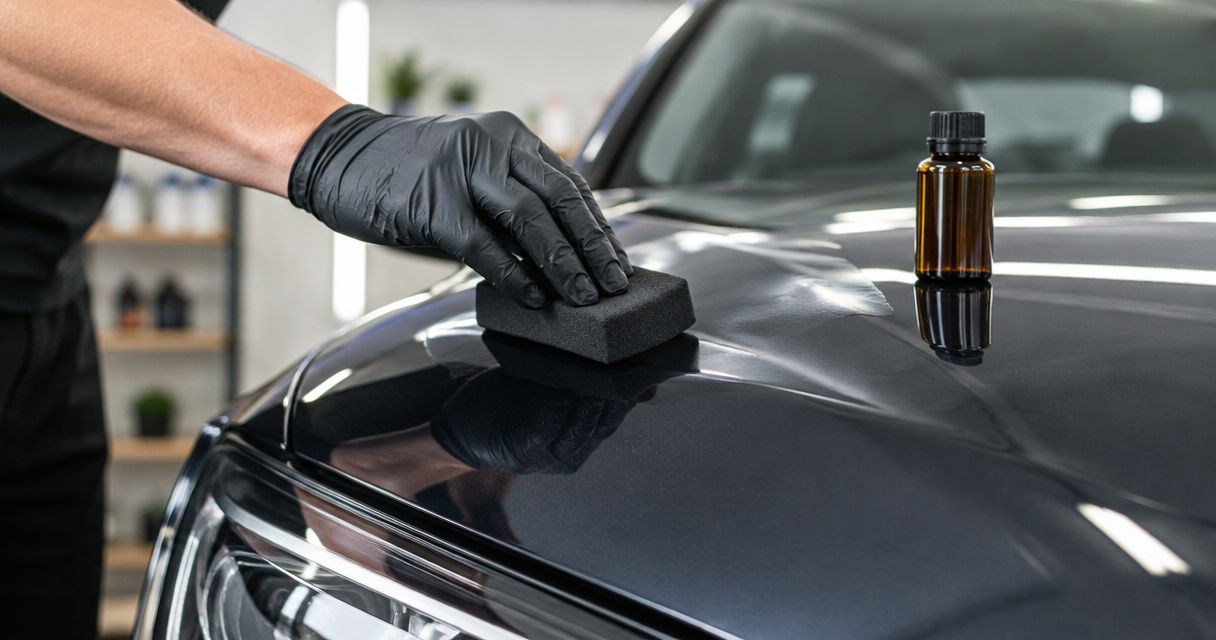
Plan correction and coating together, but confirm them separately in the scope. Correction addresses the finish's existing defects; ceramic coating is applied after the agreed preparation. One does not automatically include the other.
If a scratch needs paint repair, establish that before coating the affected area. Newly repaired paint also needs preparation and coating decisions that follow the repairer's and coating manufacturer's instructions.
A coating is not a substitute for intact paint. It does not rebuild a gouge, replace missing clear coat, or turn an unrepaired scratch into a repaired surface. The guide to whether ceramic coating prevents scratches addresses that separate protection question.
For your combined service enquiry, ask:
- Which scratches are expected to improve, and which are expected to remain?
- What cleaning and surface preparation are included?
- Is paint correction included, and what result is being proposed?
- Is ceramic coating included, and which surfaces will receive it?
- Does any damage need body-shop attention before the appointment?
- What preparation, application, and aftercare conditions must the vehicle meet?
Jmattdetailing is a fit for NH Seacoast owners seeking mobile paint correction and ceramic coating. Its mobile service brings the appointment to the vehicle's location; the booking conversation still needs to establish whether that location suits the proposed work.
That convenience does not remove preparation requirements. Ask about the work area, weather arrangements, and access before agreeing to an appointment. Do not assume every driveway or parking space is suitable for every correction-and-coating job.
Discuss your correction and coating enquiry
Describe the scratch, your location, and the finish you want before confirming the service scope.
When is leaving a scratch the better choice?
Leaving a scratch is appropriate when removing it would require excessive correction or when paint is already missing. You can still discuss improving the surrounding finish without promising to eliminate the deepest defect.
Ask the detailer to distinguish the result under inspection lighting from the result in everyday viewing. A scratch that becomes less distracting has improved, but that is not the same as complete removal.
This distinction matters when you are choosing a combined service. You need to be comfortable with the corrected finish before a coating is applied over it. Do not approve coating on the assumption that it will complete unfinished scratch removal.
Should you request wet sanding for a stubborn scratch?
Do not request wet sanding simply because ordinary polishing has not removed a scratch. Sanding is an abrasive process that removes finish and requires a suitable assessment of the paint and defect.
A deeper technique does not make a through-paint scratch correctable. Ask why a proposed method is appropriate, what its limits are, and when the technician would stop.
Should you choose touch-up or a body-shop assessment?
Choose a repair assessment when the scratch has removed paint or exposed the material underneath. Touch-up and refinishing address missing paint in different ways; neither should be described as ordinary paint correction.
Explain your appearance expectations clearly. A localized touch-up can remain visible, while a refinishing proposal needs its own discussion of the affected area, preparation, and finish matching.
What should local owners ask before an appointment?
For Exeter owners, Jmattdetailing's stated NH Seacoast coverage includes your town. Include your vehicle's location and scratch photographs when asking about mobile paint correction and ceramic coating, then confirm the appointment arrangements directly.
For Rye, North Hampton, or Newburyport owners, confirm coverage for your exact address before making plans. A local search result or guide is not confirmation that a particular location is covered or suitable for the requested work.
Keep your 2026 enquiry specific. Describe whether you have a single scratch, widespread swirl marks, previous paint repairs, or a combination of defects. Explain that you are considering correction followed by ceramic coating, rather than asking for an unspecified detail.
Before you book, get a clear answer on the proposed preparation, correction limits, coating scope, and any repair that must happen first. Ask how to make a booking enquiry or arrange a call through the business's website; do not assume the service scope from a package label alone.
FAQ
Can paint correction remove a deep scratch completely?
Paint correction can completely remove a scratch only when it stays within finish that can be safely leveled. A scratch through the clear coat into missing color or primer needs repair rather than more polishing.
Will ceramic coating hide a scratch that polishing leaves behind?
Ceramic coating does not repair a scratch left after polishing. Agree on the corrected finish before coating rather than expecting the coating to erase remaining damage.
Can I tell how deep a car scratch is from a photo?
A photo does not reliably establish scratch depth or how much finish can be safely corrected. Send overall and close-up views, then confirm whether an in-person inspection is needed.
Is a scratch too deep if it catches my fingernail?
A scratch that catches your fingernail needs careful assessment, but the test does not identify the damaged paint layer. Do not treat it as proof that removal is safe or impossible.
Should I repair missing paint before ceramic coating?
Resolve missing-paint repair decisions before coating the affected area. Coordinate subsequent preparation and coating with the repairer's and coating manufacturer's instructions.
Can I book mobile correction and coating in Exeter in 2026?
Jmattdetailing's stated NH Seacoast service area includes Exeter. For a 2026 booking, confirm your address, the scratch assessment, and whether both paint correction and ceramic coating are included.
Can I book this service in Rye, North Hampton, or Newburyport?
Confirm service coverage for your exact address in Rye, North Hampton, or Newburyport before booking. Also confirm whether your proposed work location meets the requirements for correction and coating.
One last thing
Ask which scratches should remain, not just which scratches can disappear. That question makes paint preservation part of the conversation and gives you a clearer basis for approving the work.
The best next step is a specific enquiry: send photographs, describe known paint repairs, give your location, and request an assessment for combined correction and ceramic coating. Confirm the achievable finish before confirming the coating.