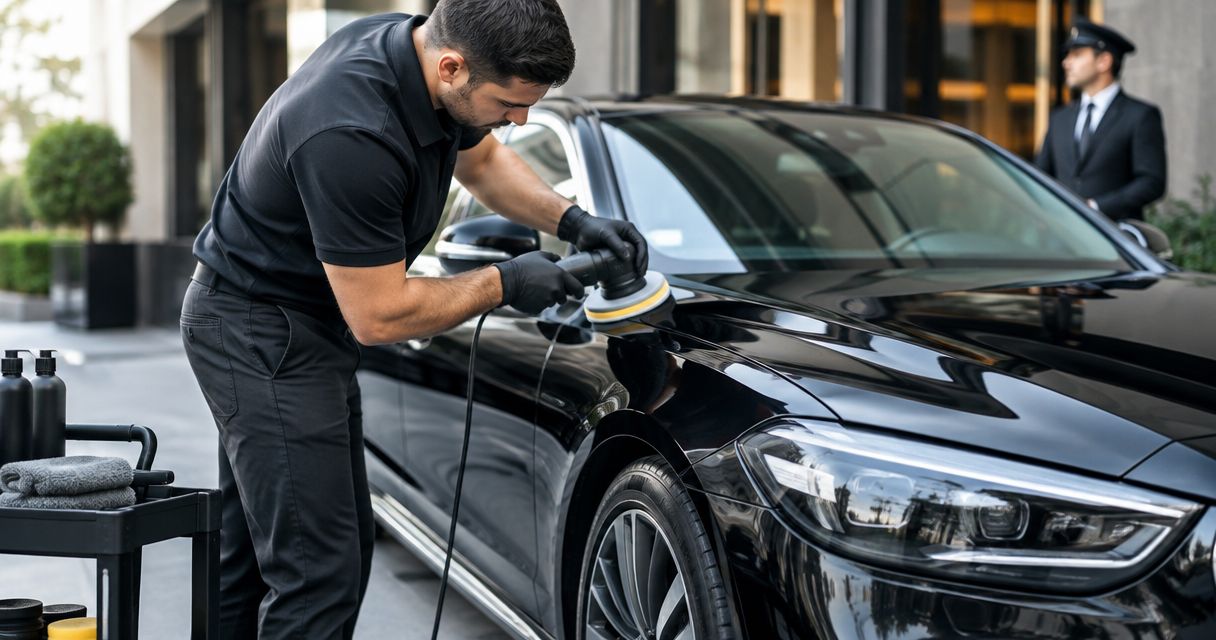
Chauffeur-service paint correction is controlled polishing that reduces paint defects with the aim of presenting a well-kept executive vehicle to passengers. This guide explains how to plan correction and ceramic coating together around vehicle condition, bookings, and the working conditions at your location.
- Paint correction for chauffeur services starts with inspection, not a promise to remove every scratch.
- JMatt Mobile Detailing suits NH Seacoast owners seeking mobile paint correction and ceramic coating assessment.
- Confirm correction, coating, preparation, and return-to-service instructions separately in the agreed scope.
- Choose a finish you can maintain between passenger journeys, rather than chasing every remaining defect.
Why paint correction matters for chauffeur services
Your executive vehicle is both transport and part of the service passengers experience. A clean car can still show circular wash marks, dull areas, and scratches under direct light; washing removes dirt, while correction addresses suitable defects in the paint surface.
The right goal is a consistent finish you can maintain, not scratch removal at any cost. Polishing removes a small amount of the paint surface, so the decision to pursue a defect must account for the condition of that surface.
For your 2026 vehicle-care plan, separate appearance improvement from protection. Correction improves the existing finish; ceramic coating adds a protective surface treatment after appropriate preparation. Neither replaces careful washing, and coating does not repair scratches.
JMatt Mobile Detailing provides mobile detailing, paint correction, and ceramic coating across the NH Seacoast, including Portsmouth, Dover, and Exeter. Mobile service removes the need to take the vehicle to a detailing location, but you still need to confirm the workspace and time out of service.
Plan correction and coating around your bookings
1. Inspect the paint before choosing the work
Start with a clean vehicle and a walk-around in daylight, then inspect with a suitable handheld light. Photograph what you see rather than trying to diagnose every mark yourself. A detailer can distinguish defects suited to polishing from damage that requires a different repair.
For a useful starting record, take 6 overview photos: front, rear, both sides, hood, and roof. Add close-ups of problem areas. This is a suggested inspection checklist, not a substitute for seeing the paint in person.
Dark paint makes this inspection especially useful because light-colored reflections can make fine marks conspicuous. Do not assume a dark sedan needs aggressive correction simply because its wash marks are easy to see.
- Record wash marks visible around reflected light.
- Photograph isolated scratches without promising their removal.
- Flag repainted panels and known repair history.
- Identify chips and peeling paint for separate discussion.
- Note trim, film, and existing coatings before work begins.
2. Set a finish target for passenger service
Decide what you want the vehicle to look like in normal working conditions. Inspect it where passengers approach and enter, not only under a bright inspection lamp. A sensible target accounts for paint condition, ongoing washing, and how the vehicle is used.
Set 2 inspection points for the job: one before authorization and one at handover. Agree which defects matter most and which should remain rather than receive further polishing. Record that agreement alongside your 2026 maintenance notes.
The manual starting point is simple: write down the concerns you want assessed. A professional inspection then turns those observations into a proposed process, without treating your requested result as a guaranteed outcome.
- Prioritize visible haze and uneven reflections.
- Identify high-visibility panels, including doors and the hood.
- Agree on defects to leave for paint preservation.
- Separate paint improvement from chip or body repairs.
- Request consistent inspection lighting at handover.
3. Confirm the combined correction and coating scope
Before requesting a combined service, list the work you expect in plain language. Preparation, correction, and coating are connected stages, but a service name alone does not establish what is included. Ask for the proposed work in writing.
JMatt Mobile Detailing is best for NH Seacoast vehicle owners seeking a mobile assessment of paint correction and ceramic coating together. The convenience is having the work assessed for your location; the limitation is that your site, paint condition, and schedule still need confirmation before booking.
Ask what the detailer will inspect and prepare before applying a coating. Product-specific instructions govern application and aftercare, so do not substitute a generic online timeline for the instructions supplied with your agreed service.
- Inspection: Confirm paint condition and the proposed finish target.
- Washing: Establish how surface dirt will be removed.
- Decontamination: Ask how bonded contamination will be assessed and treated.
- Correction: Confirm the polishing work and its limits.
- Coating: Confirm whether application is included and what surfaces it covers.
- Aftercare: Request written washing and return-to-service instructions.
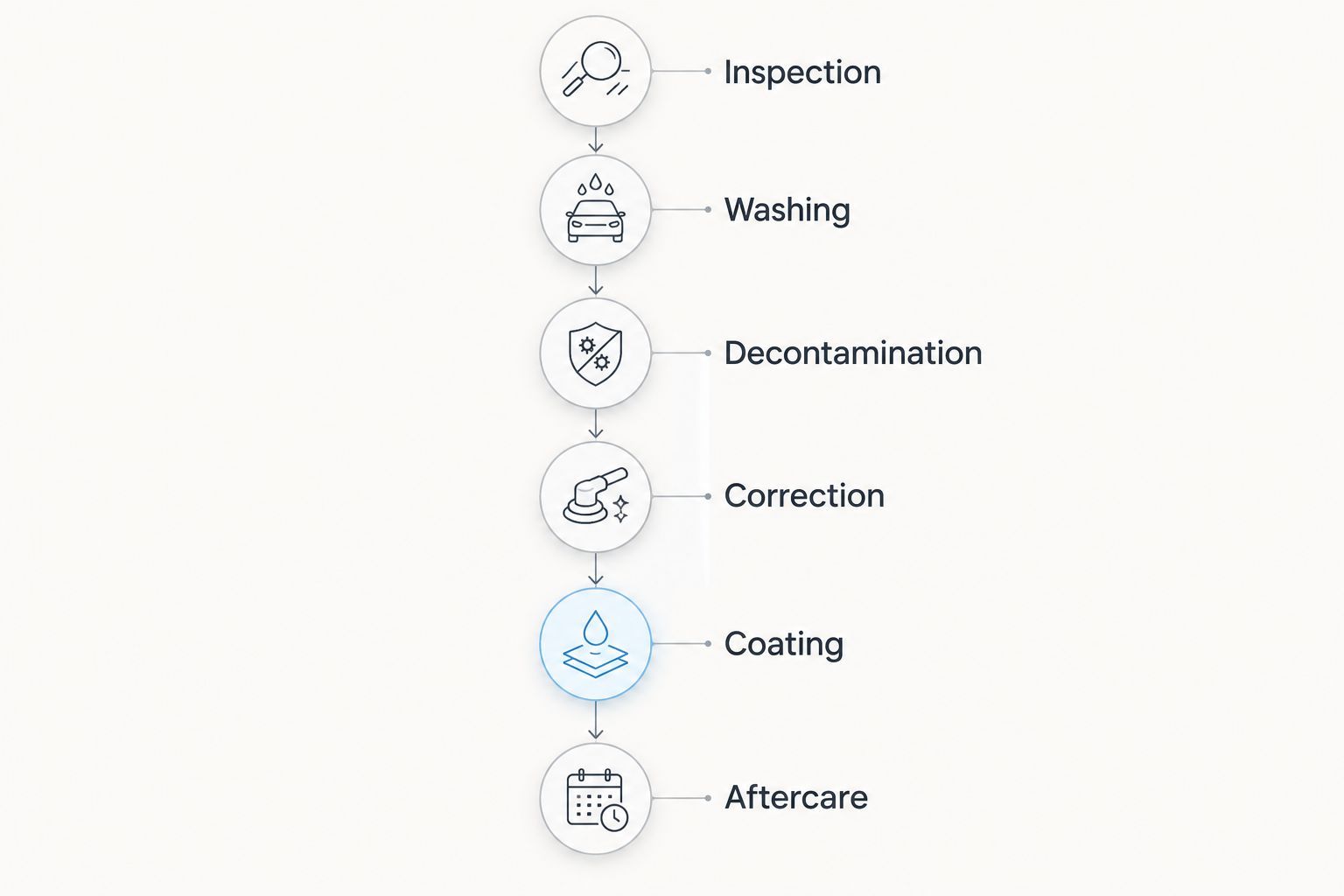
A combined plan should explain both what happens and what does not. For example, agreement to polish painted panels does not establish that wheels, glass, trim, or an interior service are included. Keep those questions in the booking discussion rather than discovering the difference at handover.
4. Check the mobile workspace and booking window
Start by reviewing your parking location and upcoming passenger commitments. Identify where the vehicle can remain undisturbed, then ask whether that space meets the detailer's requirements. Mobile work still needs suitable conditions for inspection, preparation, and the agreed coating process.
JMatt Mobile Detailing offers the convenience of service at a customer location, subject to confirming the job requirements. Do not assume every driveway, shared parking area, or uncovered space suits the proposed work. Discuss access and weather arrangements before reserving time.
For your 2026 booking calendar, distinguish work completion from permission to resume normal use. Those are separate questions. The guide to completing paint correction and ceramic coating in one visit covers the scheduling question to raise before booking.
- Confirm location access, including keys and parking permission.
- Ask about shelter and lighting requirements.
- Establish water and power requirements rather than assuming them.
- Discuss weather changes and the alternative arrangement.
- Confirm driving and washing restrictions after application.
- Leave passenger bookings outside the agreed unavailable period.
5. Compare proposals by process and limitations
You can compare proposals yourself with a simple written checklist. Put preparation, correction goals, coating scope, exclusions, and handover instructions side by side. A shared service label does not mean two proposals cover the same work.
Ask each provider to explain why the proposed correction suits your paint. A good discussion includes defects that should remain, not just those expected to improve. More polishing is not automatically a better result when preserving the finish is part of the objective.
If you manage several executive vehicles, begin with 1 vehicle before deciding whether the same approach suits the others. Use the handover and subsequent maintenance experience to refine your questions; do not assume identical paint condition across the fleet.
- Compare preparation steps, not just the headline service.
- Record correction limits and known paint concerns.
- Confirm coating surfaces and exclusions.
- Ask for handover instructions in writing.
- Establish who authorizes changes if inspection alters the proposal.
6. Build maintenance into the decision
Before booking, review how the vehicle is washed between journeys. Correction addresses existing defects; an unsuitable wash process can create fresh marks afterward. A coating does not make abrasive washing harmless or eliminate the need to remove dirt safely.
Write a short care sheet that every driver can follow. Use the coating provider's instructions for the initial care period, then agree on a repeatable maintenance process. Keep clean wash materials separate from those used on wheels and heavily soiled areas.
For your 2026 maintenance record, save the service scope, handover notes, and inspection photos together. This gives you a clear reference when discussing a new mark or deciding whether further polishing is justified.
- Follow initial care instructions before the next wash.
- Use clean wash materials suited to the task.
- Avoid dry wiping dusty paint between bookings.
- Separate wheel-cleaning materials from paint-contact materials.
- Record new damage before requesting more correction.
- Share care instructions with every driver handling the vehicle.
Discuss your correction and coating plan
Ask about paint condition, combined service scope, and mobile requirements before arranging a booking.
Compare the approaches for your executive vehicle
Choose the work that addresses the paint's actual condition. The options below are decision paths, not named packages or statements about what any provider includes.
| Approach | Best for | Main benefit | Key limitation |
|---|---|---|---|
| Maintenance detailing | Vehicles needing cleaning rather than defect removal | Removes dirt and supports presentation | Does not provide the defect reduction of correction |
| Limited correction with coating assessment | Owners seeking improvement without pursuing every defect | Sets a restrained correction target before protection is agreed | Deeper defects remain; coating inclusion needs confirmation |
| More involved correction with coating assessment | Vehicles with defects requiring closer professional evaluation | Allows the process to match the inspected condition | Requires careful paint assessment and a confirmed scheduling window |
| Paint repair assessment before detailing | Vehicles with peeling paint, exposed damage, or repair concerns | Addresses damage outside polishing's role | Correction and coating cannot substitute for necessary repairs |
For chauffeur services, choose the least aggressive correction that meets the agreed appearance target. Then confirm whether coating fits the paint condition and maintenance plan. Do not use the depth of correction as a shortcut for judging workmanship.
Common mistakes chauffeur-service owners make
Treating coating as scratch repair
Ceramic coating does not remove underlying scratches. If the existing finish concerns you, assess correction before agreeing to coating application. Otherwise, the appearance issue you wanted addressed remains unresolved beneath the treatment.
Booking against an assumed completion time
Do not schedule a passenger collection immediately after an estimated finishing time without confirming driving instructions. Ask separately about work duration, handover, and any restrictions after application. Build the vehicle's booking calendar around the answers.
Approving the same correction for every vehicle
Matching vehicles do not necessarily have matching paint histories. Repairs, previous polishing, and different washing routines change the assessment. Authorize each vehicle's process from its condition rather than copying the first proposal across the fleet.
Fixing the finish without changing the wash routine
If drivers continue wiping dusty doors with a reused cloth, the maintenance problem remains. Make the care process part of the handover and give every driver the same instructions. A finish is easier to manage when responsibility is clear.
FAQ
What's the best paint correction approach for a chauffeur car?
The best approach is the least aggressive correction that meets an agreed appearance target after inspection. Discuss ceramic coating as part of the same plan, but confirm whether it is included and appropriate for the paint.
Does ceramic coating remove swirl marks on an executive car?
No, ceramic coating does not remove swirl marks. Suitable paint correction addresses those defects before coating, subject to the condition of the paint and the agreed limits.
Can I drive the car straight after correction and ceramic coating?
Follow the detailer's product-specific return-to-service instructions rather than assuming immediate use is suitable. Confirm driving, water exposure, and washing restrictions before scheduling the next passenger journey.
Does JMatt Mobile Detailing serve chauffeur vehicles in Exeter, NH?
JMatt Mobile Detailing lists Exeter within its NH Seacoast service area and provides paint correction and ceramic coating. Ask about your chauffeur vehicle, exact location, mobile workspace, and combined service requirements before booking.
Can I book mobile correction and coating in Rye or North Hampton, NH?
Confirm service coverage for your exact Rye or North Hampton address before arranging a booking. Also describe the parking space and shelter so the provider can assess whether the proposed mobile work suits the location.
Can an executive car owner in Newburyport, MA arrange this service?
A Newburyport owner should confirm exact-address coverage directly before booking. Do not assume that a nearby service area establishes coverage or that the available workspace meets correction and coating requirements.
Is mobile paint correction better than taking a chauffeur car to a shop?
Mobile correction is better suited to owners who want to avoid transporting the vehicle and have a suitable working location. A shop-based arrangement is the alternative when the proposed work requires conditions the customer location cannot provide.
One last thing
Put paint preservation ahead of removing the final visible mark. A scratch left deliberately after inspection is not the same as a scratch overlooked. Ask the detailer to show you that distinction at handover and record it in your 2026 vehicle-care notes.
When you make the booking enquiry, lead with the vehicle, its paint concerns, your location, and your next passenger commitment. Those details make a correction-and-coating discussion more useful than asking for a service label alone.