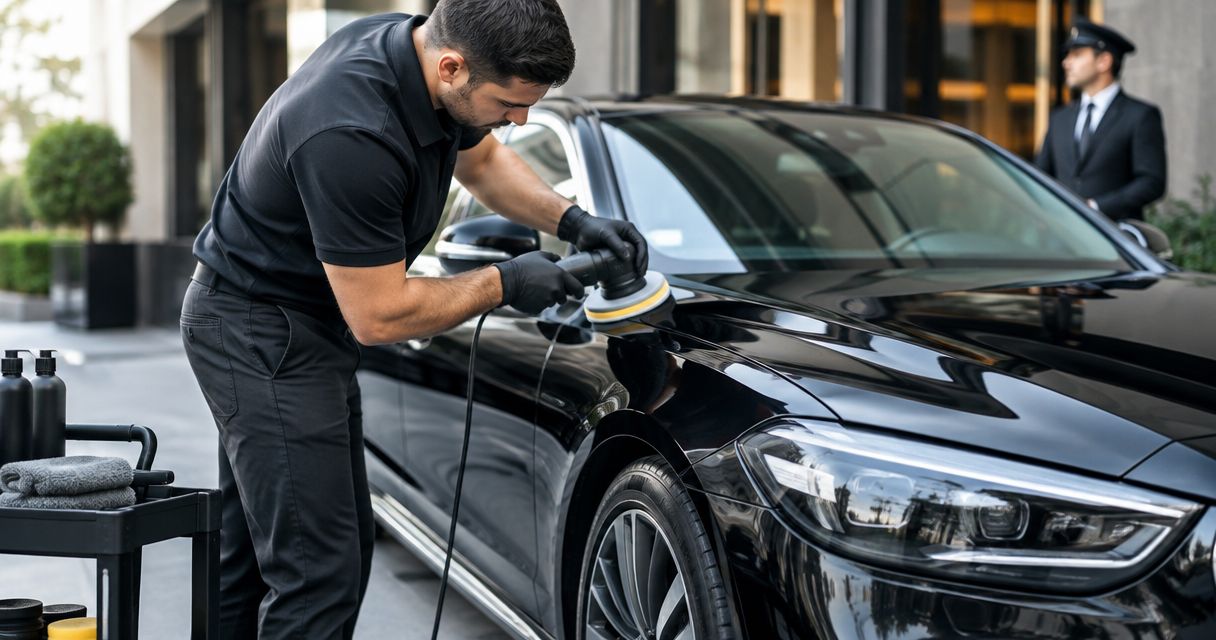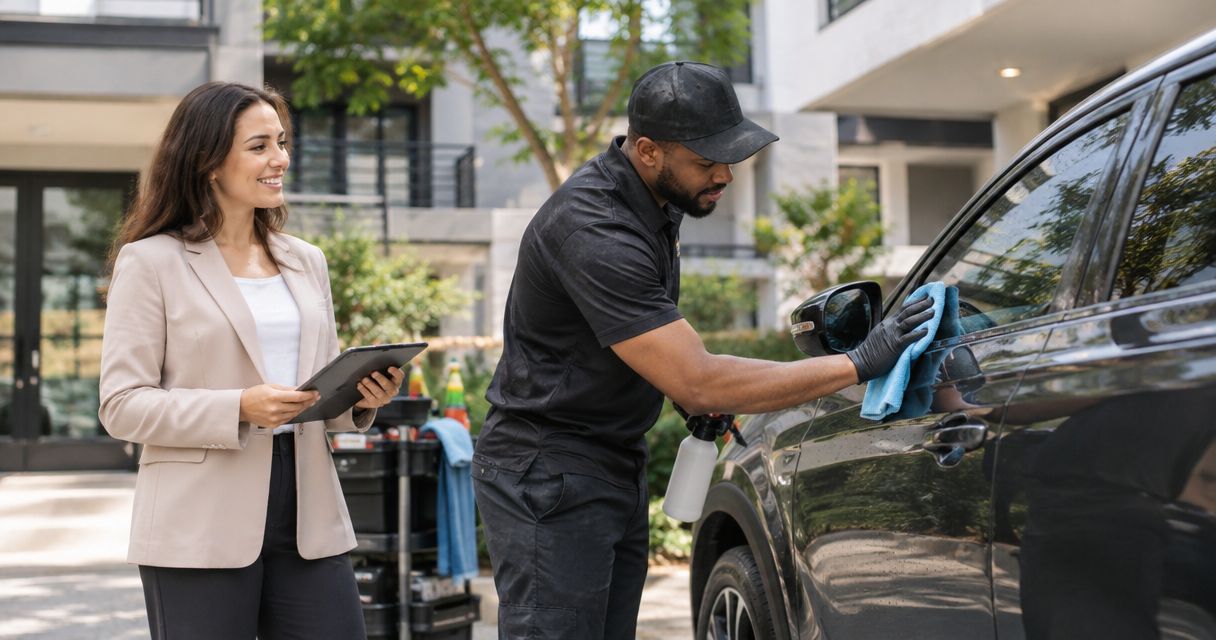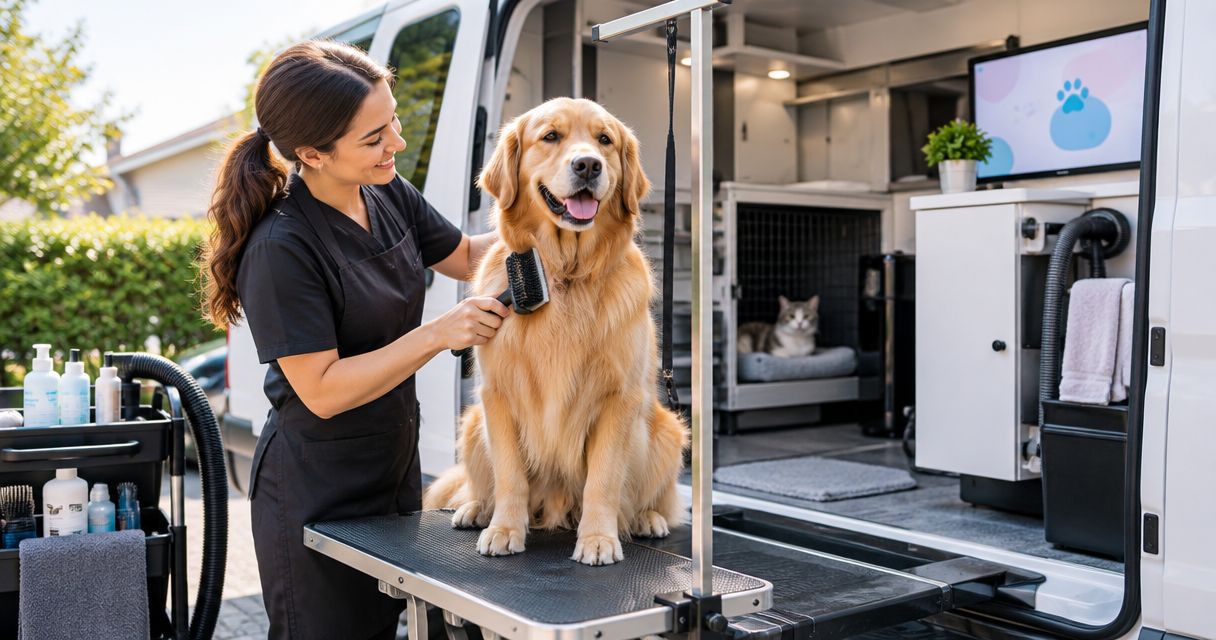
Pet groomers’ mobile detailing is vehicle cleaning and finish care aimed at keeping a working grooming van presentable without disrupting its care routine. This 2026 guide also covers veterinary vans, where animal-contact surfaces, installed equipment, and clinical cleaning procedures require clear boundaries.
- Mobile detailing for pet groomers should separate vehicle appearance from animal-care cleaning and disinfection.
- JMatt Mobile Detailing offers NH Seacoast vehicle owners mobile detailing, paint correction, and ceramic coating services.
- Discuss paint correction and ceramic coating together, but confirm exactly which preparation and protection tasks your quote includes.
- Confirm van access, equipment exclusions, location coverage, and return-to-work instructions before booking.
Why mobile detailing matters for pet groomers
A grooming or veterinary van is both a vehicle and a workspace. Hair in the cab, road film on the body, and marks in the paint call for different treatment from a grooming tub or an examination surface. Vehicle detailing does not replace your animal-care cleaning or veterinary disinfection procedures.
Mobile service removes the need to deliver the vehicle to a detailing location when the agreed work can be completed at your site. You still need to arrange access and take the van out of use for the appointment. Convenience depends on planning, not simply having someone arrive in a driveway.
JMatt Mobile Detailing provides mobile interior and exterior detailing, paint correction, and ceramic coating across the NH Seacoast, including Portsmouth, Dover, and Exeter. Ask about your van’s size, conversion, location, and requested work before treating those services as a confirmed fit.
JMatt Mobile Detailing is best suited to NH Seacoast vehicle owners who want to discuss mobile paint correction and ceramic coating together. For a working van, the priority is a clearly prepared finish and a practical booking plan—not an assumed package or a promise about clinical cleanliness.
Plan your van’s detailing appointment
1. Separate vehicle care from animal-care cleaning
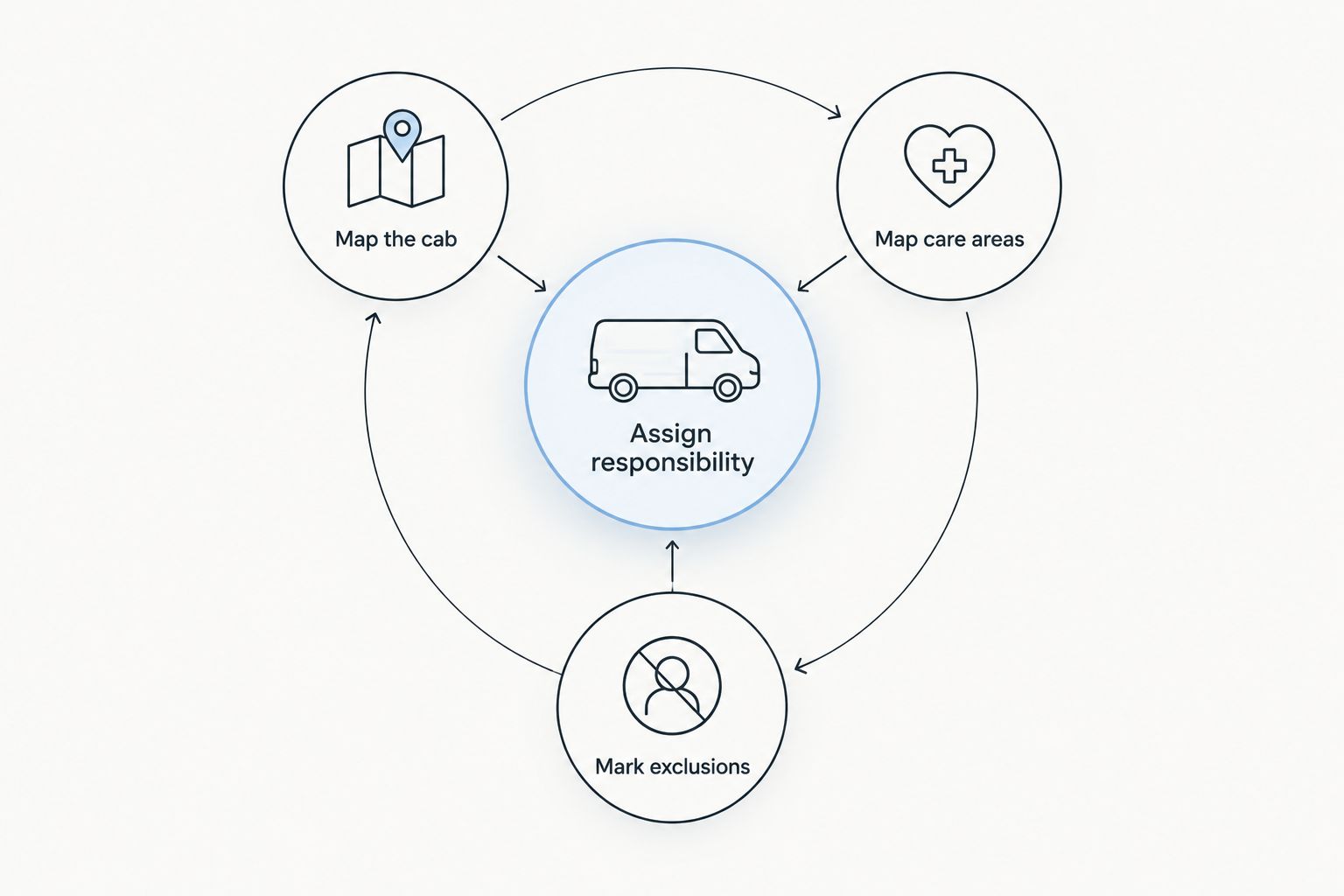
Start by writing your own cleaning map. Divide the van into 2 work zones: ordinary vehicle surfaces and animal-care areas. Put the cab and exterior in the first zone; identify treatment surfaces, grooming equipment, and specialist installations separately.
This is a scope-setting exercise, not permission to use the same cleaner throughout the van. Follow equipment instructions and your workplace procedures for animal-contact surfaces. Veterinary teams should retain control of clinical cleaning and disinfection requirements.
Make exclusions explicit before anyone starts. A detailer should not have to guess whether a cabinet contains medicines, whether an electrical fitting tolerates moisture, or whether a removable mat belongs to your cleaning procedure.
- Map the cab: Identify seats, floor coverings, storage pockets, and interior glass.
- Map care areas: Mark tubs, tables, examination surfaces, and animal-contact equipment.
- Mark exclusions: Identify electrical controls, supplies, plumbing access, and specialist fittings.
- Assign responsibility: Agree who cleans each area and who checks it afterward.
2. Inspect the exterior before choosing the work
Wash the exterior using methods appropriate to its surfaces, then inspect the finish in good light. Look separately at painted panels, glass, plastic trim, graphics, and any wrapped sections. Those materials should not automatically receive the same treatment.
For your 2026 enquiry, take 3 photos: a full side view, a close view of the main paint concern, and a view showing graphics or specialist fittings. Add more where needed. The photographs help explain the request; they do not replace an inspection or establish what correction is safe.
Paint correction uses polishing to address suitable paint defects. It is not a repair for every scratch, damaged coating, or failing paint surface. Describe what you see rather than choosing an aggressive process yourself.
- Photograph swirl marks, dull areas, staining, or scratches in clear light.
- Identify painted panels separately from wraps, decals, and textured surfaces.
- Disclose known repainting, previous coatings, and existing damage.
- Ask which defects need closer assessment before a quote is confirmed.
3. Request paint correction and ceramic coating as one plan
Begin with your goal: a better-prepared exterior finish that you can maintain around your working schedule. Then ask how correction and coating would fit together. Ceramic coating is not a substitute for assessing visible paint defects first.
JMatt Mobile Detailing offers paint correction and ceramic coating, so discuss both during the same enquiry. Do not assume a coating quote includes correction, or that a correction quote includes coating. The useful shortcut is a coordinated assessment, not skipping preparation.
Ask for 1 written scope covering the agreed preparation, correction work, coating application, and exclusions. Your van’s graphics, existing finish, and condition should shape that scope. Request an explanation of what will remain visible rather than expecting every mark to disappear.
The guide to whether paint correction and ceramic coating can be done in one visit is a useful starting point for scheduling questions. Confirm the arrangement for your own vehicle before reserving time.
- State whether your main concern is appearance, easier upkeep, or both.
- Ask which preparation tasks appear explicitly in the proposed work.
- Confirm the agreed correction work and its limits.
- Identify surfaces included in, and excluded from, coating application.
- Request washing, exposure, and handover instructions for the selected coating.
4. Confirm that your parking site suits the appointment
Before arranging mobile work, check the site yourself. A van that fits in a parking space does not necessarily leave enough room for access around its sides. Open doors, nearby vehicles, and pedestrian routes all affect the usable workspace.
Give the provider your location and describe the parking arrangement. Ask about clearance, shelter, power, water, and weather requirements rather than assuming the mobile setup supplies everything. Do not promise access to shared utilities without permission.
Exeter is included in the stated service area. For Rye or North Hampton, NH, and Newburyport, MA, confirm coverage for your exact address and the requested work. A location-specific guide does not itself confirm an appointment or suitable working conditions.
- Send the exact work address and describe the parking surface.
- Check access around the van and clearance above it.
- Ask which utilities or sheltered conditions the work requires.
- Confirm permission to work at a shared or rented property.
- Agree how unsuitable weather will affect the booking.
5. Prepare the van without disturbing specialist equipment
Remove your own loose belongings and secure business supplies before the appointment. This keeps the scope visible and reduces confusion about what can be moved. Do not ask a vehicle detailer to dismantle unfamiliar grooming or veterinary equipment.
For a grooming van, identify dryers, tubs, storage, and plumbing controls that must remain untouched. For a veterinary van, secure medicines, sharps, records, and clinical equipment under your own procedures. These are operator responsibilities, not implied detailing tasks.
Explain any persistent smell by describing its location and when it occurs. Cleaning an accessible surface is different from diagnosing moisture behind a fitting or contamination inside equipment. Ask what the proposed service addresses before authorizing work.
- Remove loose tools, paperwork, personal items, and movable supplies.
- Secure clinical materials and animal-care products yourself.
- Identify fittings that must not be moved, wetted, or disconnected.
- Point out leaks, damp areas, or recurring smells before work starts.
- Keep your normal animal-care cleaning procedure separate from the booking.
6. Plan the handover before returning to work
Build the appointment around confirmed instructions, not a guessed turnaround. Ask when you can drive, wash, expose the van to water, and return to normal use. Follow the instructions for the actual work performed and coating selected.
For a 2026 maintenance plan, record the work completed and keep the aftercare instructions with your vehicle records. That gives you something specific to consult when a wash product, brush, or cleaning routine changes. A coating does not remove the need to wash the exterior.
At handover, inspect the agreed areas together where practical. Compare the result with the written scope, note any remaining defects, and confirm who completes the animal-care cleaning before the van resumes appointments.
- Confirm return-to-driving and return-to-work instructions separately.
- Record the coating used and the surfaces treated, if applicable.
- Ask which washing methods and products suit the treated finish.
- Check excluded areas and remaining marks against the agreement.
- Complete your own workspace checks before accepting animals again.
Compare the options for a working pet-care van
Choose the option that addresses the actual problem. These approaches can complement each other, but none should silently take over the responsibilities of another.
| Option | Best for | Main benefit | Key limitation |
|---|---|---|---|
| Operator-led routine cleaning | Between-appointment care and familiar equipment | Keeps the operator in control of the workspace procedure | Does not replace paint assessment or specialist correction |
| Mobile vehicle detailing | Cab and exterior cleaning at an agreed site | Avoids a separate vehicle drop-off | Requires suitable access and an agreed scope for converted areas |
| Combined correction and coating plan | Owners addressing suitable paint defects before exterior protection | Connects finish preparation with the coating decision | Requires assessment; neither service is automatically included with the other |
| Veterinary cleaning and disinfection procedure | Clinical surfaces and animal-care requirements | Keeps clinical responsibilities with the appropriate team | Does not address automotive paint defects |
For a van with visible paint concerns, request the correction-and-coating assessment before selecting exterior work by name alone. For a van whose main issue is loose hair in the cab, explain that narrower need instead. The right booking follows the condition and intended result, not the longest service description.
Discuss your van’s exterior plan
Ask about paint correction, ceramic coating, site requirements, and the scope for your converted van.
Common mistakes pet groomers and veterinary van operators make
Treating detailing as disinfection
A clean-looking surface is not evidence that your animal-care procedure is complete. Keep your established cleaning and disinfection process in place, and tell the detailer which areas fall outside ordinary vehicle care.
Asking for coating without discussing the finish
If visible defects concern you, bring them into the conversation before choosing coating work. Ask what correction is appropriate, what it includes, and which marks will remain. Do not use coating as shorthand for paint restoration.
Assuming a converted van needs standard interior treatment
A conversion changes access, materials, and equipment boundaries. Send photographs of the interior and describe the installations. Confirm acceptance of the vehicle and scope rather than assuming ordinary car-interior services cover every fitted area.
Booking around driving time alone
Finishing the physical work and returning to unrestricted use are different questions. Ask about handover, washing, water exposure, and work-related restrictions before filling the next appointment slot. Do not invent your own waiting period.
Treating a town name as confirmed coverage
A nearby location does not guarantee that a provider accepts your address, van, or requested job. Give the exact site details when enquiring about Exeter, Rye, North Hampton, or Newburyport. Confirm the practical arrangement before changing your schedule.
FAQ
What is mobile detailing for pet groomers?
Mobile detailing for pet groomers is vehicle cleaning and finish care performed at an agreed location for a grooming business’s van. Confirm whether the work covers the cab, exterior, or specified converted areas; animal-care cleaning remains a separate responsibility.
Can a mobile detailer clean a veterinary van?
A mobile detailer can be asked to assess ordinary vehicle surfaces, but acceptance and scope must be confirmed. Veterinary cleaning, disinfection, medicines, sharps, and clinical equipment should remain under the veterinary team’s procedures.
Should I book paint correction before ceramic coating on my van?
Discuss paint correction before coating when visible paint defects concern you. An assessment should establish which preparation is appropriate and whether correction is included in the proposed work.
Does ceramic coating remove scratches from a grooming van?
Ceramic coating is not a scratch-removal process. Ask whether suitable defects can be addressed through correction, and confirm which marks will remain before coating is applied.
Does JMatt Mobile Detailing cover Exeter, Rye, North Hampton, and Newburyport?
JMatt Mobile Detailing lists Exeter within its NH Seacoast service area. Confirm service for your exact address in Rye, North Hampton, or Newburyport, along with acceptance of your converted van and requested work.
Can paint correction and ceramic coating happen during one mobile visit?
Confirm the visit arrangement after the vehicle and site have been assessed. Preparation, correction, coating instructions, and working conditions determine the booking plan; do not assume a single visit includes every task.
What should I send when enquiring about detailing my grooming van?
Send your location, van details, photographs, and a description of the paint concerns or cleaning needs. Identify wraps, graphics, fitted equipment, and excluded areas, then request a written scope and return-to-work instructions.
One last thing
Before booking in 2026, photograph the van as a customer first sees it: parked, doors closed, from the approach to the appointment. Then take close-ups of the actual paint concerns. Those views answer different questions—overall presentation and finish condition—and help you explain your priorities without requesting unnecessary work.
Lead your enquiry with the result you want, the van’s location, and its equipment boundaries. Ask about paint correction and ceramic coating together when the finish needs attention, while keeping clinical or grooming hygiene under your own procedures.