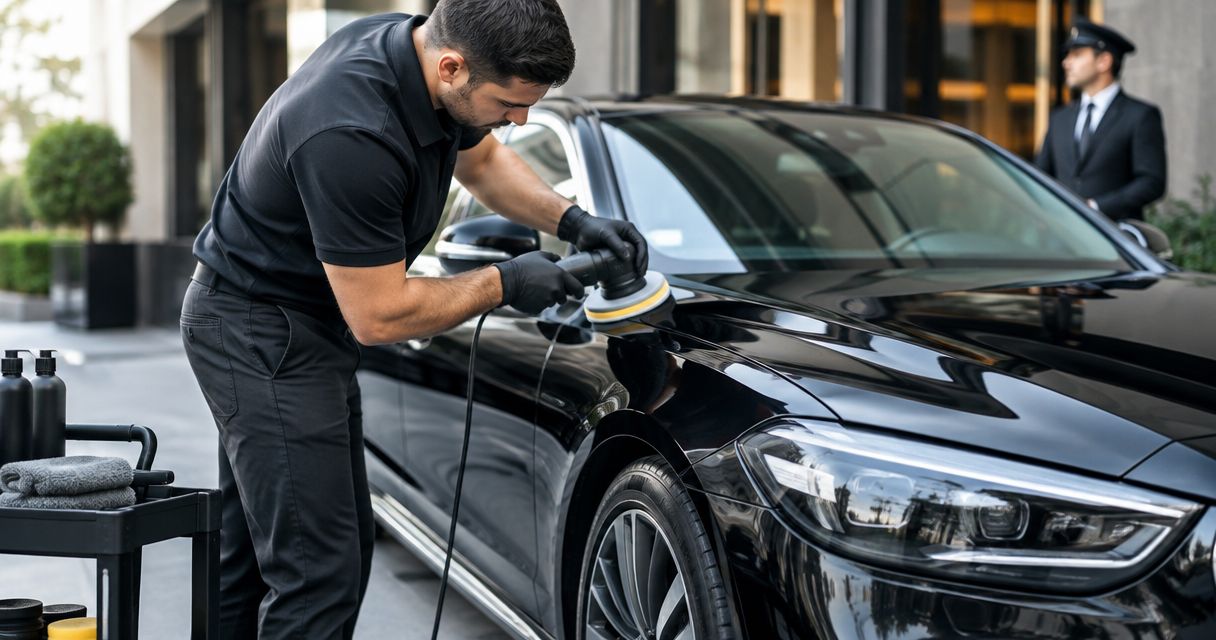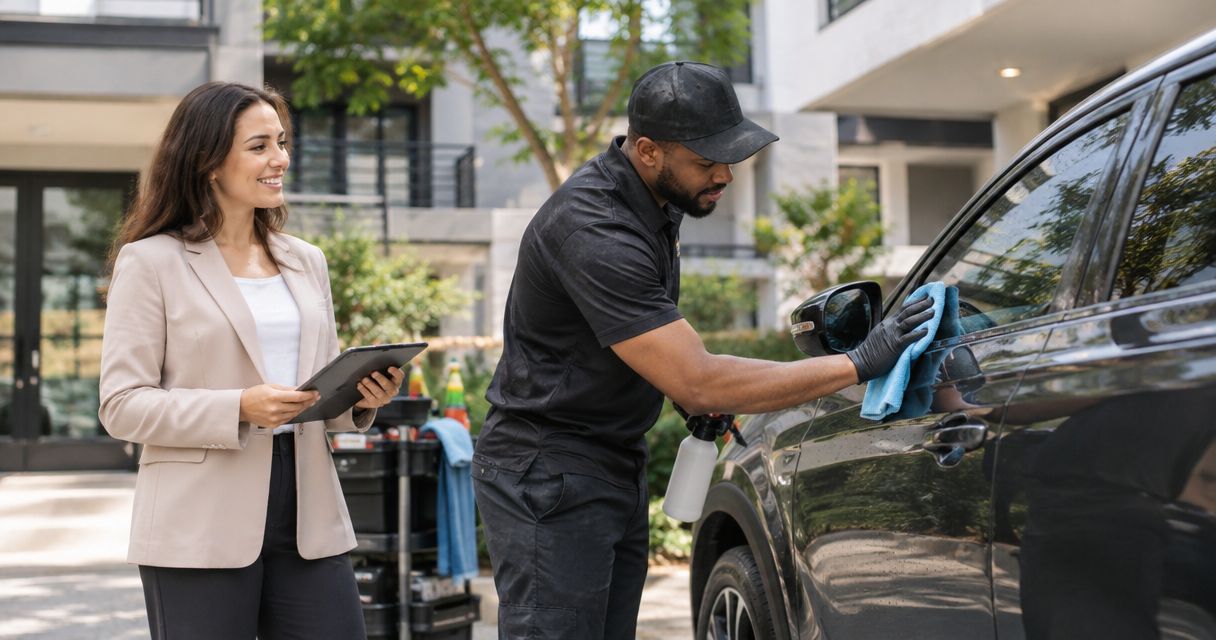
Property managers’ mobile detailing is on-site vehicle care aimed at keeping work and personal vehicles presentable without arranging a separate detailing trip. This 2026 guide explains how landlords and property managers can plan paint correction and ceramic coating together while accounting for shared parking, vehicle access, and property permissions.
- Mobile detailing for property managers starts with vehicle condition, property permission, and a workable service location.
- JMatt Mobile Detailing suits NH Seacoast vehicle owners seeking mobile paint correction and ceramic coating enquiries.
- Paint correction addresses suitable surface defects; ceramic coating adds protection, not scratch repair.
- Confirm preparation, correction scope, coating application, and aftercare before approving a combined service.
Why mobile detailing matters for property managers
Your vehicle moves between inspections, contractor meetings, and tenant appointments. Arranging work at an agreed location removes the separate trip to a detailing shop, but a shared parking lot introduces decisions that a private driveway does not: permission, access, neighboring vehicles, and space for the work.
JMatt Mobile Detailing is best for NH Seacoast vehicle owners seeking mobile paint correction and ceramic coating services. The business serves vehicle owners across the NH Seacoast, including Portsmouth, Dover, and Exeter; discuss your vehicle and proposed location through JMatt Mobile Detailing before planning around a particular site.
The aim is not to buy the largest service package. It is to match the preparation and finish to the vehicle you actually use. A landlord’s daily driver, a manager’s client-facing car, and a maintenance vehicle need separate assessments, even when they belong to the same business.
For your 2026 maintenance plan, separate ordinary cleaning from finish improvement. Washing removes dirt; paint correction uses polishing to address suitable paint defects; ceramic coating protects a prepared surface. Neither correction nor coating should be assumed to be included in a detailing enquiry.
How to arrange mobile detailing without disrupting your property
1. Define the vehicle and the result you want
Start with a phone note or simple spreadsheet. Record who owns the vehicle, who can authorize the work, and what bothers you about its condition. Describe visible problems rather than selecting a package by name.
If your main concern is swirls visible in sunlight, say so. If you want easier ongoing cleaning after improving the finish, ask about correction and coating as a coordinated service. Do not use a coating enquiry as shorthand for scratch removal.
Take 4 exterior photos as a starting point: front, rear, and both sides. Add close-ups of specific defects, without filters. Photographs help explain the concern, but they do not replace an assessment of paint condition.
- Record the vehicle’s make, model, and use.
- Identify the owner and approval contact.
- Photograph the exterior and problem areas.
- Separate dirt, paint defects, and interior concerns.
- State your preferred finish rather than demanding defect-free paint.
2. Check whether the property is suitable
Walk the proposed work area before contacting a provider. A parking space being empty does not establish that it is suitable for detailing, and managing a property does not automatically give you authority to approve every activity there.
Identify 2 possible locations if you have them: a preferred area and a backup. Ask the provider what the actual work requires, including shelter, utilities, surface conditions, and room around the vehicle. Do not assume every mobile setup has the same requirements.
JMatt Mobile Detailing’s mobile service offers the convenience of arranging vehicle care at an agreed location. For paint correction and ceramic coating, confirm that the proposed location supports the preparation, application, and aftercare requirements before treating it as booked.
- Obtain permission from the appropriate property representative.
- Keep entrances, accessible spaces, and emergency access clear.
- Describe the parking surface and available shelter.
- Ask about water, power, and runoff arrangements.
- Agree on a backup location or rescheduling process.
3. Request a clearly defined correction-and-coating scope
Begin with a written description of your concerns. Then ask the provider to explain which work addresses each concern. A combined enquiry should produce a clear sequence, not an assumption that every polishing stage or coating treatment is included.
Preparation quality and the agreed finish matter more than a package label. Ask how the paint will be assessed, which defects the proposed correction targets, and what limitations remain. Polishing removes a small amount of the paint surface, so the goal must suit the paint’s condition rather than chase every mark.
JMatt Mobile Detailing offers paint correction and ceramic coating services. Ask whether the proposed booking combines them, what preparation it includes, and what conditions the coating requires. The guide to correction and coating in one visit covers a useful question to raise during that discussion.
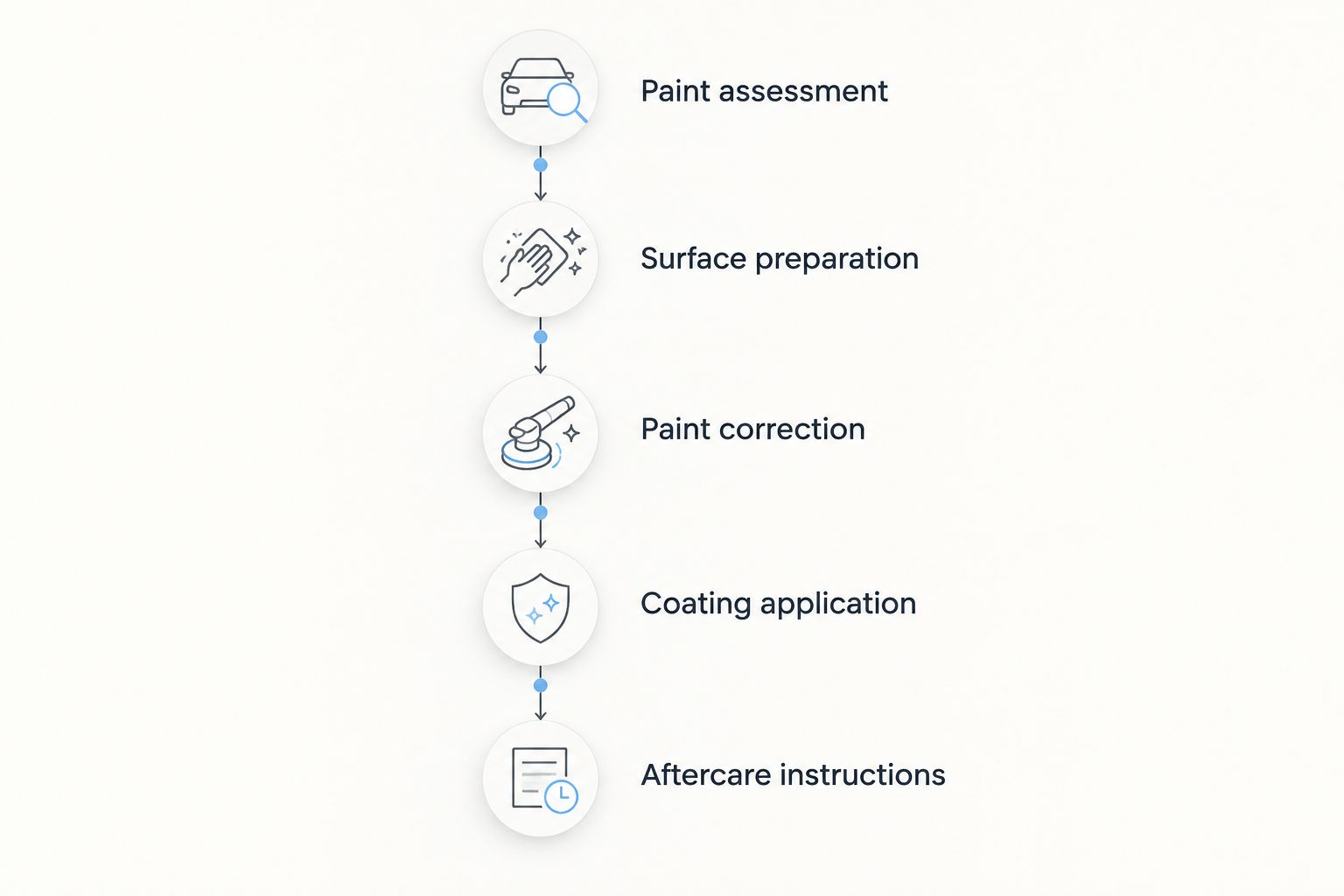
- Paint assessment: Identify condition and relevant previous work.
- Surface preparation: Confirm the cleaning and preparation included.
- Paint correction: Agree on targeted defects and limitations.
- Coating application: Confirm what surfaces receive treatment.
- Aftercare instructions: Obtain the provider’s specific guidance.
4. Match the appointment to the vehicle’s duties
Use your existing calendar to find a genuine gap in vehicle use. Do not schedule paint correction and ceramic coating between appointments unless the provider confirms that the work and required aftercare fit that window.
In your 2026 property calendar, distinguish the service appointment from the point when normal vehicle use can resume. Ask about driving, outdoor exposure, and washing after application. Those instructions depend on the actual treatment and working conditions; a generic online timetable is not a booking commitment.
For shared vehicles, assign a named person to handle keys and acceptance. A property manager working elsewhere should not leave a contractor, tenant, or colleague to make unplanned decisions about paintwork.
- Block out the provider’s confirmed work window.
- Arrange another vehicle for essential property visits.
- Assign a key handoff and collection contact.
- Confirm when driving and parking outdoors are appropriate.
- Record weather-related changes in the appointment plan.
5. Compare proposals by scope, not shorthand
Copy the proposals into a simple side-by-side document. Compare the same vehicle, concerns, work location, and requested finish. A description such as exterior detail does not establish whether paint correction or ceramic coating is included.
Use 3 comparison fields for every proposal: preparation, finish work, and aftercare. Under each field, write what is included and what still needs clarification. This is more useful than comparing package names that different providers define differently.
For your 2026 booking decision, prioritize a clear explanation of preparation and finish limitations. Mobile convenience is valuable, but it does not resolve an unsuitable location or an unclear scope.
- Compare proposals for the same vehicle and condition.
- Check whether correction is expressly included.
- Check whether ceramic coating is expressly included.
- Record exclusions and unresolved paint concerns.
- Confirm location requirements and aftercare in writing.
6. Inspect the finish and plan ongoing care
At collection, review the work against the agreed scope. Look at the areas discussed during the assessment and ask about any remaining defects. Do not treat gloss alone as proof that every requested task was completed.
Keep the service description, photographs, and aftercare instructions with your vehicle records. For a business-owned car, this gives the next authorized driver a clear reference rather than relying on a verbal handover.
A ceramic coating does not make paint scratch-proof or eliminate washing. Care practices still matter, particularly if different staff members wash or use the vehicle. For the remainder of 2026, follow the provider’s instructions rather than adding treatments based on unrelated advice.
- Review the agreed correction areas together.
- Photograph the finished vehicle for your records.
- Ask about remaining marks without assuming further polishing is appropriate.
- Share washing instructions with every regular driver.
- Keep property maintenance materials away from vehicle-care supplies.
Discuss your vehicle and work location
Ask about paint correction, ceramic coating, preparation, and a suitable mobile-service location.
Compare service options for your vehicle
Choose the service around the problem, not around the property manager job title. Routine cleaning, finish correction, and protection have different purposes. The table below compares service approaches, not confirmed packages or inclusions from any provider.
| Option | Best for | Main benefit | Key limitation |
|---|---|---|---|
| Routine mobile detailing | Owners mainly concerned with dirt and interior cleanliness | Arranges cleaning at an agreed location | Does not establish that paint correction or coating is included |
| Paint correction assessment | Owners concerned about swirls and visible paint defects | Establishes what finish improvement is appropriate | Not every scratch or paint defect is suitable for polishing |
| Combined correction-and-coating enquiry | Owners seeking finish improvement followed by paint protection | Lets you discuss preparation, correction, and protection together | Scope, site suitability, and aftercare require confirmation |
| Shop-based correction and coating | Owners whose property cannot support the proposed work | Avoids relying on shared-property working conditions | Requires arranging vehicle drop-off and collection |
Mobile service wins on avoiding a separate shop trip. Shop-based work is the more suitable route when your proposed site cannot meet the job’s requirements. Neither format alone proves the quality of preparation or the result you should expect.
Common mistakes property managers and landlords make
Treating shared parking as private workspace
A space assigned to your vehicle is not automatically permission for detailing work. Confirm who authorizes the activity and how the work affects access, neighboring vehicles, and property operations.
Assuming ceramic coating fixes existing scratches
Coating and correction serve different purposes. Ask which visible defects the proposed preparation and polishing address before discussing protection; do not expect the coating itself to remove those defects.
Combining unrelated vehicles into one vague request
A maintenance vehicle and an owner’s personal car do not necessarily need the same work. Give each vehicle its own condition notes, authorization, and requested result, even if you hope to coordinate appointments.
Booking around the application time alone
The end of application is not automatically the end of every restriction. Confirm the provider’s instructions for returning to driving, outdoor parking, and washing before scheduling inspections or contractor visits.
Assuming a nearby town is confirmed coverage
Exeter is explicitly included in the stated service area. For Rye, North Hampton, NH, and Newburyport, MA, ask about your exact address and proposed service before making property arrangements; a location-focused guide is not confirmation of a booking.
FAQ
What is mobile detailing for property managers?
Mobile detailing for property managers is vehicle cleaning and related care arranged at an agreed location rather than through a separate shop visit. For paint correction and ceramic coating, confirm property permission, working conditions, and the scope of each service.
Is JMatt Mobile Detailing suitable for a landlord’s personal car?
JMatt Mobile Detailing serves vehicle owners, so a landlord can enquire about care for a personal vehicle. Describe the vehicle, paint concerns, and proposed location rather than assuming a property-management package exists.
Can paint correction and ceramic coating be arranged together?
Ask for a combined assessment and a written scope covering both services. Correction addresses suitable paint defects before protection, but neither service should be assumed to be included without confirmation.
Can I arrange mobile paint correction and ceramic coating in Exeter, NH?
Exeter is included in the business’s stated NH Seacoast service area. Confirm that your exact work location and requested correction-and-coating scope are suitable before arranging access or vehicle downtime.
Can I book at a property in Rye or North Hampton, NH?
Confirm the exact address and requested service directly before treating either location as covered. Also ask whether the proposed parking area meets the requirements for preparation, correction, and coating.
Can I request service at a property in Newburyport, MA?
Confirm service for the exact Newburyport address before making arrangements. Explain whether you want paint correction and ceramic coating together, and describe the proposed work area.
Does ceramic coating mean a work vehicle no longer needs washing?
No, ceramic coating does not eliminate washing or make paint scratch-proof. Follow the instructions supplied for the actual coating and share them with anyone responsible for cleaning or driving the vehicle.
One last thing
Check the vehicle’s parking spot as carefully as its paint. If landscaping work, building maintenance, or frequent vehicle movements will interfere with the appointment, choose another location or date before booking.
For a property manager, a well-planned service means the right vehicle receives the agreed work without creating an access problem at the property. Start your enquiry with the paint concerns, exact address, and intended work area; then confirm correction, coating, and aftercare together.