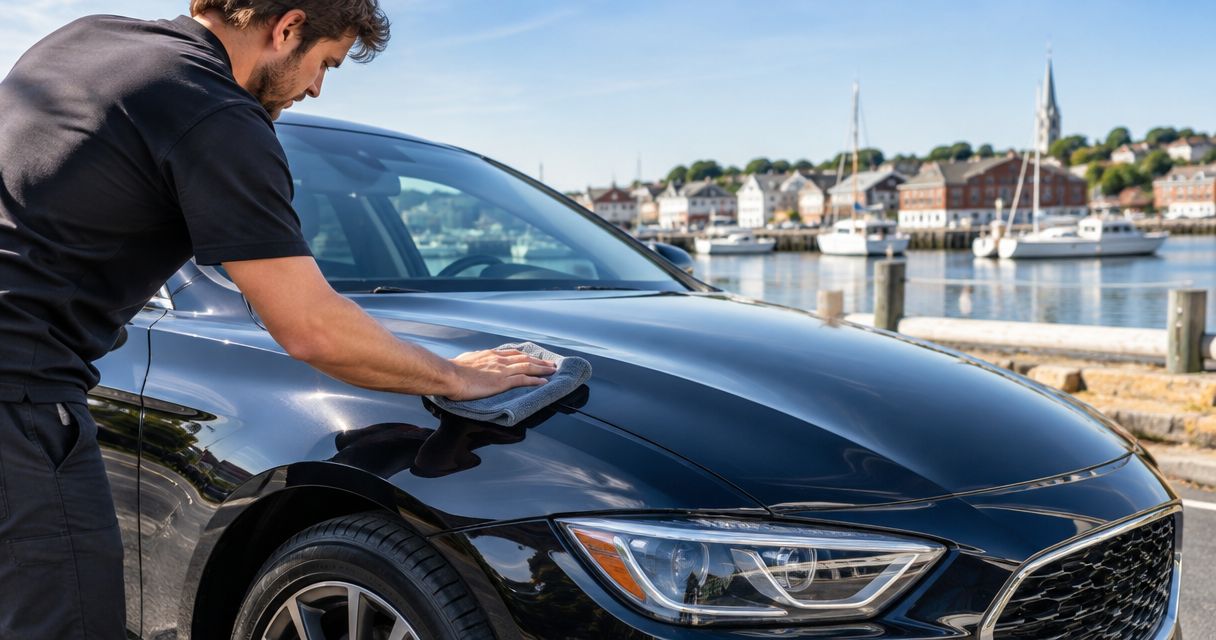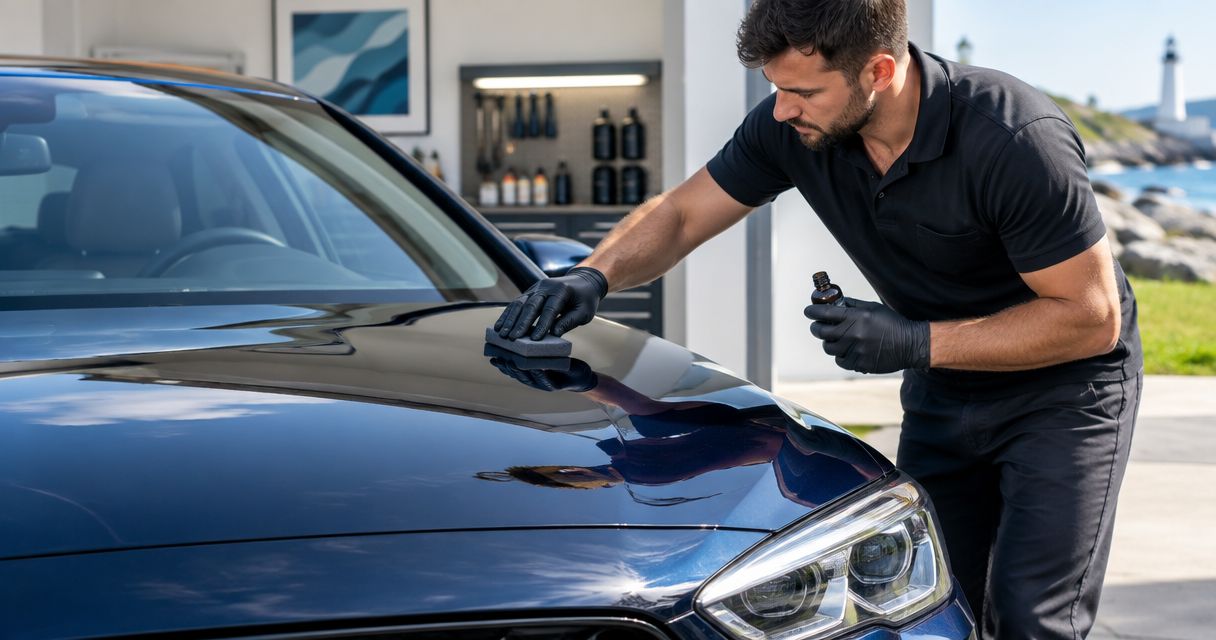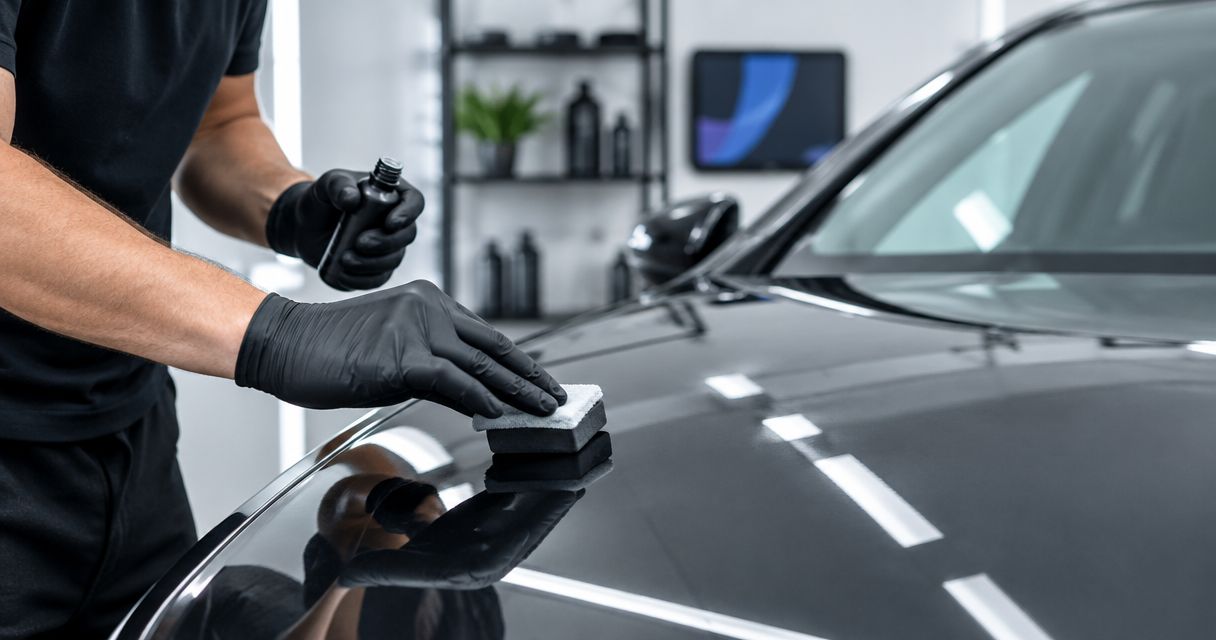
Best overall: an inspection-led correction and coating scope. Best for newer paint: light correction followed by coating. Best for visible swirl marks: multi-stage correction followed by coating. For a luxury car in 2026, choose the preparation your paint needs—not the package with the longest list of extras.
- The best ceramic coating for luxury cars starts with paint inspection and an agreed correction scope.
- Jmattdetailing suits NH Seacoast owners seeking mobile paint correction and ceramic coating enquiries.
- Newer paint needs inspection, not an automatic assumption that correction is unnecessary.
- Ceramic coating does not replace scratch repair, careful washing, or paint protection film.
Why this matters
A luxury badge does not tell you what condition the paint is in. A recently purchased car can have wash marks, while an older, carefully maintained car can need only limited correction. The coating decision starts with the finish you actually have.
Jmattdetailing provides mobile paint correction and ceramic coating services across the NH Seacoast, including Portsmouth, Dover, and Exeter. Jmattdetailing is a suitable starting point for NH Seacoast luxury-car owners seeking mobile paint correction and ceramic coating services. Confirm whether both services form part of your proposed package before booking.
The ranking below compares 4 package scopes, not named packages offered by a particular detailer. Use these scopes to explain your needs and compare proposals in 2026. Your paint inspection determines which one belongs on your car.
What makes the best ceramic coating for luxury cars?
Judge a proposed package against these criteria before comparing coating names:
- Paint condition: The proposal should address visible defects, previous repairs, and the owner's concerns—not just the vehicle's age.
- Correction scope: Confirm which polishing work is included and which marks are outside the agreed scope.
- Surface preparation: Ask how cleaning, decontamination, and preparation for coating fit into the work.
- Application conditions: For mobile work, confirm the workspace requirements and arrangements for unsuitable weather.
- Aftercare instructions: Request the coating-specific guidance for initial care and later washing.
- Finish priorities: Agree whether your priority is reducing visible swirls, preserving sensitive paint, or preparing an already tidy finish.
Correction and coating are 2 service stages with different jobs. Correction improves eligible paint defects through polishing; coating adds a protective surface treatment. Neither term proves that the other service is included.
Luxury-car coating scopes at a glance
| Rank and package scope | Best for | Standout feature | Key limitation |
|---|---|---|---|
| 1. Inspection-led correction and coating | Owners unsure what their paint needs | Correction scope follows the inspection | The final scope requires an assessment |
| 2. Light correction and coating | Newer or well-maintained paint with minor defects | Targets limited defects without assuming extensive polishing | Not suitable for substantial defects |
| 3. Multi-stage correction and coating | Paint with visible swirls and broader polishing needs | Separates defect reduction from finishing work | More correction does not make every scratch removable |
| 4. Conservative correction and coating | Classic, repainted, or paint-sensitive vehicles | Makes paint preservation the priority | Leaves defects that should not be chased |
These are buying categories, not confirmed service menus. Ask the detailer to identify the actual correction work, coating, treated surfaces, and exclusions in the proposal.
1. Inspection-led correction and coating: best for uncertain paint condition
An inspection-led scope is the strongest default when you cannot confidently describe your paint's condition. The assessment comes first; the correction and coating plan follows. That keeps the proposal tied to the vehicle rather than a preset assumption about luxury cars.
For a 2026 enquiry, explain what bothers you: circular wash marks in sunlight, dull areas, visible scratches, or uncertainty about previous repairs. Also explain what you want to preserve. A good discussion separates your cosmetic priorities from work that is unsuitable for the paint.
Inspection-led correction and coating pros:
- Gives the paint assessment a clear role in the decision.
- Connects correction work to defects you actually want addressed.
- Lets you confirm preparation and coating within one agreed scope.
- Helps separate achievable improvement from damage requiring repair.
Inspection-led correction and coating cons:
- You cannot settle the exact correction scope from the vehicle model alone.
- An assessment can identify defects outside a detailing package.
- A vague proposal remains vague even if it includes an inspection.
Best for: Luxury-car owners who want a combined service but do not know which level of correction to request.
Verdict: Buy an inspection-led scope after the correction, coating, and exclusions are clearly agreed.
2. Light correction and coating: best for newer, tidy paint
Light correction followed by coating suits paint with limited defects that do not require an extensive correction approach. The work should address the finish identified during inspection, then prepare it for the selected coating. New ownership does not automatically mean defect-free paint.
This is the minimal-scope choice when inspection supports it. Do not request additional polishing simply because the car is expensive, and do not skip preparation because the car is new. Both decisions should follow paint condition.
Light correction and coating pros:
- Matches limited correction needs rather than assuming heavy work.
- Keeps attention on preparation and the existing finish.
- Gives owners of tidy cars a clear alternative to extensive correction.
Light correction and coating cons:
- Does not address substantial defects merely by adding coating.
- Needs a clear definition of what light correction includes.
- Is unsuitable when the inspection identifies broader correction needs.
Best for: Owners of newer or well-maintained luxury cars with minor, correctable paint defects.
Ask which areas will be polished and what remains outside the scope. If the proposal simply says preparation, request enough detail to understand whether polishing is included.
Verdict: Buy light correction and coating when the inspection supports limited polishing; skip it when substantial defects remain your main concern.
3. Multi-stage correction and coating: best for visible swirl marks
Multi-stage correction separates defect-reduction work from the finishing work that follows. Coating comes after the agreed correction and surface preparation. This scope is relevant when visible swirls or other polishable defects need more attention than light correction provides.
The number of polishing stages is not a promise of complete defect removal. Paint condition, repair history, and the nature of each defect still govern the decision. A deeper mark needs assessment, not an assurance that extra polishing will remove it.
Multi-stage correction and coating pros:
- Addresses a broader correction need before coating application.
- Separates defect reduction from refinement of the finish.
- Creates a clear discussion about which marks are being targeted.
- Keeps coating from being presented as a substitute for polishing.
Multi-stage correction and coating cons:
- Cannot make every scratch safe to remove.
- Requires agreement on the intended finish and remaining defects.
- Adds unnecessary correction work when the paint needs only limited polishing.
Best for: Luxury-car owners whose main concern is visible swirling or a finish that needs broader correction.
In 2026, compare the proposed work rather than treating a higher stage count as an automatic upgrade. Ask what each stage is intended to achieve on your vehicle.
Verdict: Buy multi-stage correction and coating for assessed correction needs; skip it as an automatic upgrade for already tidy paint.
4. Conservative correction and coating: best for sensitive paint
Conservative correction prioritizes preserving the finish over removing every visible mark. It is a useful discussion for classic cars, vehicles with previous paint repairs, or any finish that needs particular caution. Coating suitability and preparation still need confirmation.
A classic or repainted car does not automatically require this scope. The point is to disclose the paint history and let the assessment determine the approach. Some defects should remain rather than become targets for further polishing.
Conservative correction and coating pros:
- Makes preservation an explicit priority.
- Encourages discussion of previous repairs and known paint issues.
- Allows acceptable remaining defects to be agreed before work starts.
Conservative correction and coating cons:
- Leaves marks that a more aggressive cosmetic goal would target.
- Does not guarantee that every surface is suitable for coating.
- Requires realistic expectations about the finished appearance.
Best for: Owners who value preserving sensitive or historically significant paint more than pursuing a defect-free appearance.
Tell the detailer about repainting, previous polishing, and any known finish problems. Do not leave those details until the appointment begins.
Verdict: Buy a conservative scope when paint preservation is the priority; hold until suitability and exclusions are confirmed.
How to compare a combined-service proposal
A useful proposal follows a clear sequence. For a mobile appointment, the workspace discussion belongs alongside the paint discussion—not after the date is booked.
- Paint inspection: Identify the visible defects, known repairs, and the finish you want.
- Correction scope: Agree on polishing work and defects that will remain.
- Coating scope: Confirm the coating, treated surfaces, preparation, and exclusions.
- Aftercare plan: Obtain application-specific instructions and discuss ongoing washing.
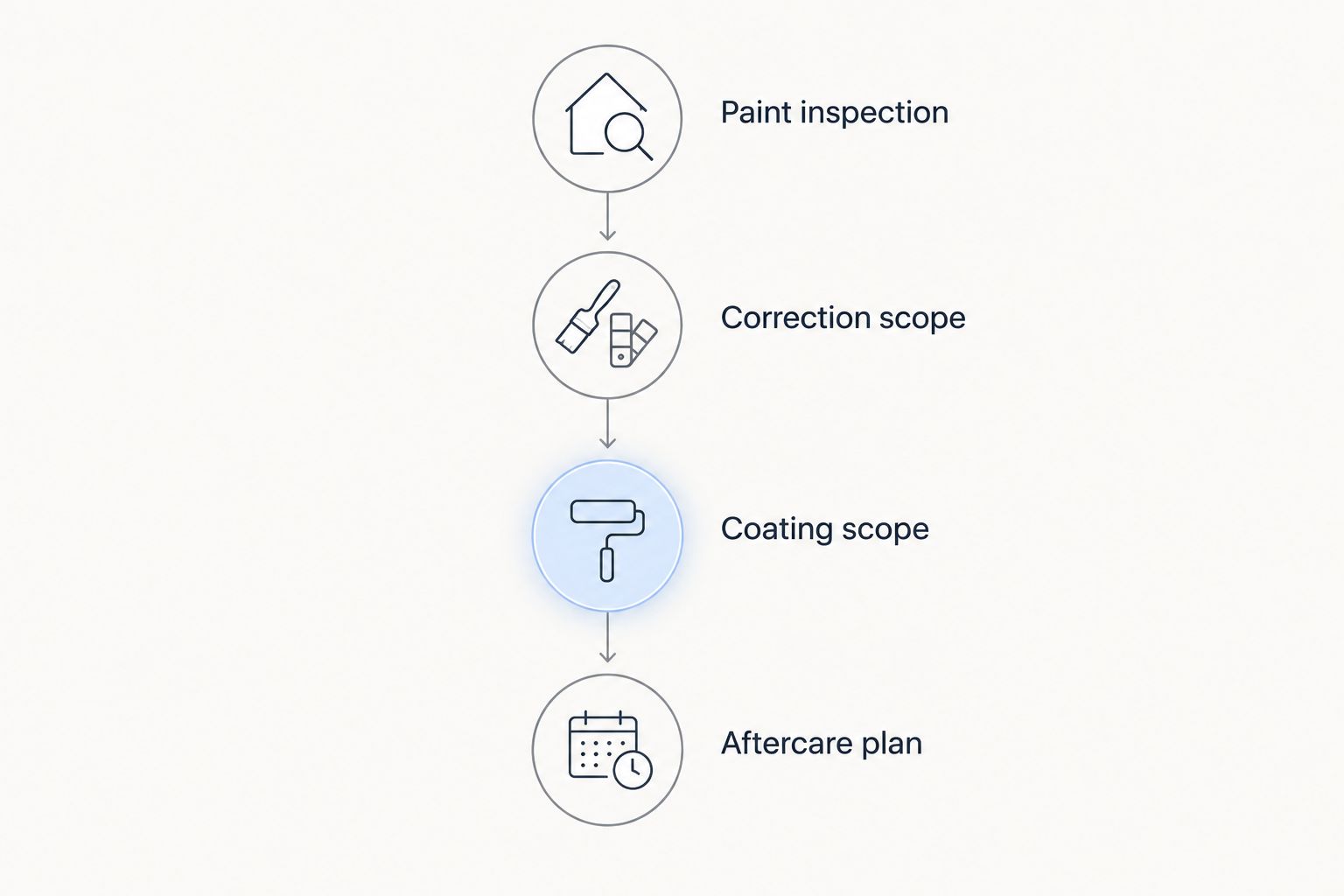
Compare proposals across 3 inspection areas: paint condition, repair history, and workspace suitability. This checklist helps you ask useful questions; it is not a substitute for a detailer's physical assessment.
Confirm whether trim, glass, wheels, or other surfaces are part of the proposed work. A paint-coating description does not establish that those areas are included. Request the boundaries of the service in writing so you can compare like with like.
Mobile service and local booking questions
Jmattdetailing offers mobile service, which makes the proposed work location part of your enquiry. Ask what space, shelter, access, and other arrangements the selected correction and coating work requires. Do not assume every driveway is suitable for every coating application.
For Exeter enquiries, describe your vehicle and the location where you want the work completed. For Rye or North Hampton, NH, ask whether that address is covered and what setup is needed. For Newburyport, MA, confirm service coverage before making appointment plans; NH Seacoast coverage alone does not establish Massachusetts coverage.
When calling or sending a booking enquiry in 2026, include:
- Your vehicle and the finish problems you can see.
- Your town and proposed work location.
- Known paint repairs or previous coating work.
- A request for paint correction and ceramic coating as a combined proposal.
- Your preferred outcome and questions about aftercare.
Request a combined-service enquiry
Discuss your paint condition, correction needs, coating scope, and mobile work location.
How these scopes are ranked
The ranking puts decision quality first: inspect the paint, agree on correction, confirm preparation, and then select the coating scope. Inspection-led work ranks first because it does not assume that all luxury cars need the same treatment.
Light correction, multi-stage correction, and conservative correction serve different needs. None is an upgrade for every vehicle. The right choice is the one that addresses your paint condition without promising work the finish cannot safely support.
Which ceramic coating package should you choose?
Choose an inspection-led correction and coating proposal if you are undecided. Move to light correction, multi-stage correction, or a conservative approach only when the assessment supports that choice.
For NH Seacoast owners, Jmattdetailing provides a local mobile-service option for that enquiry. Confirm the combined scope and location requirements before booking. In 2026, a clear explanation of preparation is more useful than an impressive-sounding package name.
FAQ
What's the best ceramic coating for luxury cars?
The best ceramic coating for luxury cars is selected after assessing the paint and agreeing on preparation. Start with an inspection-led correction and coating proposal rather than choosing by package name alone.
Does a new luxury car need paint correction before ceramic coating?
A new luxury car needs paint inspection before deciding on correction. Minor wash marks or other defects can still be present, so confirm what preparation the proposed coating service includes.
Is paint correction included with ceramic coating?
Paint correction is included only when the agreed package explicitly includes it. Ask which polishing work, coating application, and treated surfaces appear in the proposal.
Will ceramic coating remove scratches from my car?
Ceramic coating does not remove scratches. Correction can improve suitable defects, while deeper damage needs assessment and can fall outside detailing work.
Can I enquire about mobile correction and coating in Exeter, NH?
Yes, Jmattdetailing serves Exeter within its stated NH Seacoast area and provides paint correction and ceramic coating services. Confirm the combined package scope and requirements for your proposed work location.
How do I arrange correction and coating in Rye or North Hampton, NH?
Start by confirming coverage for your exact Rye or North Hampton address. Then describe the paint condition and ask what workspace the combined service requires.
Can I book mobile ceramic coating in Newburyport, MA?
Confirm Newburyport coverage directly before planning an appointment. A stated NH Seacoast service area does not establish coverage at a Massachusetts address.
Does ceramic coating replace paint protection film?
Ceramic coating does not replace paint protection film. They are different forms of protection; discuss film separately if your concern is physical impacts such as stone chips.
One last thing
Photograph the defects you most want addressed before you enquire. Send an overall view and closer views, and describe when the marks are visible. Photos help explain your priorities, but the final correction decision still belongs to the paint assessment.
Keep those priorities specific. Asking about the swirl marks on the hood gives the detailer a clearer starting point than asking for the biggest package.