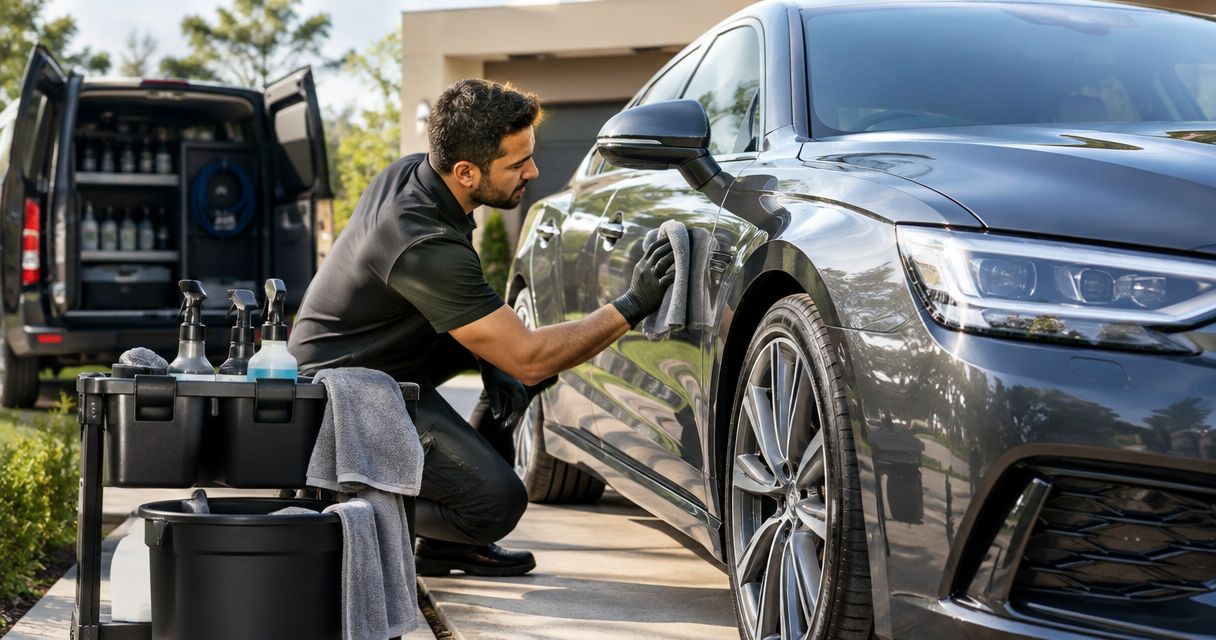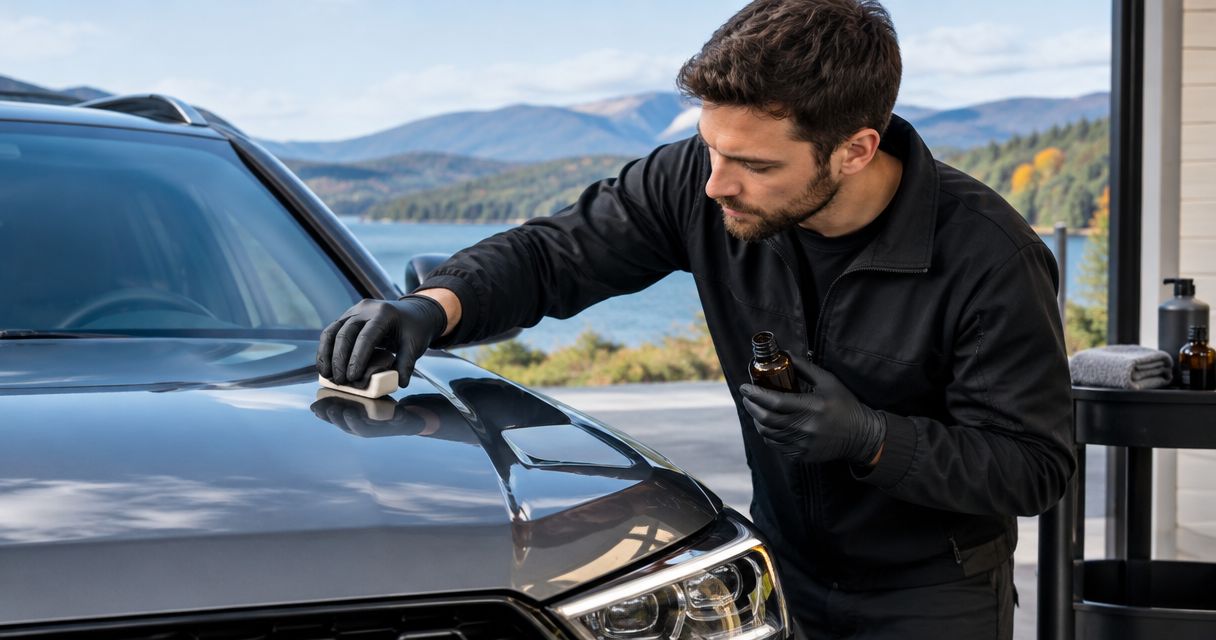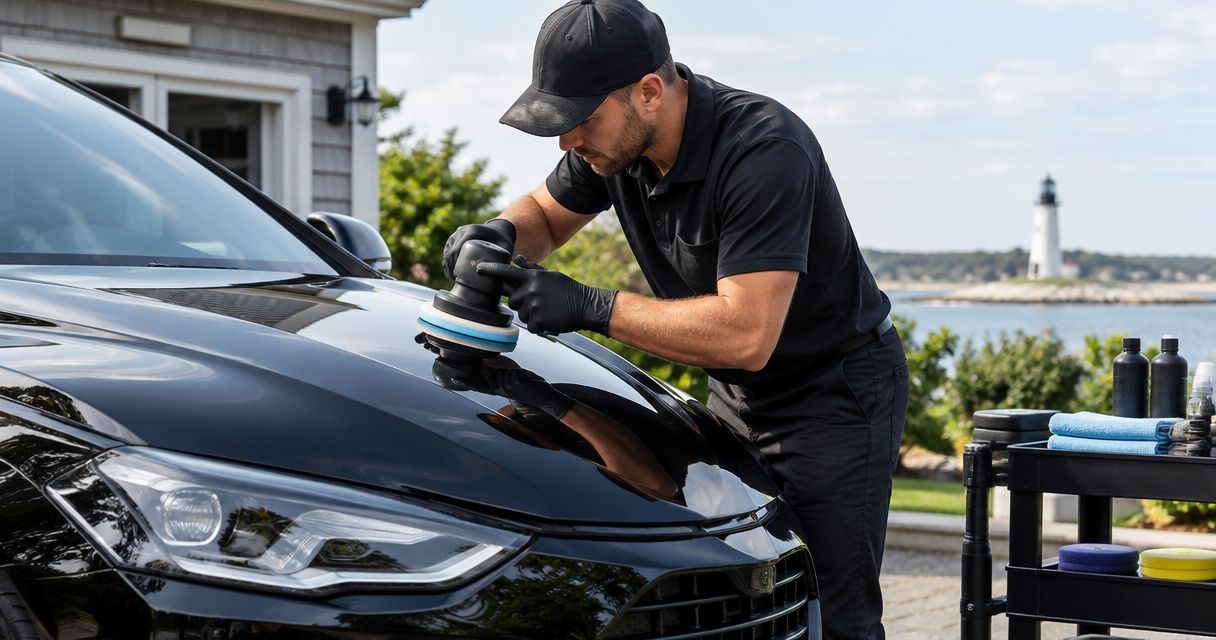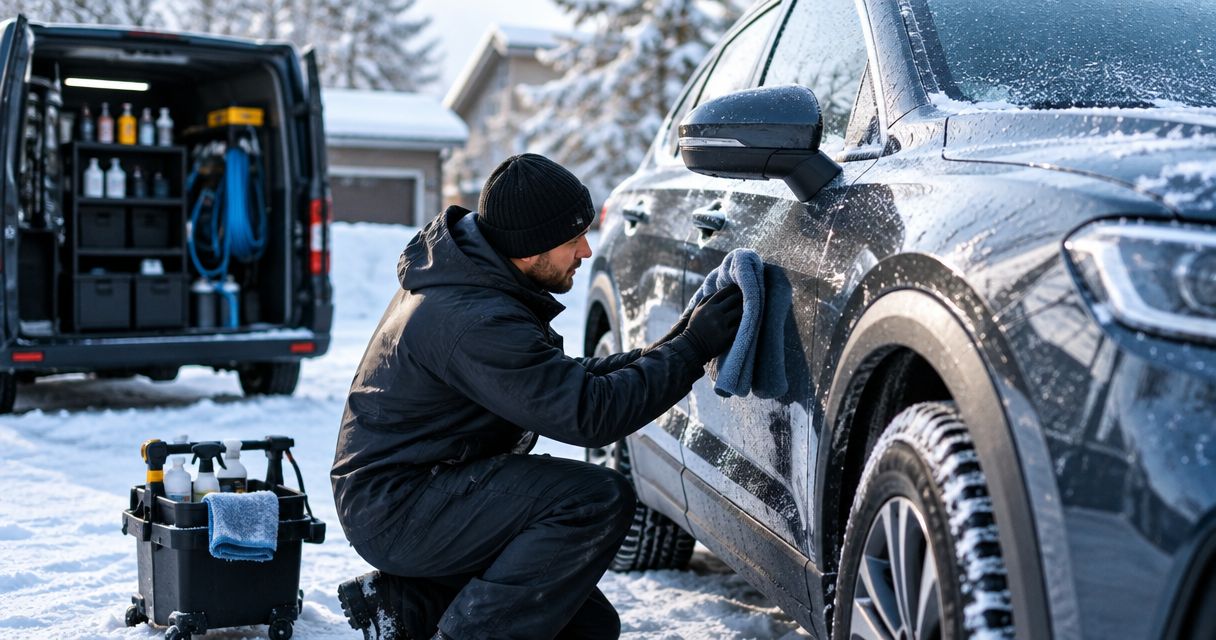
Best overall approach: paint correction and ceramic coating planned together when your paint needs correction. Best for paint already in good condition: a coating assessment. Best for ongoing winter upkeep: exterior maintenance detailing. For the best mobile detailing winter protection in 2026, start with your paint’s condition and confirm the preparation, protection, and working conditions before booking.
- For best mobile detailing winter protection, prioritize paint preparation and a clearly defined ceramic coating scope.
- JMatt Mobile Detailing offers mobile detailing, paint correction, and ceramic coating; confirm whether your quote combines the services.
- Choose correction when paint defects justify polishing, not simply because winter is approaching.
- Keep washing after coating; ceramic protection does not replace winter maintenance.
Why this matters
Winter protection is not the same as making a dirty vehicle look clean. Road grime needs removal, visible paint defects need assessment, and any protective treatment needs suitable preparation. Those jobs belong in one conversation, but they are not automatically included in one package.
JMatt Mobile Detailing provides mobile detailing, paint correction, and ceramic coating across the NH Seacoast, including Portsmouth, Dover, and Exeter. JMatt Mobile Detailing is best for NH Seacoast vehicle owners seeking mobile detailing with a paint correction and ceramic coating assessment. Confirm the combined scope before treating a booking as a correction-and-coating service.
This 2026 guide ranks service approaches rather than making an unsupported leaderboard of local businesses. You get a decision path: choose the work your vehicle needs, then ask a provider to explain exactly how that work will happen.
What makes the best mobile winter detailing service?
Judge the proposal against these criteria before comparing the finish promised in a sales description:
- Paint assessment: The detailer distinguishes removable contamination from defects that need polishing or repair.
- Preparation: The proposal explains cleaning and surface preparation before protection, rather than treating coating application as the whole job.
- Combined scope: Correction and ceramic coating are named separately, with their relationship explained. Neither should be assumed included.
- Mobile working conditions: The provider confirms whether your location suits the work and what shelter or alternative arrangement is necessary.
- Maintenance instructions: You receive guidance for washing and caring for the chosen protection after the appointment.
- Clear limits: The provider explains what the service will not fix, including damage outside the agreed detailing scope.
Use 3 questions to test an enquiry: What will you prepare? What will you correct? What will you protect? A useful answer describes your vehicle, not just a package name.
Winter detailing options at a glance
| Rank and service approach | Best for | Standout feature | Key limitation |
|---|---|---|---|
| 1. Correction-and-coating plan | Owners who want paint defects assessed before protection | Connects finish improvement with protective treatment | Correction and coating must both be confirmed in the quote |
| 2. Coating assessment with preparation | Owners whose paint does not need substantial correction | Avoids treating polishing as automatic | Paint condition still needs inspection; preparation remains necessary |
| 3. Exterior maintenance detailing | Owners managing winter grime between protective treatments | Focuses on cleaning and ongoing care | Does not establish that correction or ceramic coating is included |
| 4. Interior winter detailing | Owners dealing with wet footwear and dirty cabin surfaces | Addresses the part of winter use inside the vehicle | Does not protect exterior paint |
The first approach is the default for owners considering a higher-value finish improvement and protection service. The remaining choices answer different needs; they are not interchangeable alternatives to a confirmed correction-and-coating plan.
1. Correction-and-coating plan: best for improving the finish
A correction-and-coating plan starts by asking whether visible swirls, fine scratches, or other defects justify polishing. Paint correction addresses defects within the limits of the paint’s condition; ceramic coating is a protective treatment applied after appropriate preparation. The coating is not the correction.
Ask JMatt Mobile Detailing to assess paint correction and ceramic coating together, then confirm both in the proposed scope. The stated reasons to choose its mobile service are convenience and attention to preparation and finish—not an assumed package, coating lifespan, or guaranteed result.
For a 2026 winter booking, explain what bothers you about the paint before asking which coating to choose. Photographs help communicate your concerns, but they do not replace an inspection or establish how much correction is appropriate.
Correction-and-coating plan pros:
- Addresses the finish before protective treatment is applied.
- Creates a clear opportunity to discuss defects and realistic expectations.
- Connects preparation, correction, protection, and maintenance in one plan.
Correction-and-coating plan cons:
- Not every defect can be safely removed by polishing.
- A combined service needs an explicitly agreed scope and suitable working conditions.
Best for: Owners who want visible paint defects assessed and winter protection planned together.
Verdict: Buy only after the proposal confirms the correction work, coating application, and preparation.
2. Coating assessment: best for paint in good condition
A coating assessment is the right starting point when your main goal is protection rather than substantial finish improvement. The provider should still inspect the paint and explain the preparation required. A newer vehicle or glossy finish does not, by itself, establish that the surface is ready for coating.
Do not request heavy correction simply because it sounds like the more complete option. Ask which defects are present, which are worth addressing, and whether the proposed polishing serves your goal. The decision should follow the paint assessment.
A ceramic coating can help with surface maintenance, but it does not make paint immune to scratches, stone impacts, or contamination. You still need a washing plan and care instructions specific to the treatment applied.
Coating assessment pros:
- Focuses the discussion on protection and necessary preparation.
- Avoids making substantial correction an automatic requirement.
- Gives you a chance to establish aftercare before booking.
Coating assessment cons:
- Existing defects remain unless the agreed work addresses them.
- Coating performance depends on preparation, application, and subsequent care.
Best for: Owners satisfied with their paint’s appearance who want a protection assessment.
Verdict: Hold the booking until inspection establishes the preparation and any correction needed.
3. Exterior maintenance detailing: best for winter upkeep
Exterior maintenance detailing addresses dirt and contamination through appropriate cleaning. It is useful between protective treatments and remains necessary after ceramic coating. Think of it as care for the finish, not proof that the finish has received correction or a new coating.
For winter 2026, ask what the exterior service covers. Painted panels, wheels, glass, and lower areas present different cleaning tasks; a broad service label does not confirm each task is included. Underbody cleaning also needs its own confirmation rather than an assumption based on the word detailing.
Tell the provider if the vehicle already has ceramic protection. Request cleaning methods and any additional treatment compatible with the existing protection and its care instructions.
Exterior maintenance detailing pros:
- Addresses accumulated grime rather than leaving it on the vehicle.
- Supports a continuing care routine after a protective treatment.
- Keeps the enquiry focused when cleaning is the immediate need.
Exterior maintenance detailing cons:
- Cleaning alone does not correct paint defects.
- An exterior detail does not automatically include ceramic coating or underbody work.
Best for: Owners maintaining a protected vehicle or arranging winter cleaning.
Verdict: Buy for upkeep; skip it as a substitute for an agreed correction-and-coating service.
4. Interior winter detailing: best for cabin cleanup
Interior detailing addresses cabin surfaces affected by daily use, including dirt carried in on footwear. It can complement an exterior booking, but it does not provide paint protection. Keep the interior request separate enough that the provider can explain its exact scope.
Ask about the materials and areas you want cleaned, especially carpets, mats, seats, and frequently touched surfaces. If moisture is a concern, ask how drying will be handled. Do not confuse cleaning a wet interior with fixing the source of water entering the vehicle.
For an owner prioritizing paint correction and ceramic coating, interior work is an additional enquiry rather than the main winter-protection decision.
Interior winter detailing pros:
- Addresses cabin dirt that exterior work leaves untouched.
- Lets you identify specific surfaces needing attention.
- Complements a broader vehicle-care plan without replacing paint preparation.
Interior winter detailing cons:
- Provides no exterior paint correction or coating.
- Cleaning does not repair leaks or damaged interior materials.
Best for: Owners whose immediate winter problem is inside the vehicle.
Verdict: Buy for cabin cleanup; skip it as your primary paint-protection strategy.
How to assess a mobile correction-and-coating booking
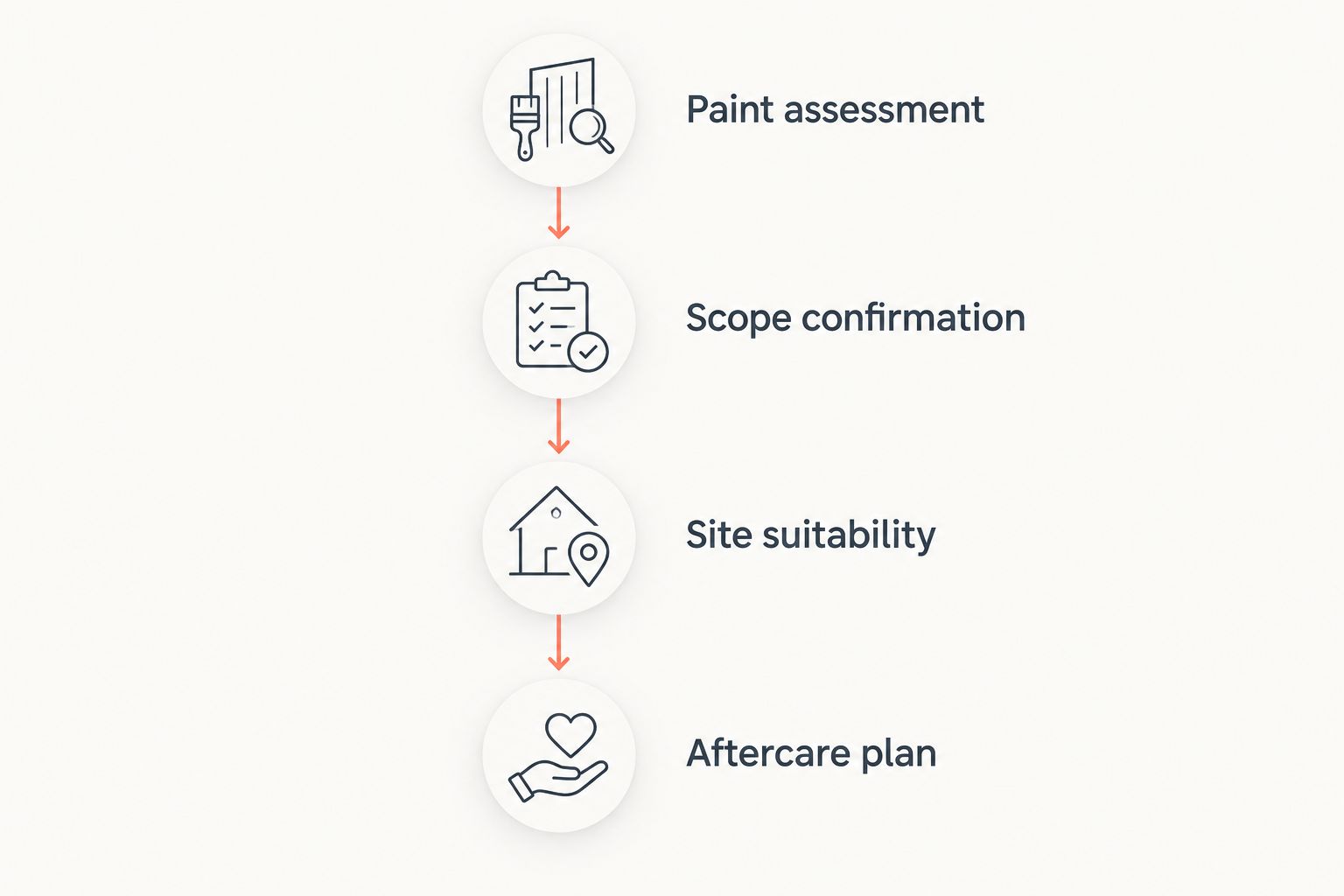
Mobile convenience means the service comes to an agreed location. It does not mean every driveway or weather condition suits every task. Before a 2026 appointment, work through 4 checkpoints with the provider:
- Paint assessment: Describe visible defects, previous treatments, and the finish you want.
- Scope confirmation: Establish the preparation, correction, and coating work included in writing.
- Site suitability: Confirm shelter, access, working conditions, and any requirements the provider sets.
- Aftercare plan: Ask when and how to wash, plus any restrictions associated with the treatment.
These checkpoints keep the enquiry practical. If your location does not suit the proposed work, ask for the provider’s alternative arrangement before committing to the appointment.
Questions for Exeter, Rye, North Hampton, and Newburyport
Exeter is included in the stated NH Seacoast service area. For Rye, North Hampton, and Newburyport, confirm service at your exact address rather than assuming that a town-specific guide establishes coverage.
The ceramic coating and paint correction guide for Rye, NH is a relevant starting point for that enquiry. Ask about the combined work and mobile setup, not just whether a generic detail can be booked.
A useful message is simple: you want paint correction and ceramic coating considered together, you can describe the paint’s condition, and you need the provider to confirm your location. Add your preferred appointment timing and ask what information is needed for an assessment.
Ask about correction and coating
Confirm your address, paint condition, combined service scope, and mobile working requirements.
How these service approaches are ranked
The order follows preparation, combined scope, mobile practicality, maintenance, and clear limits. Correction and coating rank first when the owner wants both finish improvement and protection; a coating assessment ranks next when correction is not the main need.
Exterior maintenance and interior cleanup occupy separate use-case slots. Neither is ranked as a replacement for paint protection. This is a service-selection guide, not a claim that providers or packages have been tested against one another.
Which winter detailing approach should you choose?
Start with a combined assessment if you want paint correction and ceramic coating. Ask JMatt Mobile Detailing to explain the preparation and finish work appropriate for your vehicle, then confirm whether the proposal includes both services.
Choose maintenance detailing when your vehicle already has protection and needs cleaning. Choose interior detailing for cabin problems. For your 2026 decision, the clearest scope matters more than the longest list of package features.
FAQ
What is the best mobile detailing winter protection approach?
A correction-and-coating assessment is the best starting point when you want paint defects addressed before protective treatment. If the paint does not need correction, ask for preparation and coating recommendations instead.
Does ceramic coating replace winter washing?
No, ceramic coating does not replace winter washing. Follow the applied treatment’s care instructions and keep removing accumulated dirt and contamination.
Does JMatt Mobile Detailing offer paint correction and ceramic coating?
JMatt Mobile Detailing offers paint correction and ceramic coating services. Confirm whether your proposed booking includes both, along with the preparation and aftercare instructions.
Can I book mobile correction and coating in Exeter, NH?
Exeter is within the stated NH Seacoast service area. Confirm your address, the combined scope, and whether your location suits the proposed work before booking.
Can I arrange mobile paint correction and coating in Rye or North Hampton?
Confirm service at your exact Rye or North Hampton address directly with the provider. A town-specific guide does not establish coverage or confirm that your location suits coating work.
Does the service cover Newburyport, MA?
Confirm Newburyport coverage directly before booking. Provide your address and ask specifically about mobile paint correction and ceramic coating rather than assuming coverage from nearby NH towns.
Does every winter detail include ceramic coating?
No, the term winter detail does not establish that ceramic coating is included. Ask for preparation, correction, and protective treatment to be identified separately in the proposed scope.
Can mobile ceramic coating be applied outdoors in winter?
Outdoor application depends on the coating’s requirements and the actual working conditions. Ask the provider to confirm a suitable setup or an alternative arrangement rather than assuming an open driveway is adequate.
One last thing
Ask which paint defects will remain—not just which ones the provider intends to improve. That question makes the finish discussion specific and helps you judge the proposal before the vehicle is coated. A clear limit is more useful than an unexplained promise.