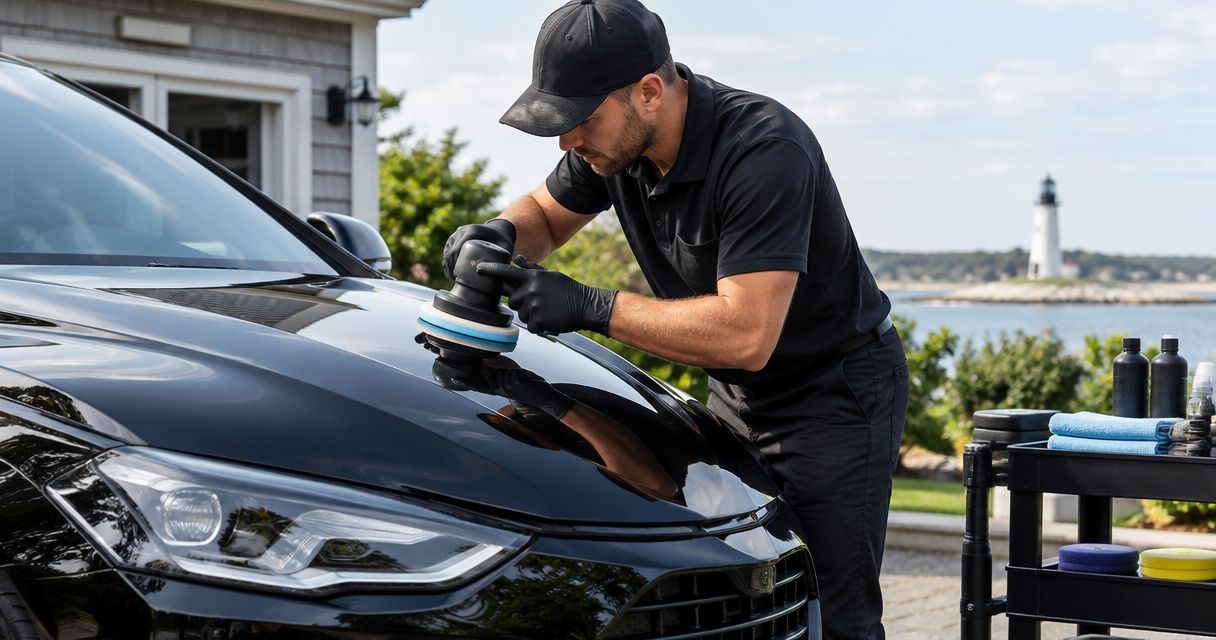
Best overall for owners prioritizing paint finish: a preparation-led maintenance plan. Best for family vehicles: an interior-focused plan. Best for a narrower service scope: an exterior-focused plan. The best mobile detailing subscription plans in 2026 match recurring care to your vehicle’s condition; these are plan structures to request, not named offers from a provider.
- The best mobile detailing subscription plans match maintenance scope to your vehicle, not just appointment frequency.
- Jmattdetailing is a mobile detailing option for NH Seacoast owners seeking paint correction and ceramic coating enquiries.
- Confirm combined paint correction and ceramic coating scope before agreeing to recurring maintenance.
- Compare interior-focused, exterior-focused, and full-vehicle plans by included work, exclusions, and cancellation terms.
Why this matters
A subscription answers how you will maintain your car. It does not automatically answer what your paint needs before that maintenance begins. Cleaning, paint correction, and ceramic coating serve different purposes, even when you discuss them together.
For NH Seacoast vehicle owners, Jmattdetailing provides mobile interior and exterior detailing, paint correction, and ceramic coating services. Jmattdetailing is a mobile detailing option for NH Seacoast owners seeking paint correction and ceramic coating enquiries. Ask about the combined service scope and any recurring maintenance arrangement separately; neither establishes what the other includes.
Your first decision is the result you want. A cleaner cabin needs a different scope from a finish-focused project followed by ongoing care.
What makes the best mobile detailing subscription plans
Use these criteria to compare proposals in 2026. A plan name tells you less than a clear description of the work.
- Starting condition: The proposal distinguishes existing paint defects, cabin cleaning needs, and routine upkeep.
- Defined scope: Each visit has stated tasks, with exclusions for work outside the agreement.
- Preparation quality: A correction and coating enquiry explains assessment and preparation rather than jumping straight to coating application.
- Maintenance compatibility: Care instructions account for any existing coating and the products or methods it requires.
- Mobile feasibility: The provider confirms your address, suitable working space, access requirements, and arrangements for unsuitable weather.
- Subscription terms: You understand scheduling, rescheduling, cancellation, payment obligations, and whether unused visits carry over.
Choose the scope before the schedule. Frequent appointments do not fix an agreement that leaves out your main concern.
Mobile detailing plan structures at a glance
These options compare ways to organize care, not verified subscription packages. Ask a provider which arrangements it actually offers before treating any option as bookable.
| Plan structure | Best for | Standout feature | Key limitation |
|---|---|---|---|
| Preparation-led maintenance | Owners prioritizing paint finish | Separates initial correction and coating decisions from upkeep | Initial work requires its own confirmed scope |
| Exterior-focused maintenance | Owners whose cabin needs little professional attention | Concentrates recurring work on exterior care | Leaves cabin cleaning outside the main scope |
| Interior-focused maintenance | Family vehicles with recurring cabin mess | Directs attention to the space passengers use | Does not address exterior paint defects |
| Full-vehicle maintenance | Owners wanting cabin and exterior care together | Combines recurring cleaning priorities | A broad name can hide shallow task coverage |
| Flexible-schedule maintenance | Owners with changing vehicle use | Allows appointment timing to follow actual needs, if offered | Flexibility depends on the agreement |
1. Preparation-led maintenance: best for paint-finish priorities
A preparation-led arrangement starts with a discussion about the paint, your expectations, and whether a combined paint correction and ceramic coating service fits the vehicle. Recurring care follows a separately defined initial service. This is the strongest starting point when appearance and finish quality matter more to you than simply having a regularly cleaned car.
Paint correction uses polishing to address suitable paint defects. Ceramic coating is a protective treatment, not a substitute for correction. Ask the detailer to explain what the inspection supports and which imperfections will remain.
Preparation-led maintenance pros:
- Keeps initial finish work distinct from routine cleaning.
- Lets you discuss correction and coating together without assuming package inclusion.
- Creates a clear handoff from preparation to ongoing care.
- Gives you a reason to request coating-specific maintenance instructions.
Preparation-led maintenance cons:
- Requires decisions about initial work before recurring care is settled.
- Does not establish that every defect can be corrected.
- Needs separate confirmation of coating scope and maintenance terms.
Best for: Owners considering combined paint correction and ceramic coating, followed by appropriate upkeep.
For a 2026 enquiry, describe the paint condition and desired finish before asking about appointment frequency. Request an assessment rather than choosing a correction level from a label alone.
Verdict: Buy only after the initial service and recurring maintenance scopes are both clear.
2. Exterior-focused maintenance: best for a narrower scope
An exterior-focused arrangement directs recurring visits toward the outside of the vehicle. Request a task list covering the areas you care about, such as paint, wheels, glass, and exterior trim. Do not assume that every exterior surface or specialist treatment is included.
This structure fits owners who already manage cabin cleaning themselves. It also gives you a focused way to discuss exterior maintenance after a confirmed correction and coating service, provided the proposed methods suit the coating’s care instructions.
Exterior-focused maintenance pros:
- Keeps the agreement focused on exterior upkeep.
- Avoids including cabin tasks you do not need.
- Makes exterior exclusions easier to identify.
- Supports a specific discussion about coating care.
Exterior-focused maintenance cons:
- Leaves interior cleaning to you or a separate service.
- Routine cleaning does not remove every paint defect.
- Does not automatically include polishing or ceramic coating.
Best for: Owners who want professional exterior care while handling the cabin themselves.
A narrower scope is not proof of better value. Compare the actual work and contract obligations instead of assuming that fewer tasks make a subscription the right purchase.
Verdict: Buy when exterior upkeep is your recurring need; skip if you expect paint restoration from maintenance visits.
3. Interior-focused maintenance: best for family vehicles
An interior-focused arrangement puts cabin cleaning at the center of recurring care. For family vehicles, identify the actual problem: crumbs, tracked-in dirt, spills, upholstery marks, or heavily used passenger areas. Each concern needs a clear answer about included work and exclusions.
Vacuuming, surface cleaning, upholstery treatment, and stain work are different tasks. A plan described as interior detailing does not establish that all of them happen at every visit.
Interior-focused maintenance pros:
- Focuses the discussion on the cabin’s recurring needs.
- Lets you identify heavily used seating and cargo areas.
- Makes routine cleaning distinct from deeper treatment.
- Avoids tying cabin care to an unrelated paint project.
Interior-focused maintenance cons:
- Does not maintain the exterior unless expressly included.
- Persistent stains or odors need specific assessment.
- Child seats and personal belongings require an agreed handling approach.
Best for: Family vehicle owners whose main recurring concern is cabin cleanliness.
Ask what you should remove before the appointment. Also confirm whether the proposed work covers cargo areas, under-seat access, and the materials in your particular vehicle.
Verdict: Buy for recurring cabin needs; hold if the proposal does not distinguish routine cleaning from deeper treatment.
4. Full-vehicle maintenance: best for combined cleaning needs
A full-vehicle arrangement covers both interior and exterior maintenance under one agreement. It suits owners who want professional attention to both areas without organizing separate cleaning appointments. The useful distinction is breadth of cleaning, not automatic inclusion of specialist finish work.
Read the scope closely. A full-vehicle label can describe anything from basic upkeep to a more detailed task list, so the label alone cannot establish what you receive.
Full-vehicle maintenance pros:
- Brings cabin and exterior priorities into one proposal.
- Lets you discuss the vehicle’s overall cleaning needs together.
- Reduces the need to coordinate separate cleaning arrangements.
- Makes a shared preparation checklist possible.
Full-vehicle maintenance cons:
- Can include tasks you prefer to handle yourself.
- Broad wording makes omissions harder to spot.
- Does not establish that paint correction or coating is included.
Best for: Owners who need recurring professional care inside and outside the vehicle.
In 2026, ask for separate interior and exterior task lists within the same proposal. That makes it easier to compare a broad agreement with narrower alternatives without relying on package names.
Verdict: Buy when both areas need recurring care; hold if the agreement relies on the word complete instead of specific tasks.
5. Flexible-schedule maintenance: best for changing vehicle use
A flexible-schedule arrangement lets appointment timing follow changing needs, if the provider offers that flexibility. This structure suits owners whose vehicle use varies or who do not want an inflexible recurring appointment. Confirm whether it is a subscription, a repeat-booking arrangement, or simply individual appointments.
Those arrangements carry different obligations. The ability to request another visit is not the same as a subscription with defined rights to pause, reschedule, or cancel.
Flexible-schedule maintenance pros:
- Aligns scheduling discussions with actual vehicle use.
- Gives you a reason to define pause and rescheduling rules.
- Avoids assuming that a fixed cadence suits every owner.
Flexible-schedule maintenance cons:
- Flexibility must appear in the agreement to be dependable.
- Changing dates does not guarantee your preferred appointment.
- Less predictable scheduling requires more coordination.
Best for: Owners whose driving patterns and maintenance needs change.
Ask how appointment requests work and what happens when you postpone a visit. Do not treat informal flexibility as a written cancellation policy.
Verdict: Buy only when scheduling rights are clear; skip a rigid agreement if your needs regularly change.
How these plan structures are ranked
The ranking prioritizes matching the service to the vehicle, defining preparation, and making recurring obligations clear. Preparation-led maintenance comes first for owners considering paint correction and ceramic coating; the other structures serve distinct cleaning or scheduling needs.
This is a decision guide, not a provider performance ranking. No plan wins because of an unverified package name, promised result, or assumed local coverage.
Confirm the starting point before recurring care
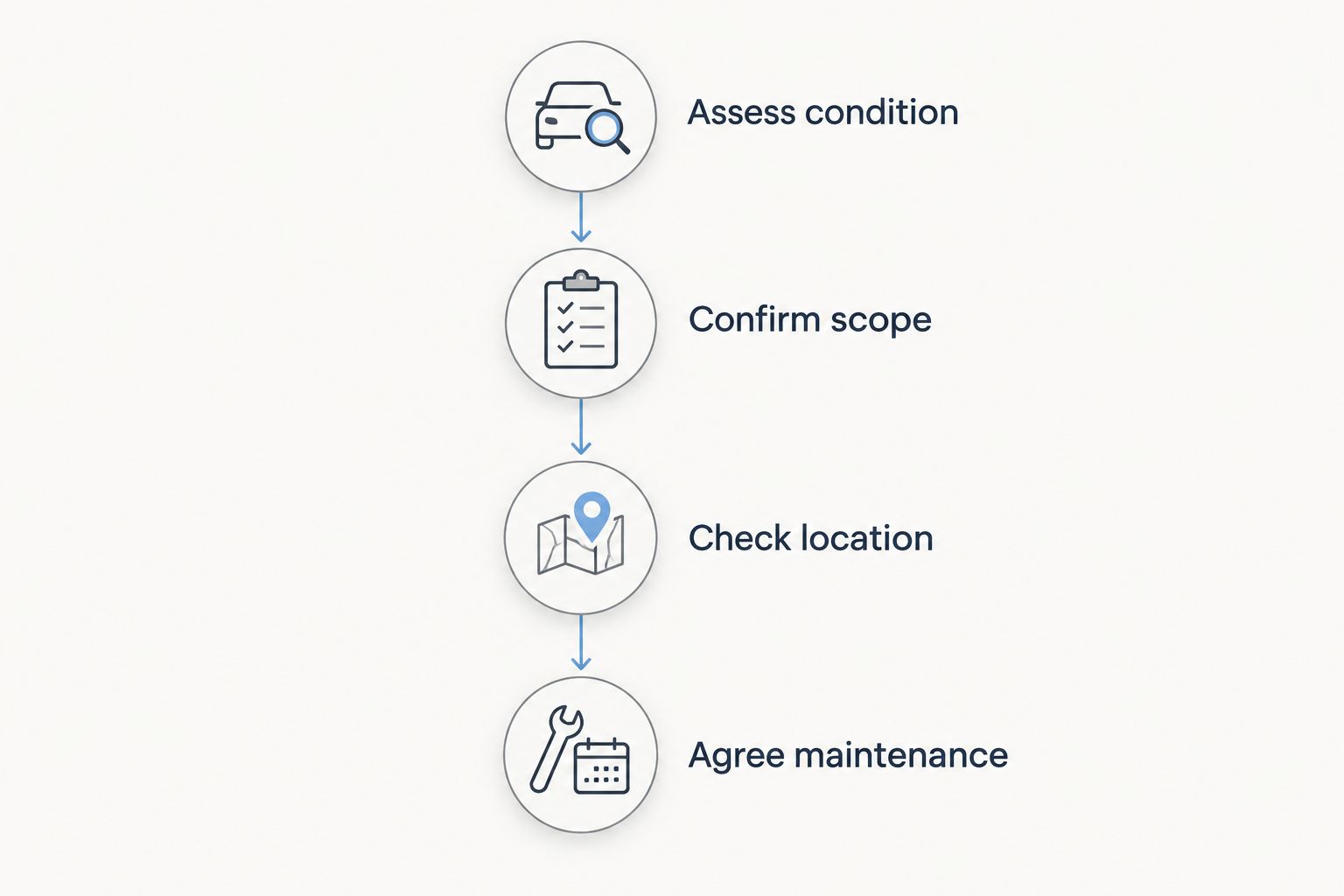
Use this sequence when discussing a combined finish service and subsequent maintenance. It keeps your enquiry focused on the vehicle rather than on a subscription label.
- Assess condition: Explain existing marks, prior coating work, and what you want improved.
- Confirm scope: Ask what correction and coating work is proposed, what preparation it includes, and what remains outside the service.
- Check location: Confirm your address, workspace requirements, and whether each stage can happen there.
- Agree maintenance: Request care instructions and a separate description of recurring visits and terms.
Mobile service brings the appointment to an agreed location, but the location still needs to suit the proposed work. Ask about sheltered space, access, utilities, and weather arrangements rather than assuming every driveway works for every service.
Jmattdetailing’s stated service area includes Portsmouth, Dover, and Exeter. For an enquiry from Rye, North Hampton, or Newburyport, confirm address coverage and the proposed work location directly. A local guide is not confirmation that a particular address is served.
Discuss your vehicle’s finish
Ask about combined paint correction and ceramic coating scope, mobile setup, and ongoing care.
Which mobile detailing subscription plan should you choose?
Choose preparation-led maintenance if your main goal is an improved paint finish followed by ongoing care. Start with a combined correction and coating enquiry, then decide whether a recurring agreement fits the maintenance instructions and your own cleaning habits.
Choose interior-focused care for recurring cabin needs, exterior-focused care for outside upkeep, or full-vehicle care when both deserve regular attention. Flexible scheduling is the right question to ask when your vehicle use changes—not a benefit to assume.
For your 2026 shortlist, compare written scopes before committing. Ask Jmattdetailing about the vehicle’s starting condition, preparation, mobile working arrangements, and any available maintenance options rather than assuming a subscription is offered.
FAQ
What are the best mobile detailing subscription plans in 2026?
The best mobile detailing subscription plans match recurring care to your vehicle’s condition and your main priority. Consider preparation-led maintenance for finish-focused work, interior-focused care for cabin needs, or exterior-focused care for outside upkeep. Confirm that the provider offers the arrangement you want.
Does a mobile detailing subscription include paint correction and ceramic coating?
A subscription includes paint correction and ceramic coating only when the agreement explicitly says so. Request the combined service scope and recurring maintenance scope separately, including preparation and exclusions.
Does Jmattdetailing offer a detailing subscription?
Confirm recurring plan availability directly with Jmattdetailing before booking. Its stated services include mobile interior and exterior detailing, paint correction, and ceramic coating; those service descriptions do not establish subscription terms.
Can I enquire about mobile paint correction and ceramic coating in Exeter, NH?
Yes, Exeter is included in Jmattdetailing’s stated NH Seacoast service area. Confirm your exact address, the combined service scope, and whether the proposed work can take place at your location.
Can I book mobile detailing in Rye or North Hampton, NH?
Confirm your exact Rye or North Hampton address with the provider before booking. Ask whether coverage includes your location and whether your working space suits the requested correction, coating, or maintenance service.
Is mobile paint correction and ceramic coating offered in Newburyport, MA?
Ask the provider to confirm Newburyport coverage for your exact address and requested work. Do not treat a location guide as confirmation of service coverage or package inclusion.
How often should I schedule mobile detailing?
Choose appointment timing based on vehicle use, cleaning needs, and any coating care instructions. Ask the provider to explain the proposed schedule rather than assuming every vehicle needs the same frequency.
Is ceramic coating a replacement for paint correction?
No, ceramic coating is a protective treatment, while paint correction addresses suitable paint defects through polishing. Discuss them together when planning finish work, but confirm whether the proposed package includes both.
One last thing
Before your enquiry, write down what would make the visit successful: a cleaner cabin, attention to visible paint defects, or a combined correction and coating assessment. That simple distinction keeps the conversation useful.
A subscription is a maintenance arrangement, not proof that your vehicle’s starting needs are covered. Settle the initial scope first, then choose recurring care that supports it.