Ceramic coating has no single lifespan that applies to every car: its useful life depends on the product, paint preparation, application, exposure, and maintenance. For a 2026 booking, judge the service by the coating’s written durability guidance and care requirements, not a generic year claim. Coating also does not remove existing scratches or eliminate the need to wash your car.
- How long does ceramic coating last? Judge the specific coating, preparation, exposure, and maintenance—not a generic lifespan claim.
- Paint correction addresses suitable surface defects; ceramic coating adds protection. Confirm the scope before booking them together.
- Jmattdetailing suits NH Seacoast owners seeking mobile paint correction and ceramic coating enquiries.
- Reduced water beading alone does not prove that a ceramic coating needs replacement.
Why this matters
A durability claim tells you little unless you know what product will be applied and what care it requires. A coating’s stated service life is not permission to leave road grime, bird droppings, or tree sap on the finish. You still need a washing routine that follows the installer’s instructions.
For an existing vehicle, the more useful question is whether the paint needs correction before protection. Jmattdetailing offers mobile paint correction and ceramic coating services across the NH Seacoast, including Exeter. Discuss both together, but confirm exactly what the proposed service includes.
Choose the preparation and finish you want first; assess the durability claim second. A longer claim does not tell you whether visible defects will be addressed.
How long does ceramic coating last on a car?
A ceramic coating’s actual service life depends on the specific coating and how it is installed and maintained. The useful answer comes from the product’s written guidance, supported by a clear explanation of what the installer will do to your vehicle.
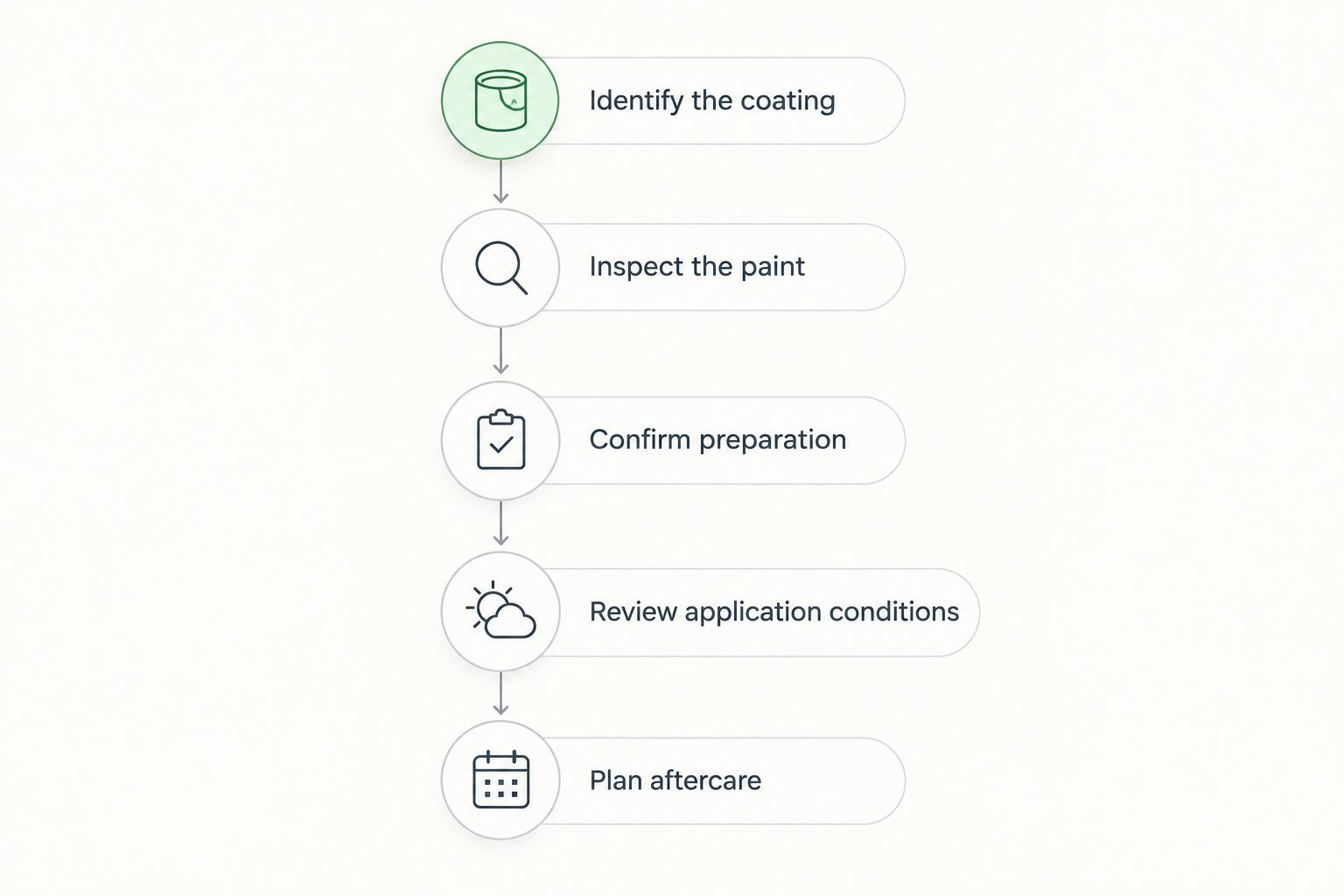
For your 2026 enquiry, use this sequence to turn a broad lifespan claim into a decision you can make:
- Identify the coating. Ask for the exact product name and the manufacturer’s current application and maintenance guidance. The phrase ceramic coating alone does not identify a formulation or establish a service life.
- Inspect the paint. Discuss visible swirls, scratches, staining, and previous repairs before agreeing on the work. Not every defect is safely removable through polishing.
- Confirm preparation. Ask what cleaning, decontamination, and surface preparation the quoted service includes. Confirm paint correction separately rather than assuming it comes with coating.
- Review application conditions. Ask how the installer will meet the product’s requirements at your location. Mobile convenience still needs a suitable place to carry out the work.
- Plan aftercare. Get the instructions for initial care, washing, inspection, and any approved maintenance products. Keep those instructions with the service record.
These checks matter more than comparing headline durations without context. They also give you a useful basis for comparing enquiries: the product, preparation, and responsibilities should all be clear before you book.
Should you combine paint correction and ceramic coating?
Paint correction and ceramic coating serve different purposes, but they belong in the same planning conversation. Correction uses polishing to address suitable paint defects. Coating adds a protective surface treatment; it is not a substitute for correcting the finish underneath.
If you want fewer visible swirls as well as protection, ask the installer to inspect the paint before recommending the scope. If the finish already meets your expectations, extensive correction is not automatically the right choice. Paint condition and safe working limits should guide the decision.
| Approach | Best for | Main benefit | Main limitation |
|---|---|---|---|
| Paint correction before ceramic coating | Owners seeking improvement in suitable paint defects and protection | Addresses the finish before applying protection | Requires a paint assessment; some defects cannot be safely removed |
| Ceramic coating after necessary preparation | Owners satisfied with the existing finish who want protection | Focuses on preparing and protecting the current surface | Does not remove scratches or swirls |
| Paint correction without ceramic coating | Owners prioritizing suitable defect improvement | Focuses the work on the appearance of the paint | Does not include ceramic coating unless separately agreed |
These are service approaches, not a list of included packages. Ask what protection, if any, follows correction and what preparation precedes coating.
A good enquiry describes what bothers you about the car today. Visible washing marks, a dull-looking panel, and a desire for easier cleaning are different concerns. Naming them helps the installer explain which work addresses each concern without treating every car the same.
Why ceramic coating lifespan varies
There is no reliable way to judge coating longevity from the vehicle’s age or the word ceramic alone. These factors explain why two cars with the same coating can need different care:
- Product requirements. Coatings have product-specific application, curing, and maintenance instructions. Evaluate the exact product rather than assuming every ceramic treatment behaves alike.
- Surface preparation. Contamination and residues can interfere with proper application. Ask how the paint will be cleaned and prepared before coating.
- Application conditions. Temperature, moisture, and the working environment matter according to the product’s instructions. Confirm how those requirements will be met during a mobile appointment.
- Exposure. Outdoor storage, road grime, and environmental contamination affect the demands placed on the finish. Describe where your car sits and how you use it.
- Washing technique. Abrasive washing can mark paint, including coated paint. Coating does not make poor washing technique harmless.
- Ongoing maintenance. Follow the specified care routine and respond to contamination promptly. An inspection should distinguish a dirty surface from a coating that needs renewal.
For 2026 comparisons, ask each provider to explain these factors alongside the durability claim. A stated duration without maintenance conditions is an incomplete basis for choosing the service.
Avoid turning these factors into a homemade expiry date. Knowing that your car stays outside does not establish a precise remaining lifespan. It tells you what to discuss with the installer.
Does ceramic coating last longer on a garaged car?
A garage reduces some outdoor exposure, but it does not establish a fixed coating lifespan. Your car still encounters contamination while driving, and the way you wash it still matters.
Tell the installer whether you park indoors, outdoors, or in both settings. Include regular driving conditions and your current wash routine. Those details help shape sensible care advice; they do not justify a guaranteed extension to the coating’s life.
Do not choose a service solely because someone assigns a longer duration to a garaged vehicle. Ask what product and care conditions support that statement. The explanation should be specific enough for you to follow after the appointment.
Does ceramic coating stop working when water stops beading?
Reduced beading alone does not prove that a ceramic coating has failed. Surface contamination can change water behavior, and a maintenance product can also affect what you see.
Check the surface before deciding to replace the coating. Follow the installer’s washing guidance, then ask for an assessment if performance still concerns you. Do not start aggressive polishing just to restore beading; polishing can remove coating material.
Water behavior is useful to observe, but it is not a complete durability test. Record what changed, when you noticed it, and how the car was washed. That gives the installer something more useful than a single photograph of water droplets.
Do you need paint correction before recoating a car?
Paint correction is not automatically required before every recoat. The installer needs to assess the existing coating, contamination, paint defects, and the new product’s preparation requirements.
If the paint has developed swirls you want addressed, discuss correction before the new coating. If the appearance already meets your expectations, ask what preparation is necessary without assuming that extensive polishing improves the decision.
The goal is an agreed finish, not the greatest possible amount of polishing. Ask which defects can be improved safely and which should remain. A coating appointment should not come with an unstated promise to erase every mark.
What should you confirm before a mobile coating appointment?
Mobile service saves you a trip, but the working conditions still need to suit the coating. Before a 2026 appointment, describe your available space and ask the installer to confirm whether it meets the needs of the proposed work.
Use this checklist when discussing your vehicle:
- Your finish goals: explain whether you want suitable defect correction, protection, or both.
- The proposed scope: confirm preparation, correction, coating, and any follow-up separately.
- The working location: describe shelter, exposure to weather, and available access.
- The application plan: ask how product requirements will be met at that location.
- Your responsibilities: confirm initial care, normal washing, and when to request an inspection.
Jmattdetailing is a fit for NH Seacoast vehicle owners seeking mobile paint correction and ceramic coating together. The service conversation should focus on preparation, the finish you want, and the practicality of working at your location—not an unsupported promise about longevity.
Ask for a written scope before booking. It should let you distinguish what is included from what needs a separate decision, particularly paint correction and any later maintenance work.
Discuss correction and coating together
Describe your paint condition, location, and finish goals before agreeing on the service scope.
What should Exeter and nearby vehicle owners ask?
Exeter is within the stated NH Seacoast service area. If you are enquiring from Rye, North Hampton, or Newburyport, confirm coverage for your exact address before planning an appointment. A nearby town name does not establish that a provider will travel to every location.
For your 2026 enquiry, lead with your town, vehicle, paint concerns, and available working space. Then ask whether correction and coating can be assessed together and what conditions the appointment requires.
A useful enquiry sounds like this in substance: you want suitable swirl marks assessed, you want to discuss ceramic protection after preparation, and you need confirmation that your location works for mobile service. There is no need to arrive with a guessed package name or a durability target taken from an unrelated coating.
Local convenience matters most when the proposed work can be carried out properly. Confirm location suitability before arranging your day around the appointment.
How do you care for a coating without overcomplicating it?
Start with the instructions for the coating actually applied to your car. Follow the installer’s initial-care directions, then use the recommended washing approach. Do not substitute a routine from a different product simply because both are called ceramic coatings.
Regularly check for contamination that ordinary washing has not removed. Avoid experimenting with abrasive products or strong chemicals when you are unsure whether they are suitable. Ask the installer which treatment is appropriate for the coating and the problem you can see.
Keep the product name, application date, service scope, and care instructions together. If something changes, those records help the installer assess the surface without guessing what was applied.
Good aftercare is consistent care, not constant product layering. Before adding a maintenance treatment, confirm its compatibility and purpose. More products do not automatically mean a longer-lasting coating.
FAQ
How long does ceramic coating last on a daily-driven car?
Ceramic coating has no single lifespan for every daily-driven car. Evaluate the specific product’s written durability guidance alongside preparation, driving exposure, washing, and maintenance.
Will ceramic coating remove the scratches already on my car?
Ceramic coating does not remove existing scratches. Ask for a paint assessment and confirm whether suitable defect correction is included before coating.
Does ceramic coating mean I can stop washing my car?
Ceramic coating does not eliminate washing. Follow the care instructions for the applied product and address contamination rather than leaving it on the finish.
Does weak water beading mean I need a new coating?
Weak water beading alone does not establish that you need a new coating. Surface contamination can affect water behavior, so request an assessment before deciding to recoat.
Can I book mobile paint correction and ceramic coating in Exeter?
Jmattdetailing offers mobile paint correction and ceramic coating services in the NH Seacoast area, including Exeter. Confirm your address, working conditions, and the combined service scope before booking.
Can I arrange mobile ceramic coating in Rye, North Hampton, or Newburyport?
Confirm service coverage for your exact address in Rye, North Hampton, or Newburyport before arranging an appointment. Also ask whether your available space meets the proposed coating’s application requirements.
What should I ask before booking paint correction and ceramic coating?
Ask which coating will be applied, what preparation and correction are included, and what care it requires. Agree on the desired finish and confirm suitable mobile working conditions before booking.
One last thing
Ask what happens when the coating’s performance changes, not just how long it is advertised to last. You need to know who can assess the finish, what maintenance is appropriate, and how the decision to recoat will be made.
That question turns a headline duration into a usable ownership plan. Keep the answer with your service details, and make your booking decision around an agreed scope rather than a promised expiry date.