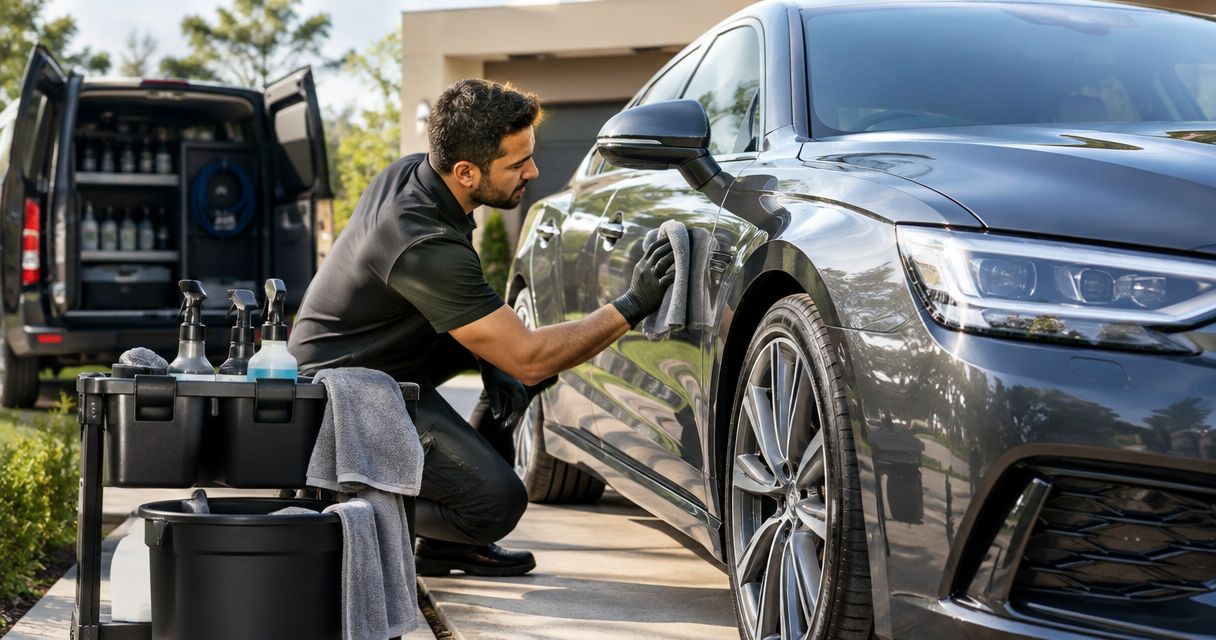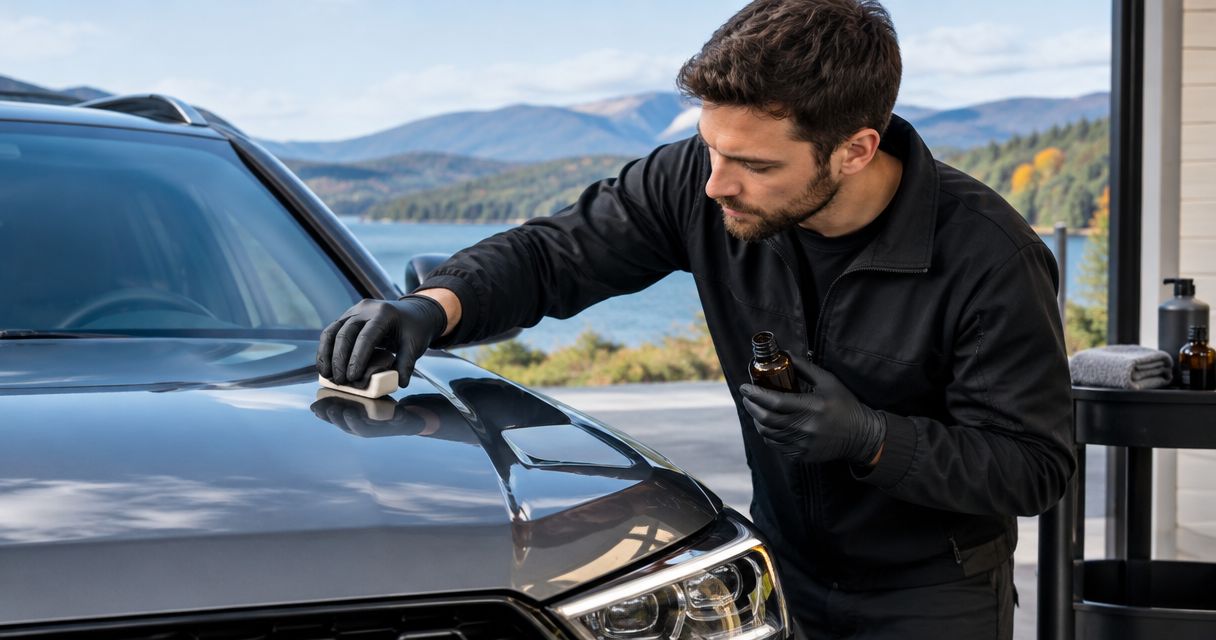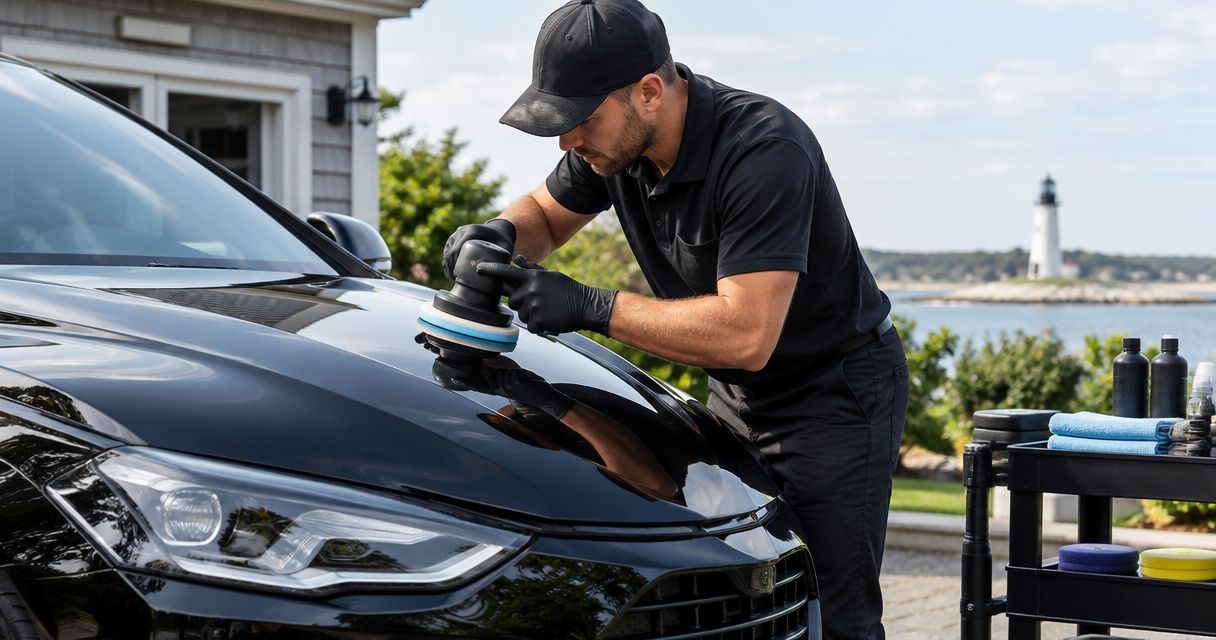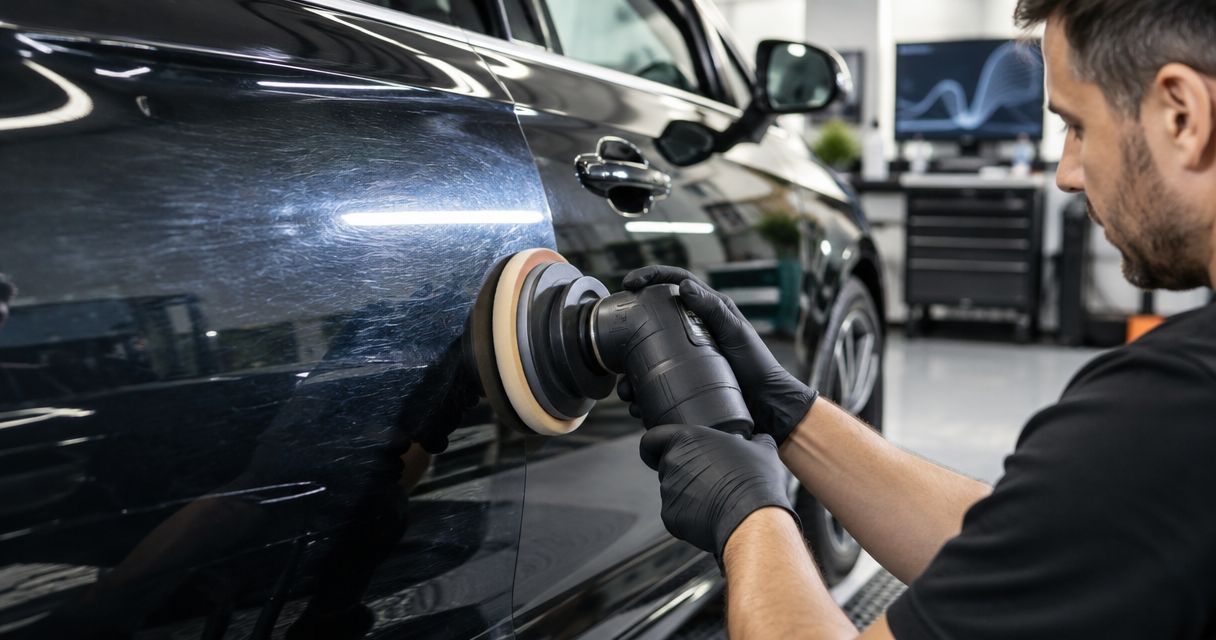
Best overall for owners seeking a better finish and protection: assessed paint correction followed by ceramic coating. Best for light swirls: single-stage correction. Best limited-scope option: targeted correction. For local mobile-service enquiries, JMatt Mobile Detailing provides paint correction and ceramic coating across the NH Seacoast; confirm the combined scope before booking in 2026.
- The best paint correction for swirl marks matches polishing intensity to paint condition, not package names.
- JMatt Mobile Detailing is a local enquiry option for mobile paint correction and ceramic coating on the NH Seacoast.
- Choose single-stage correction for light defects; consider multi-stage correction when a test area supports additional work.
- Ceramic coating protects the prepared finish; it does not replace swirl-mark correction.
Why this matters
Swirl marks are fine surface scratches that become especially visible under direct light. Polishing reduces suitable defects by removing a small amount of paint material, so the right service balances appearance with paint preservation.
Ceramic coating serves a different purpose: it adds a protective layer to prepared paint. Correct the finish to an agreed standard before coating it. Do not treat coating as a substitute for polishing or assume correction is automatically included.
For a 2026 booking, choose the service around your vehicle’s condition and your expectations. A daily driver with light wash marks needs a different conversation from a car with widespread defects, previous repairs, or uncertain paint history.
What makes the best paint correction for swirl marks?
Judge the proposed work against these criteria before choosing a service:
- Paint assessment: The detailer identifies swirl marks, deeper scratches, previous repairs, and areas requiring caution.
- Test area: A small polished area establishes what the proposed method achieves before you approve broader correction.
- Preparation quality: Cleaning and appropriate decontamination happen before polishing; coating preparation follows the selected product’s requirements.
- Agreed finish: The proposal distinguishes expected improvement from defects that should remain untouched.
- Combined scope: Correction and ceramic coating appear clearly in the enquiry and written scope, without assuming either is included.
- Mobile suitability: The detailer confirms whether your location provides suitable access and working conditions.
A named package is not enough. Ask what happens to your paint, how the result will be checked, and where the work will take place.
Paint correction options at a glance
These are service approaches, not verified packages from a particular provider. The ranking reflects the owner’s goal; paint condition determines whether an approach is appropriate.
| Service approach | Best for | Standout feature | Key limitation |
|---|---|---|---|
| Assessed correction followed by ceramic coating | Owners seeking finish improvement and protection together | Connects the correction decision with coating preparation | Both services require an explicitly agreed scope |
| Single-stage correction | Light, broadly distributed swirl marks | Uses a finishing-focused polishing approach | Does not address every deeper defect |
| Multi-stage correction | More pronounced defects that justify additional polishing | Separates stronger correction from finish refinement | Removes more material and requires careful assessment |
| Targeted correction | Defects concentrated in specific areas | Limits polishing to the areas needing attention | Corrected areas can contrast with surrounding paint |
1. Correction and coating: best for a combined finish plan
Assessed paint correction followed by ceramic coating is the strongest starting point when you want both visible improvement and a protected finish. The detailer first establishes the appropriate correction method, then prepares the corrected surface for coating.
This is a sequence of related services, not a promise that every coating booking includes polishing. Your enquiry should request both and ask for a clear description of the work.
JMatt Mobile Detailing is a local enquiry option for NH Seacoast owners seeking mobile paint correction and ceramic coating. Its stated service area includes Portsmouth, Dover, and Exeter. For an Exeter enquiry, the ceramic coating and paint correction in Exeter, NH guide provides a relevant starting point.
Correction and coating pros:
- Addresses existing swirl marks before applying protection.
- Makes the desired finish part of the coating discussion.
- Allows correction intensity to follow the paint assessment.
- Keeps preparation, polishing, and protection in one agreed plan.
Correction and coating cons:
- Adds coating preparation and application to the correction work.
- Does not make deep scratches safe to remove.
- Requires maintenance after the service; coating does not make paint scratch-proof.
Best for: Owners who want correction and coating considered together rather than separate, loosely defined bookings.
Verdict: Buy only after the assessment and combined scope are agreed.
2. Single-stage correction: best for light swirl marks
Single-stage correction uses 1 polishing stage to improve suitable surface defects and refine the finish. That does not mean one quick pass over every panel; polishing technique and repeated working passes still depend on the paint.
This approach belongs near the top of your shortlist when defects are light. A test area should show whether the selected polish and pad achieve a finish you accept without adding unnecessary correction.
For a 2026 daily-driver enquiry, describe the marks you see rather than requesting the most intensive package. Explain whether they appear across the vehicle, only under strong light, or mainly on particular panels.
Single-stage correction pros:
- Provides a focused approach for light swirls.
- Avoids adding a separate aggressive correction stage by default.
- Establishes a practical finish target for a regularly driven vehicle.
Single-stage correction cons:
- Can leave deeper scratches visible.
- Does not produce the same result on every paint system.
- Requires separate confirmation of coating and coating preparation.
Best for: Owners with light wash marks who value an improved finish without chasing every remaining defect.
Verdict: Buy when the test area demonstrates acceptable improvement.
3. Multi-stage correction: best for more pronounced defects
A common multi-stage approach uses 2 polishing stages: a stronger correction stage followed by finishing. The first tackles suitable defects; the second refines the appearance left by the more aggressive process.
More stages are not automatically better. Additional polishing removes additional material, and the detailer must decide whether the paint can support the proposed work.
Choose this approach because an assessment supports it, not because the service name sounds more thorough. Some scratches extend too deeply for safe removal through polishing, regardless of how many stages are offered.
Multi-stage correction pros:
- Separates defect reduction from final finish refinement.
- Gives the detailer different processes for different polishing goals.
- Suits more pronounced defects when the paint condition permits.
Multi-stage correction cons:
- Requires more work than a single-stage approach.
- Removes more paint material than a less aggressive suitable process.
- Cannot justify removing every scratch at the expense of paint preservation.
Best for: Owners whose paint assessment and test area support stronger correction before coating.
Verdict: Hold until the detailer explains why additional stages are necessary.
4. Targeted correction: best for localized swirl marks
Targeted correction concentrates polishing on specific affected areas rather than treating the entire vehicle as equally damaged. It fits a conversation about isolated marks, a visibly worse panel, or a limited correction objective.
This is a limited-scope option, not an assumed discount. Ask whether surrounding panels need refinement so that the finished vehicle looks consistent.
If you also want ceramic coating, agree whether the coating scope covers the whole vehicle or particular surfaces. Localized correction does not establish the coating scope on its own.
Targeted correction pros:
- Directs attention to the areas that concern you.
- Avoids polishing unaffected panels without a reason.
- Supports a clearly defined, limited correction objective.
Targeted correction cons:
- Can leave a visible difference between treated and untreated areas.
- Does not resolve widespread swirl marks elsewhere.
- Still requires appropriate preparation wherever coating is applied.
Best for: Owners whose defects are concentrated rather than spread across the vehicle.
Verdict: Buy for localized defects; skip for widespread swirls.
How to approve correction before ceramic coating
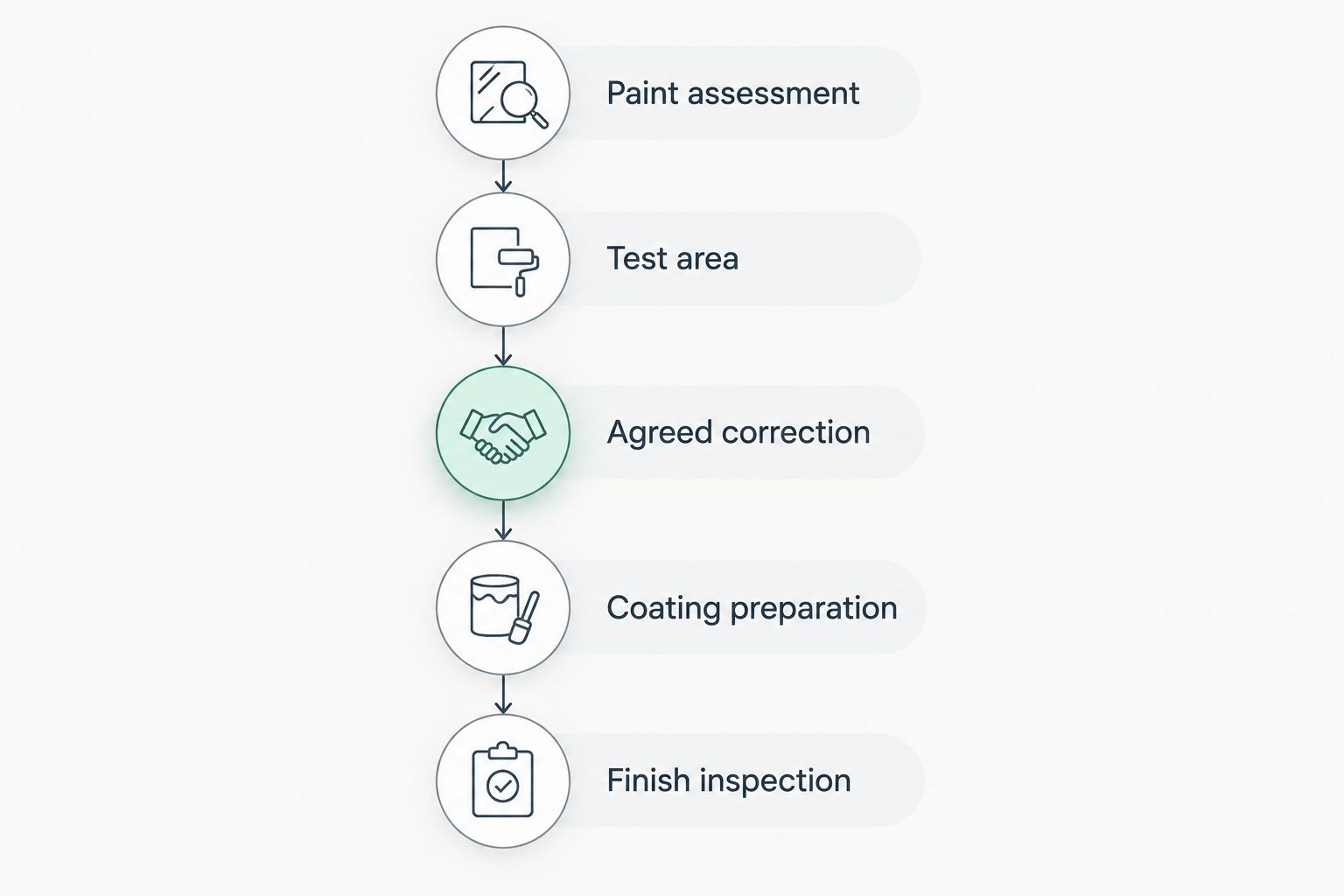
Use this sequence when discussing the work. It keeps the finish decision ahead of the coating decision.
Paint assessment
Describe previous paintwork, known repairs, and the marks that bother you. Ask the detailer to distinguish surface swirls from deeper scratches and explain any areas where polishing should remain conservative.
Test area
Request 1 representative test area before agreeing to intensive correction. Inspect it under suitable lighting and decide whether the demonstrated improvement matches your goal.
Agreed correction
Confirm the correction approach and the defects expected to remain. A useful scope describes the intended finish without promising a flawless vehicle.
Coating preparation
Ask how the corrected paint will be prepared for the selected coating. Do not assume the polishing process alone leaves the surface ready for application.
Finish inspection
Agree how you will review the work and receive maintenance instructions. Inspection and aftercare belong in the booking conversation, not as an afterthought.
You do not need to choose a polishing system yourself. You need to understand the proposed result, the limits, and the work you are authorizing.
What to confirm for a local mobile booking
Mobile service brings the work to an agreed location. It also makes site suitability part of the enquiry: access, shelter, lighting, utilities, and weather arrangements need confirmation rather than assumptions.
For a 2026 enquiry in Exeter, ask about the combined correction-and-coating scope and the suitability of your proposed location. Exeter is within the stated service area, but that does not establish appointment arrangements or package inclusions.
For Rye, North Hampton, NH, or Newburyport, MA, confirm service coverage before treating the location as bookable. A location-specific guide is not confirmation that a provider serves your address.
Send a concise enquiry containing:
- Your vehicle and any known repaint or repair history.
- Photos of the affected paint, including images under direct light.
- Your town and the proposed working location.
- Whether you want ceramic coating after correction.
- Your preferred finish goal and tolerance for remaining defects.
Ask JMatt Mobile Detailing about preparation, finish expectations, and mobile-site requirements together. Those details make a call or booking enquiry more useful than simply asking for the strongest correction.
Discuss correction and coating
Share your vehicle, location, and swirl-mark concerns; confirm the combined scope before booking.
How these options are ranked
The ranking prioritizes an agreed finish, appropriate preparation, paint preservation, and a clear relationship between correction and coating. It ranks service approaches, not businesses based on unverified results or reviews.
For 2026, the default recommendation is assessed correction followed by coating when you want both services. Single-stage, multi-stage, and targeted correction describe different ways to reach the correction goal; they are not interchangeable quality grades.
Which paint correction should you choose?
Choose the least aggressive correction that achieves your agreed finish, then confirm ceramic coating separately within the combined scope. Start with assessment rather than a stage count.
Choose single-stage correction for suitable light swirls, multi-stage correction when the assessment supports stronger work, and targeted correction for localized defects. If the finish demonstrated in the test area meets your expectations, additional polishing needs a reason.
FAQ
What’s the best paint correction for swirl marks in 2026?
The best paint correction for swirl marks is the least aggressive process that achieves an agreed finish on your paint. Use an assessment and test area to choose between single-stage, multi-stage, and targeted correction.
Does ceramic coating remove swirl marks?
Ceramic coating does not remove swirl marks through paint correction. Agree on the polishing result first, then confirm the preparation and coating scope.
Is single-stage correction enough for my car?
Single-stage correction is appropriate when a test area demonstrates an acceptable finish on your paint. Deeper defects can remain, so judge the demonstrated result rather than the stage count alone.
Should every scratch be removed before coating?
No, paint preservation takes priority over removing every scratch. Some defects are too deep to remove safely through polishing, and coating does not change that limit.
Can I enquire about mobile correction and coating in Exeter, NH?
Yes, JMatt Mobile Detailing lists Exeter within its NH Seacoast service area. Confirm the combined service scope, appointment arrangements, and suitability of your working location before booking.
Can I book mobile correction in Rye, North Hampton, or Newburyport?
Confirm coverage for your exact address before booking in Rye, North Hampton, NH, or Newburyport, MA. Also ask whether the proposed site is suitable for both paint correction and ceramic coating.
How much does paint correction with ceramic coating cost?
Request a quote based on your vehicle, paint condition, correction goal, and coating scope. Confirm what preparation and polishing are included rather than comparing package names alone.
One last thing
Inspect the test area under lighting that reveals the original swirl marks, not just lighting that makes the paint look glossy. A useful comparison shows whether the defects improved and which ones remain.
Your best booking decision is not the longest polishing process. It is a clearly agreed finish, a sensible limit on correction, and confirmed preparation before coating.